The short version
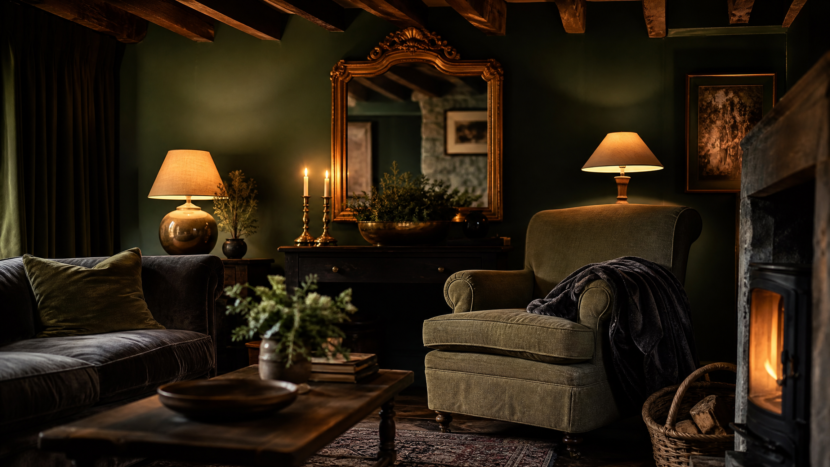
Dark cottagecore is the same aesthetic — natural materials, dried botanicals, aged brass, a lived-in feeling — in a deep, moody palette instead of a pale one. Charcoal, forest green and olive rather than cream and sage. It works best in rooms with poor natural light, which is exactly where the pale version struggles, and it depends almost entirely on getting the lighting right.
Why dark rooms are the right home for this
Standard advice for a dark room is to paint it white to bounce what light there is around. In a room with genuinely poor light, this rarely works. You get a grey room instead of a dark one, and grey is worse.
The alternative is to stop fighting it. A north-facing room painted deep green with warm lamplight reads intentional and enveloping. The same room in cool white reads gloomy, because the eye keeps registering that the white is not actually white.
This is the single strongest argument for dark cottagecore: it turns the room’s main limitation into its main feature. If you have been battling a dim room, our guide to small bedrooms with no natural light covers the general principle.
The three-shade formula
Dark palettes go wrong when they become one flat mass of dark. The fix is three depths rather than one:
| Layer | Shade | Where it goes |
|---|---|---|
| Deepest | Forest green, charcoal, deep aubergine | Walls, or walls and ceiling in a small room |
| Middle | Olive, warm brown, muted rust | Upholstery, curtains, large textiles |
| Lightest | Bone, oat, aged brass | Lampshades, ceramics, hardware, small accents |
That lightest layer is not optional. Without something bone or brass to catch the light, the room has no focal points and reads as a cave rather than a cocoon.
On green specifically: deep greens with a yellow or brown base stay warm. Greens with a blue base go cold fast under artificial light. If you can only test one thing, test the green at night under the bulbs you actually own.
Lighting is the whole thing
You can get every other decision right and lose the room to one ceiling light. Dark cottagecore is lit low, warm and from multiple points.
- Lamps only. Turn the overhead off and leave it off. Three to five light sources at different heights.
- 2700K or warmer. Anything cooler turns deep green grey and makes brass look like nickel.
- Light the corners. A dark room with a lit centre and dark corners feels smaller. A dark room with lit corners feels deep.
- Candles genuinely matter here. Brass candlesticks are not just decorative in this palette — the moving flame is what stops a dark room feeling static.
- An antique or gilt mirror opposite a lamp doubles your light sources for free.
Our guide to warm living room lighting applies directly, and small room lighting ideas covers placement.
Texture does what colour cannot
In a pale room, colour variation creates interest. In a dark room, most of your colour range is gone, so texture carries the load. A dark room with flat surfaces looks like a painted box; a dark room with varied texture looks rich.
- Velvet for one item only — a throw or a single cushion. It catches light in a way nothing else does.
- Heavy linen for curtains, in the middle shade rather than the darkest.
- Dark wood with visible grain. Oak, walnut, or a limed finish on existing furniture.
- Matte ceramic rather than glazed. Glossy surfaces produce hard highlights that look harsh against dark walls.
- Aged brass, unlacquered so it patinas. The one metal that belongs in this palette.
The botanicals go dark too
Fresh flowers look wrong here — too bright, too temporary. Dark cottagecore uses:
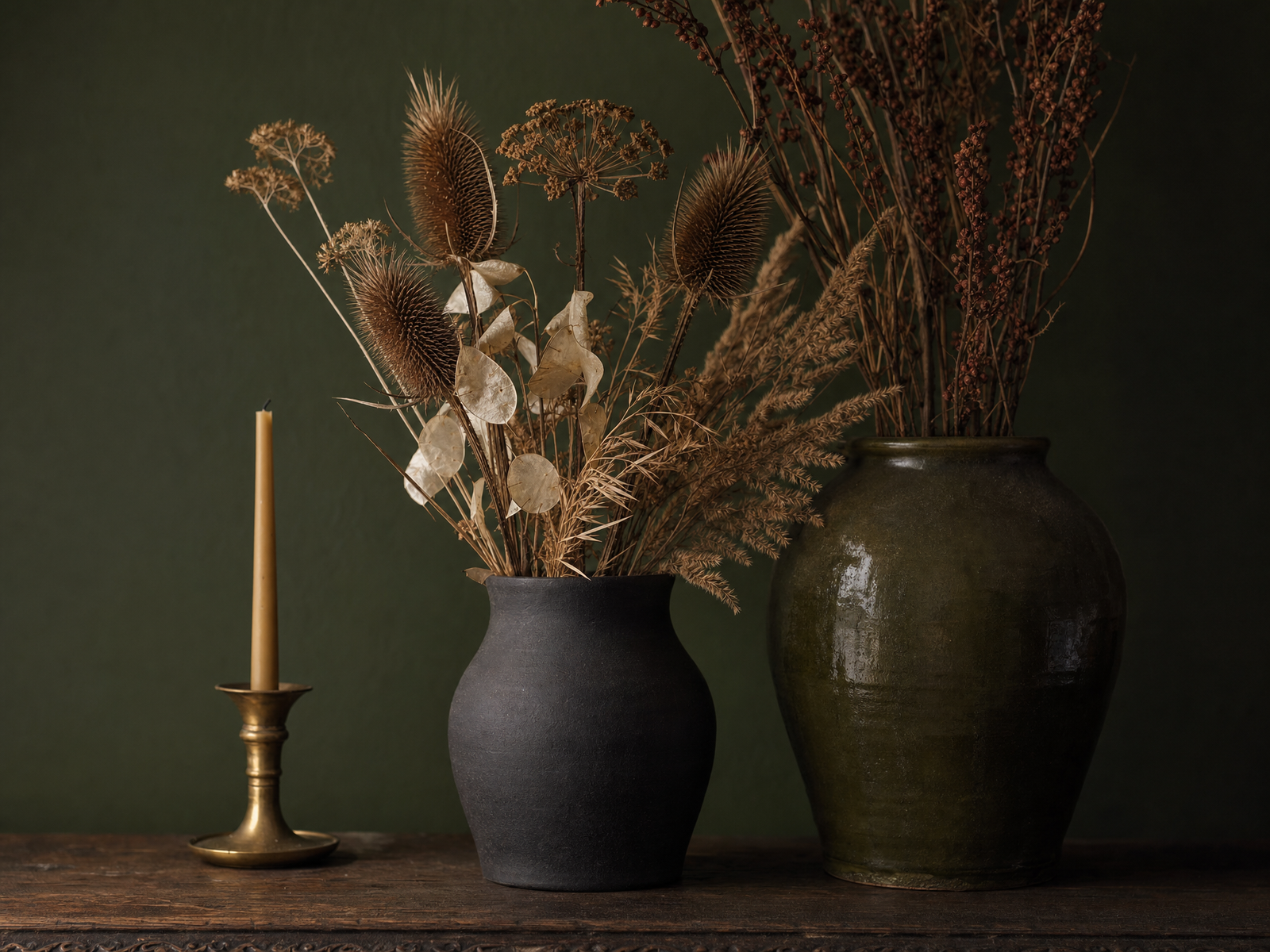
- Dried seed heads, bleached grasses, and stems in rust and deep brown
- Matte dark ceramic vessels rather than clear glass
- Eucalyptus, which dries to a muted grey-green that suits the palette exactly
- Bare branches, which sound bleak and read sculptural
Room by room
Bedroom
The easiest room to start with, because it is the one place where enveloping darkness is the actual goal. Charcoal linen bedding, deep green walls, two warm bedside lamps and no overhead light at all. For the softer version, compare with English cottage bedroom ideas.
Living room
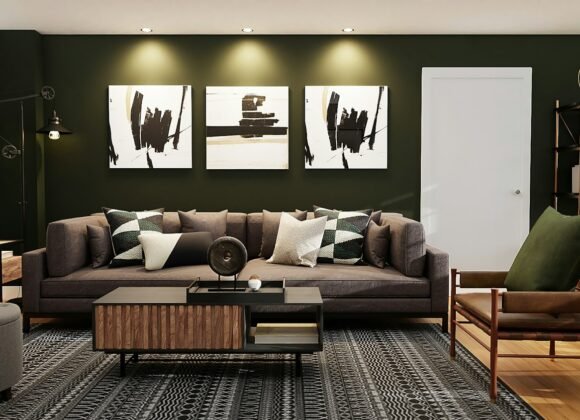
Deep walls, an olive or warm brown sofa, one velvet throw, brass candlesticks on a dark wood console, and lamps in at least three positions. A gilt mirror opposite the main lamp. Our warm living room ideas for autumn and winter overlap heavily with this.
Kitchen
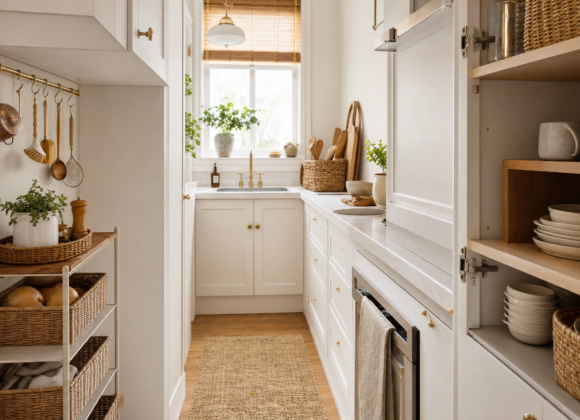
The hardest room, because kitchens need working light. Compromise: dark lower cabinets, warm white or bone upper walls, brass hardware, and warm task lighting under the wall units. You get the mood without losing the ability to see what you are chopping.
Renting, or not wanting to commit
- One dark wall rather than four. Behind the bed or sofa, so you sit facing the lighter walls.
- Heavy curtains in a deep shade do a surprising amount of the work with no paint at all.
- Dark textiles — bedding, throw, rug — shift a room’s mood significantly before you touch a wall.
- Swap the bulbs and lampshades. A dark or bone linen shade over a warm bulb changes the quality of light in a way a white plastic shade cannot.
Frequently asked questions
What is dark cottagecore?
Dark cottagecore uses the same natural materials, dried botanicals and aged brass as traditional cottagecore, but in a deep palette of forest green, charcoal, olive and warm brown rather than cream and sage. It reads moody and enveloping rather than light and pastoral.
Will dark colours make my small room look smaller?
Not necessarily. Dark walls blur where the walls end, which can make a small room feel deeper rather than tighter — but only if the lighting is right. A dark room with a single bright overhead light will feel smaller. A dark room with several warm lamps, including ones lighting the corners, will not.
What paint colours work for dark cottagecore?
Deep greens with a yellow or brown base, charcoal with a warm undertone, and deep aubergine. Avoid anything with a blue base, which goes cold and grey under artificial light. Always test the colour at night, under the bulbs you actually use.
How do I keep a dark room from feeling depressing?
Three things: multiple warm light sources rather than one, a lightest layer of bone and brass to catch that light, and varied texture. Rooms that feel oppressive are almost always missing one of those, most often the lighting.
Does dark cottagecore work in a north-facing room?
It is arguably the best solution for one. North light is cool and weak, which drains pale palettes and makes white walls read grey. A warm deep colour stops competing with the light and lets your lamps set the mood instead.
Can I do this without painting?
Yes. Dark heavy curtains, dark bedding or upholstery, a dark rug, warm bulbs and linen lampshades will move a room a long way. Painting a single feature wall behind the bed or sofa gets you most of the rest without committing the whole room.
Where to take this next
For the opposite end of the same aesthetic, see modern cottagecore, or the traditional middle ground in our storybook cottagecore living room ideas. To carry the palette into the kitchen, cottagecore kitchen ideas covers the styling method that applies at any depth of colour.