Lighting is the most underrated tool in small-room decorating. The right lighting setup can make a cramped room feel open, warm, and significantly larger — while the wrong one (a single harsh overhead light) makes even a generous room feel small and flat. Here’s how to use natural and artificial light to transform any small space.
⚡ Quick Wins — Do These Today (Most Cost Nothing)
- Clean your windows — dirty glass blocks more light than you’d think
- Replace one overhead bulb with a warm-white LED (2700K)
- Move a floor lamp into your room’s darkest corner
- Place a mirror opposite your main window
- Swap dark curtains for sheers or tie them fully open during the day
These five changes cost little to nothing and deliver immediate results. Work through the full guide below for a comprehensive lighting overhaul.
Why Overhead Lighting Alone Makes Rooms Feel Smaller
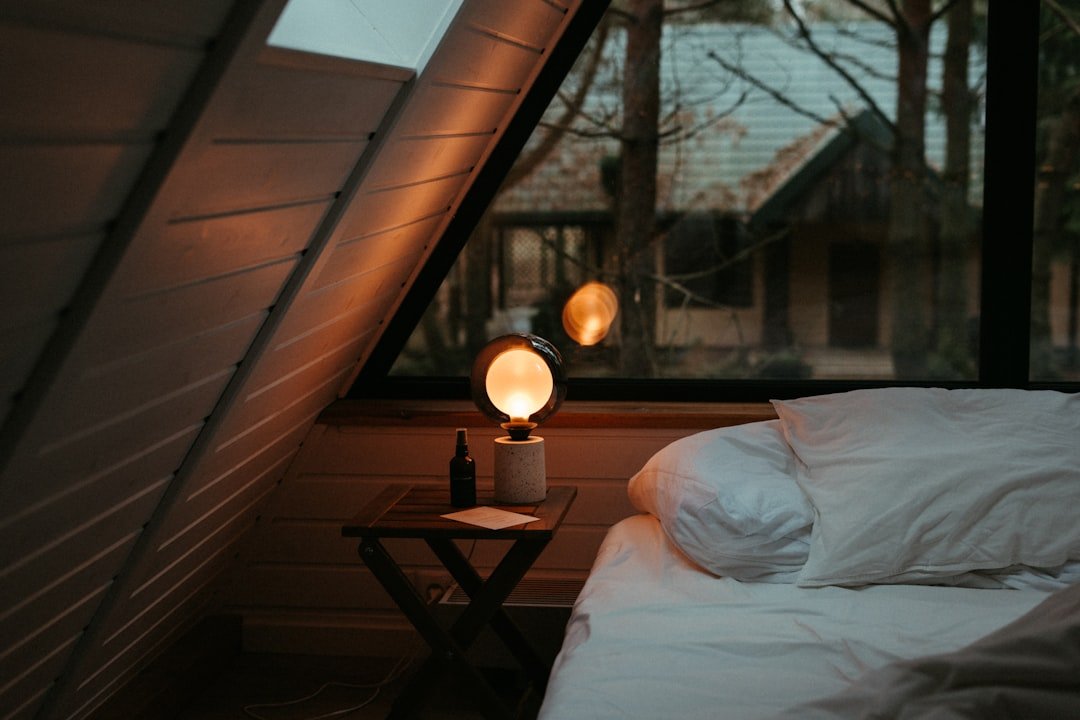
A single ceiling light illuminates from one point above, casting harsh shadows downward and creating a flat, uniform brightness that the eye reads as “one plane.” There’s no visual depth, no variation — just an evenly lit box. Multiple light sources at different heights create layers of light and shadow that give a room perceived depth. Depth is what the brain reads as space.
Think about how a restaurant feels compared to a fluorescent-lit office. Same square footage; completely different perceived size. The difference is almost entirely in the lighting approach — and you can recreate that in any small room at home.
The Layered Lighting Formula
Good small-room lighting uses three layers working together:
- Ambient light (the base): overhead light or a central lamp, dimmed if possible, providing general illumination
- Task light (functional): a desk lamp, reading lamp, or under-cabinet light for specific activities
- Accent light (atmosphere): fairy lights, LED strips, candles, or a decorative lamp that adds warm pools of light in corners and along shelves
A small room with all three layers feels immeasurably more spacious and welcoming than the same room lit only by overhead light. You don’t need to add all three at once — start with one floor lamp and one accent source, and build from there.
Maximise Natural Light First
Before spending anything on artificial lighting, maximise what you already have for free. Natural light makes rooms feel larger, improves mood, and sets the baseline for every artificial layer you add on top.
What to do:
- Clean your windows. Dirty glass can block 20–30% of available light. A quick clean with glass cleaner and a microfibre cloth takes five minutes and makes an immediate difference.
- Remove anything blocking the window zone. Furniture pushed against the glass, tall plants on the sill, and heavy objects on the ledge all eat light before it enters the room.
- Swap heavy curtains for sheers. A sheer or linen panel lets in diffused light even when drawn, while still providing privacy. If privacy isn’t a concern, remove window coverings entirely during daylight hours.
- Hang curtains as high as possible. Floor-to-ceiling curtains mounted near the ceiling maximise the window’s perceived size and let light in from a higher angle — both make the room feel larger and brighter.
- Place a large mirror opposite the window. This single step effectively creates a second window — reflecting the daylight back across the room and doubling its perceived brightness.
Choose Warm-White Bulbs Throughout
Bulb colour temperature affects how a room feels as much as how it looks. Warm white (2700–3000K) creates a cosy, expansive feeling — the same quality of light as a sunset or candlelight. Cool white (4000K+) creates a clinical, “office” feel that makes small rooms feel colder and more contained.
Replace every bulb in a small room with warm-white LEDs (look for 2700K on the packaging) and the difference is immediate. This costs $3–$8 per bulb and is one of the cheapest high-impact changes you can make.
💡 Bulb buying tip: Don’t buy by wattage — buy by lumens and Kelvin. For a small bedroom or living room, aim for 400–800 lumens (brightness) at 2700K (warmth). Too bright is almost as bad as too dim in a small space.
Use Dimmers Where Possible
A dimmer switch transforms a room’s atmosphere at different times of day. Bright for tasks, dimmed for evenings — the same room can feel functional at noon and deeply cosy at 9pm. Smart bulbs (Philips Hue, IKEA TRÅDFRI) achieve the same effect without replacing the switch — controlled via app or voice, they’re fully renter-safe and removable.
If a smart bulb feels like too much, a simple plug-in dimmer adapter ($8–$15) sits between the socket and a standard lamp and gives you manual dimming control on any lamp you already own.
Floor Lamps in Dark Corners
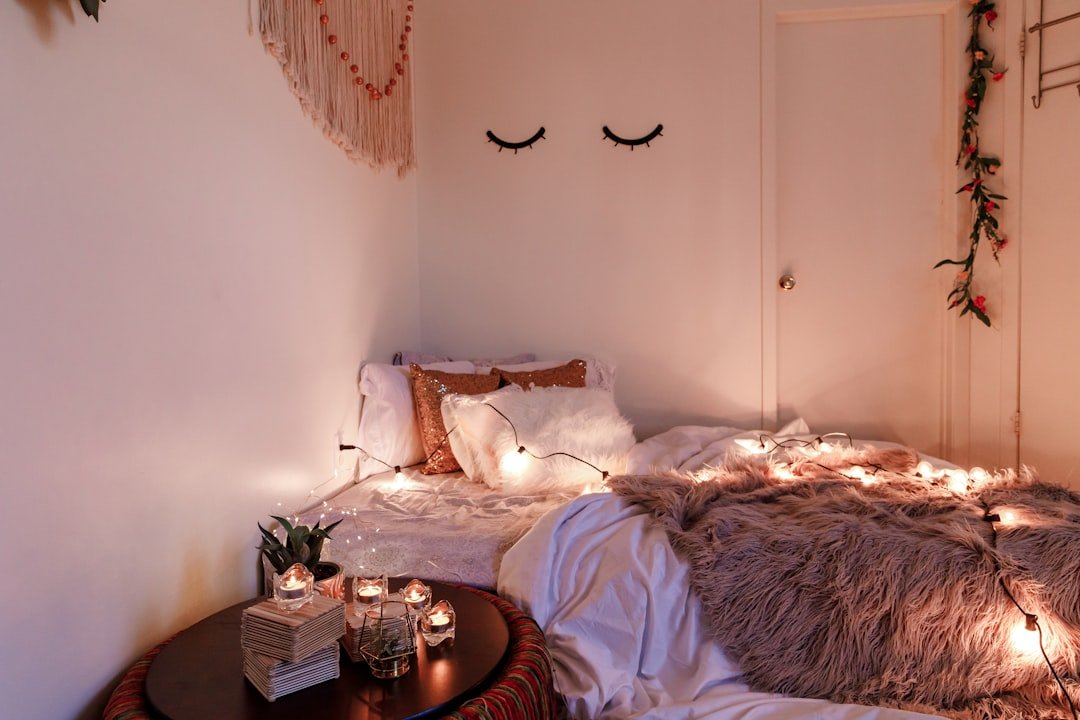
Dark corners shrink a room visually — the eye interprets unlit edges as the boundary of the space. A floor lamp in the darkest corner of a small room eliminates that boundary and effectively extends the room’s perceived size.
Choose an arching floor lamp if you’re tight on floor space — the arm extends the light source over a sofa or chair without the base taking up much room. Position it so the light pools upward and outward, not just downward. Upward-directed light bounces off the ceiling and spreads more widely than a downward-only lamp.
Budget options: IKEA HEKTAR, RANARP, and ARÖD floor lamps all deliver good warm light for $30–$80. Look for second-hand versions on Facebook Marketplace — floor lamps are one of the most commonly listed items and often go for $5–$20.
Mirror Placement to Amplify Light
A large mirror placed opposite a window doubles the amount of natural light in a room by reflecting it back. The same principle works with artificial light: a mirror opposite a floor lamp or table lamp significantly amplifies the lamp’s output and spreads light further across the room.
Place mirrors where they’ll capture light sources — not facing blank walls where they merely reflect the room back at itself. The best placements: opposite a window, beside a lamp, or at the end of a narrow room to visually extend its length.
Lighting by Room Type
Small Bedroom
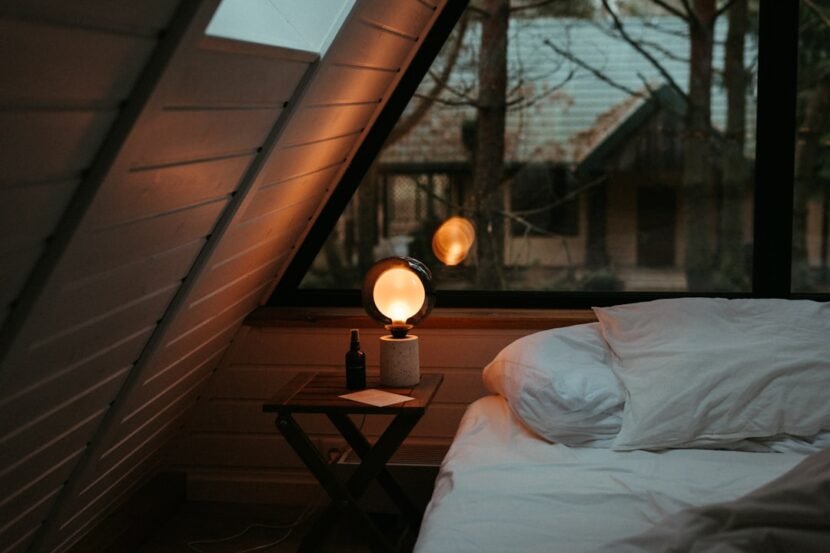
Prioritise bedside lamps over overhead lighting. Two matching bedside lamps (one each side of the bed) create symmetry and warm ambient light at the right height for reading. Add a floor lamp in the corner for general evening light, and LED strip lighting behind the headboard for a soft accent glow. Avoid a bright central overhead — use it only when getting dressed, and keep it on a dimmer if possible.
Small Living Room
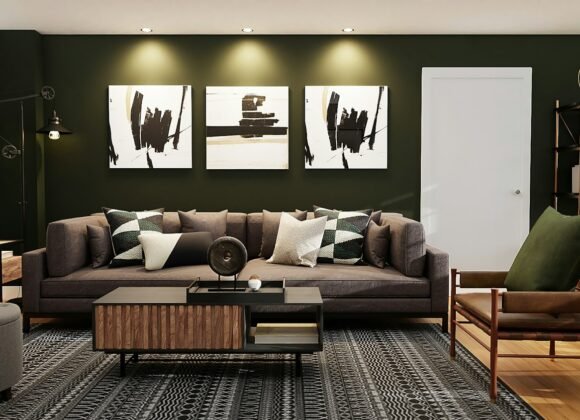
Layer three sources: a floor lamp in the corner, a table lamp on a side table or shelf, and LED strip lights behind the TV or along a bookshelf. Use the overhead only for cleaning or when maximum brightness is needed. Position lamps so they illuminate the room’s edges and corners — the areas that typically feel darkest and therefore smallest.
Small Kitchen or Hallway
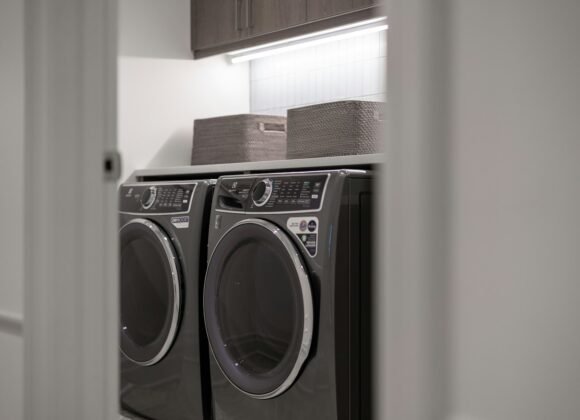
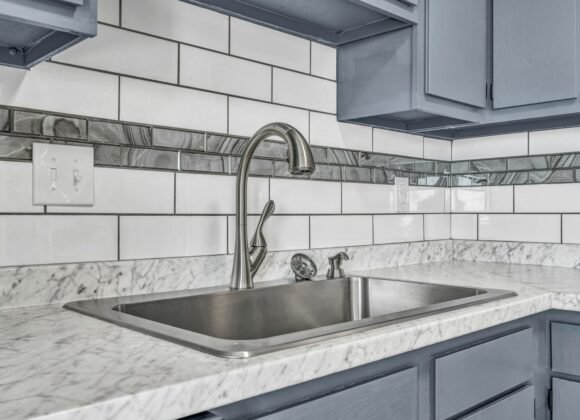
Under-cabinet LED strip lights (plug-in versions require no installation) brighten work surfaces and make a small kitchen feel much larger. In a narrow hallway, a wall-mounted sconce (plug-in version, no wiring needed) at eye level adds warmth that an overhead can’t provide. A mirror at the end of a hallway with a light source aimed at it visually doubles the space.
Light-Coloured Textiles That Reflect Rather Than Absorb
Dark textiles absorb light; light ones reflect it. In a small room, cream, white, and pale-toned curtains, bedding, and rugs bounce light around the room rather than deadening it. This doesn’t mean everything needs to be white — a warm greige or soft sage achieves the same light-reflecting effect while adding more character than plain white.
This is particularly impactful for rugs. A large light-toned rug in a small living room or bedroom reflects light upward from the floor, effectively adding a fourth light source that costs nothing beyond the rug itself.
LED Strip Lighting: The Affordable Accent Layer
LED strip lights applied behind a TV, under a bed frame, along the underside of shelves, or behind a headboard create a warm ambient glow for $10–$25. They’re adhesive-backed, fully renter-safe (peel off cleanly), and controlled by remote or app.
Behind a TV or along a bookshelf they create the visual effect of the room extending into that wall — a simple optical illusion that adds genuine depth. Behind a headboard they replace an expensive bedside lamp setup with a single, low-profile strip that illuminates the whole sleeping zone.
What to buy: Govee and Philips Hue both make quality LED strips. For budget options, generic warm-white strips on Amazon work perfectly for static, non-colour-changing use and cost under $12 for 5 metres.
How Room Colour Affects Lighting
Paint colour and lighting are inseparable in a small room. Light paint reflects light; dark paint absorbs it. A small room painted in a warm white or pale greige will feel significantly brighter under the same lighting setup than the same room painted in a dark navy or forest green.
If you can’t change the paint (renter, or simply don’t want to), compensate with more light sources and lighter textiles. A dark-walled small room needs two to three times the artificial light of a pale-walled one to achieve the same sense of openness.
Matte paint absorbs more light than satin or eggshell finishes. If you are painting, choose a satin or eggshell finish on walls — it reflects slightly more light than flat matte without looking shiny.
Seasonal Light Challenges
In winter months — particularly in northern climates — natural light disappears early and small rooms can feel oppressively dark by 4pm. A few targeted additions help:
- A SAD lamp or daylight bulb (6500K) used during working hours compensates for reduced sunlight and improves mood as well as perceived brightness
- Candles add flickering warm light that feels intentionally cosy rather than dimly lit — group three or five on a tray for a styled, cohesive look
- Fairy lights left up year-round on a shelf or around a mirror make winter evenings feel warm rather than dark — the “Christmas lights” stigma disappears when they’re warm white and tastefully placed
Budget Lighting Sources
You don’t need to spend much. Here’s where to find good lighting at low prices:
- IKEA: HEKTAR, RANARP, ARÖD, TERTIAL — all under $30, all warm-toned, all well-reviewed
- Facebook Marketplace / thrift stores: Floor lamps and table lamps for $5–$25; buy the lamp, replace the bulb
- Amazon: LED strip lights, fairy lights, smart bulbs — generic brands at a fraction of Philips Hue prices
- TJ Maxx / HomeGoods: Decorative table lamps and lamp shades at 30–50% below retail
- IKEA TRÅDFRI smart bulbs: ~$10 each — cheaper than Philips Hue and compatible with most smart home systems
What Success Looks Like
After applying these changes, your small room should have:
- ✅ Clean windows letting in maximum natural light
- ✅ Warm-white bulbs (2700K) in every socket
- ✅ At least two light sources beyond the overhead
- ✅ A floor lamp in the room’s darkest corner
- ✅ A mirror opposite the main light source
- ✅ Light-toned textiles on at least the rug and curtains
- ✅ LED accent lighting in at least one location
Tick all seven and your small room will feel noticeably larger, warmer, and more welcoming — regardless of its actual square footage.
Frequently Asked Questions
What type of lighting makes a small room look bigger?
Layered warm-white lighting from multiple sources at different heights. A floor lamp in the corner, a table lamp on a surface, and LED accent strips together create the depth and visual variation that makes a room feel larger. Avoid a single overhead bulb — it flattens the room and creates harsh shadows that emphasise its boundaries.
What colour temperature bulb is best for a small room?
2700–3000K (warm white). This range creates the cosy, welcoming quality of incandescent light while being fully LED-efficient. Avoid anything above 3500K in living spaces — cooler temperatures create a clinical feel that makes small rooms feel more contained, not less.
Does a mirror actually help with lighting in a small room?
Yes, significantly. A large mirror placed opposite a window can effectively double the natural light in a room by reflecting it back into the space. The same effect works with artificial light — a mirror opposite a floor lamp amplifies its output considerably. Position matters: aim the mirror at your best light source, not at a blank wall.
How many light sources does a small room need?
At minimum, three: one ambient source (overhead or central lamp), one task source (desk or reading lamp), and one accent source (floor lamp, fairy lights, or LED strip). In a bedroom, two bedside lamps count as one source each. More is generally better in a small room — the goal is to eliminate dark edges and corners, which is where the room feels smallest.
Is LED strip lighting worth it in a small room?
Yes — it’s one of the best value-per-dollar lighting additions for a small room. A $10–$25 warm-white LED strip behind a TV, under a bed frame, or along a shelf creates a soft ambient glow that makes the room feel larger and more considered. It’s also renter-safe (adhesive-backed, peels off cleanly) and requires no installation beyond plugging in.
Related reading: How to Make a Small Room Look Bigger on a Budget | How to Arrange Furniture in a Small Living Room