Bedrooms collect clutter faster than any other room in the house, and they do it quietly. A charger here, a stack of folded laundry there, three books you meant to read, a hair dryer that never quite makes it back into the cupboard. The best bedroom storage ideas that hide clutter beautifully are not about buying more plastic boxes. They are about giving every category of thing a closed, obvious home so the room reads as calm even on the days when life is not. This guide walks through the storage that actually works in a real bedroom, from the space under your bed to the surfaces you should deliberately leave empty.
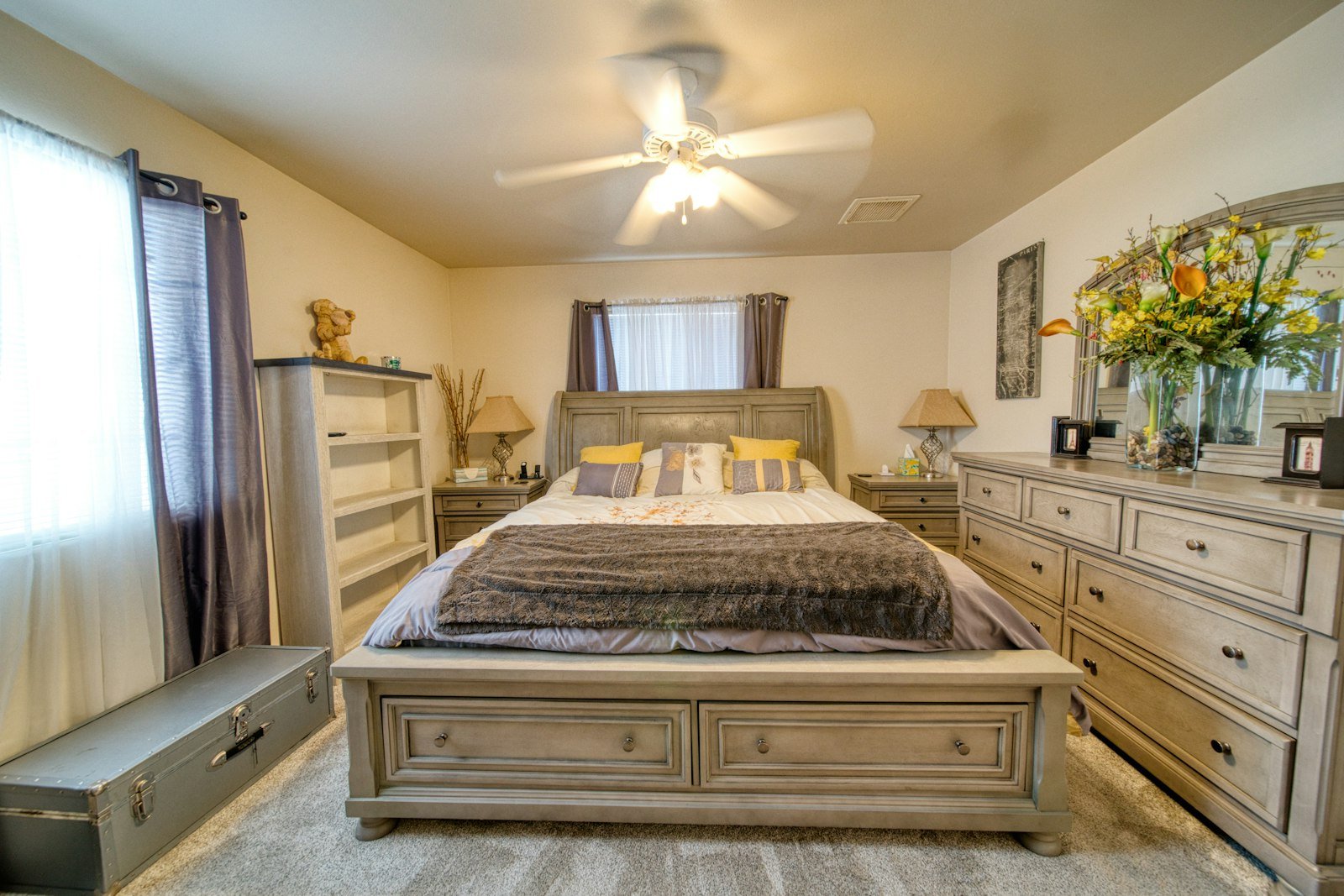
Decide What Actually Deserves Bedroom Storage First
Before adding a single basket, work out what genuinely belongs in the room. Most bedroom clutter is not bedroom clutter at all. It is things that migrated in and never left: paperwork, tools, gift bags, sports gear, holiday decorations, the box that the lamp came in. Storage cannot fix a volume problem, and buying containers for things that should live somewhere else is how bedrooms end up with a full wardrobe and a floor that is still covered.
Do a fast sort into four groups: things used daily, things used seasonally, things that belong in another room, and things that belong nowhere. Only the first two categories earn permanent bedroom storage. Daily items need the easiest access. Seasonal items can go somewhere deep and awkward, because you will only reach for them twice a year. This one decision determines every storage choice that follows.
Under the Bed Is the Biggest Wasted Zone in Most Bedrooms
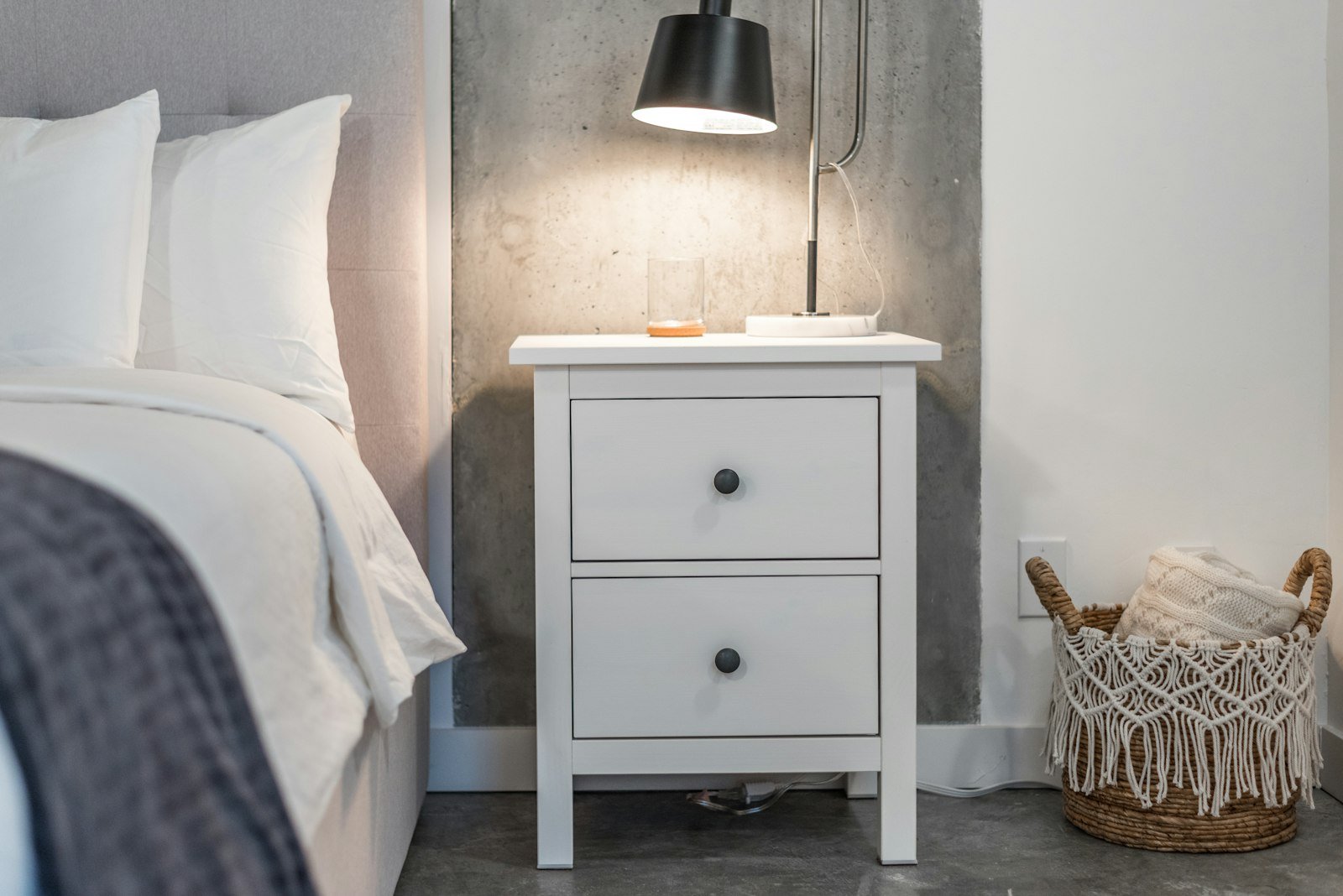
The floor under a standard double bed is roughly fourteen square feet of storage that most people use for dust and one lost sock. It is the single highest-value place to start, because it is already there and it costs almost nothing to activate.
Measure the Clearance Before You Buy Anything
Measure from the floor to the underside of the bed frame, then subtract half an inch so containers slide rather than scrape. Typical clearances run from five inches on a low platform bed to twelve inches or more on a divan. Boxes with wheels are worth the small extra cost because they let you pull things out without lifting the mattress or crawling.
What Belongs Under the Bed
- Out-of-season clothing in flat fabric boxes or vacuum bags, swapped twice a year.
- Spare bedding, duvets and pillows, which are bulky but light and rarely needed.
- Shoes you wear occasionally, in a shallow rolling tray rather than loose.
- Suitcases, which take almost no extra space once packed with the seasonal items above.
- Wrapping paper, gift bags and ribbon in one long flat box, because these are the classic homeless items.
What should not go under the bed: anything you need daily, anything fragile, and anything you are storing because you have not decided about it yet. Under-bed space is for genuine storage, not for deferred decisions.
Hide the Boxes With a Longer Bed Skirt
Even tidy storage boxes look like storage boxes. A bed skirt or valance that reaches the floor turns the whole zone invisible in one move, and costs less than most single storage containers. Choose one in the same tone as your bedding rather than a contrasting colour, so it reads as part of the bed rather than a separate layer.
Choose a Bed Frame That Does the Hiding For You
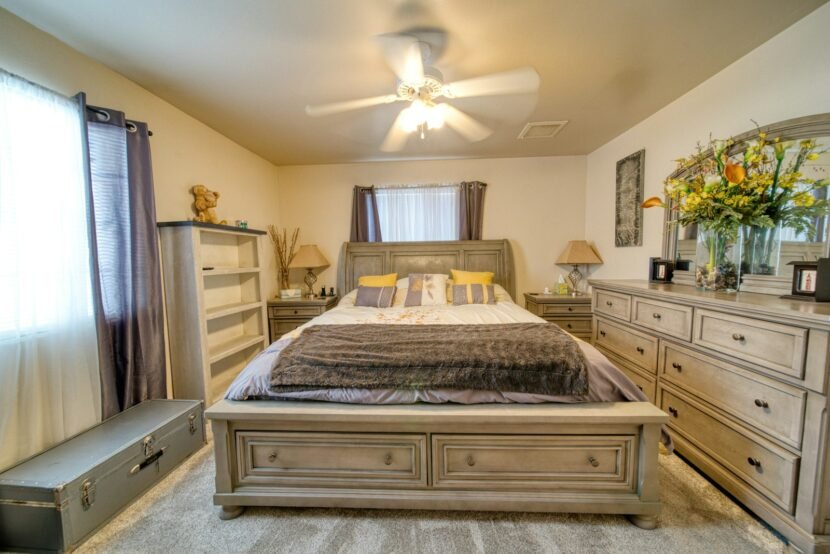
If you are replacing a bed anyway, a storage bed is the highest-impact upgrade available in a bedroom. Two formats dominate. Drawer beds have two to six built-in drawers in the base, which suit rooms with space to open a drawer on at least one side. Ottoman or lift-up beds hinge the entire mattress upward on gas struts, giving one enormous cavity and requiring no side clearance at all, which makes them the better choice in a genuinely tight room.
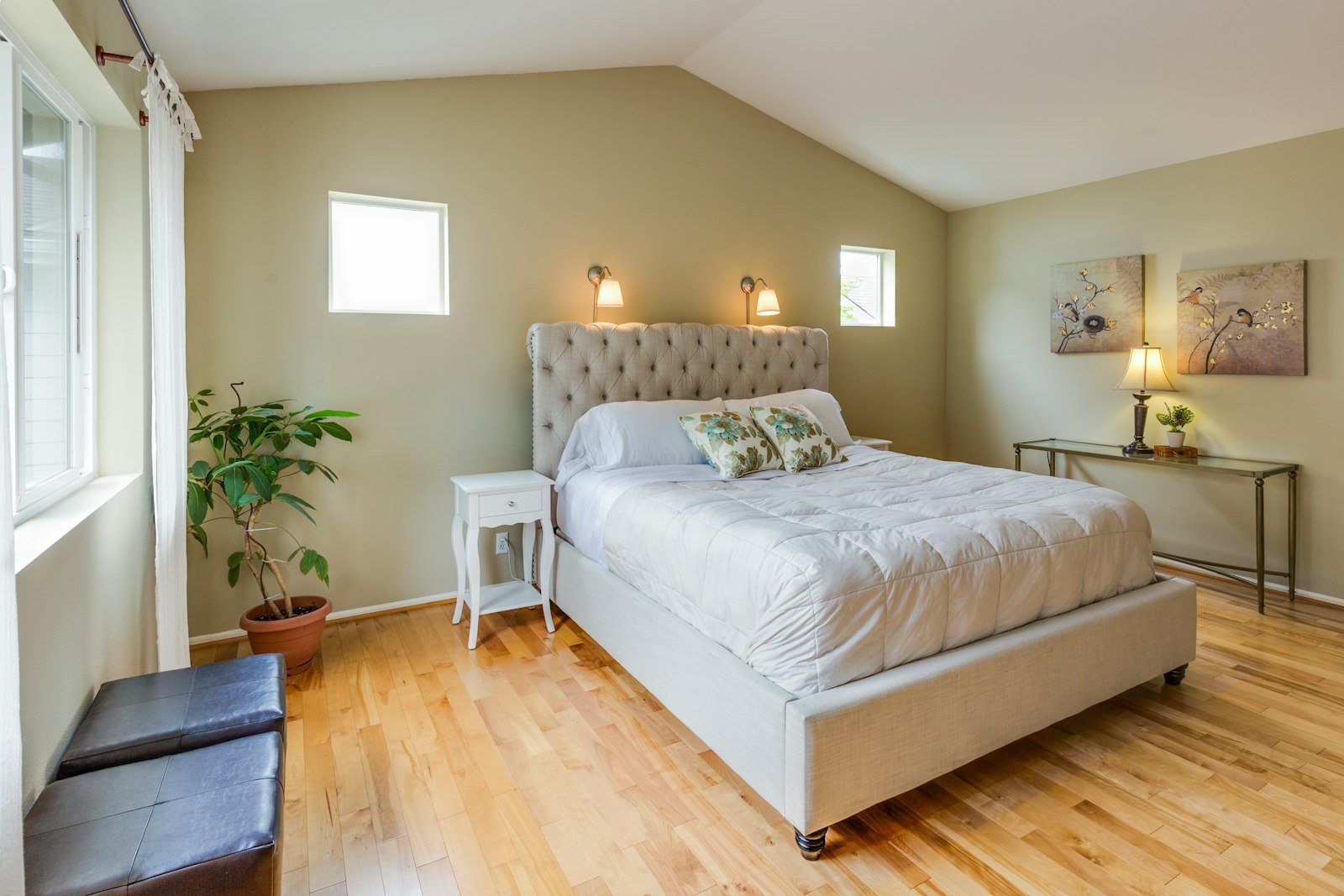
The honest trade-off is access. A lift-up bed holds more but you have to clear the bed to open it, so it is best for things you touch twice a year. Drawers hold less but open in a second, so they suit weekly items. If you have the choice, pick based on what you will actually store, not on capacity alone.
Swap Open Nightstands for Ones With Doors and Drawers
The nightstand is the single worst offender in a cluttered bedroom, because it collects the small, ugly, necessary things: charging cables, medication, lip balm, reading glasses, hair ties, receipts. An open-shelf nightstand puts all of that on display at eye level from the doorway.
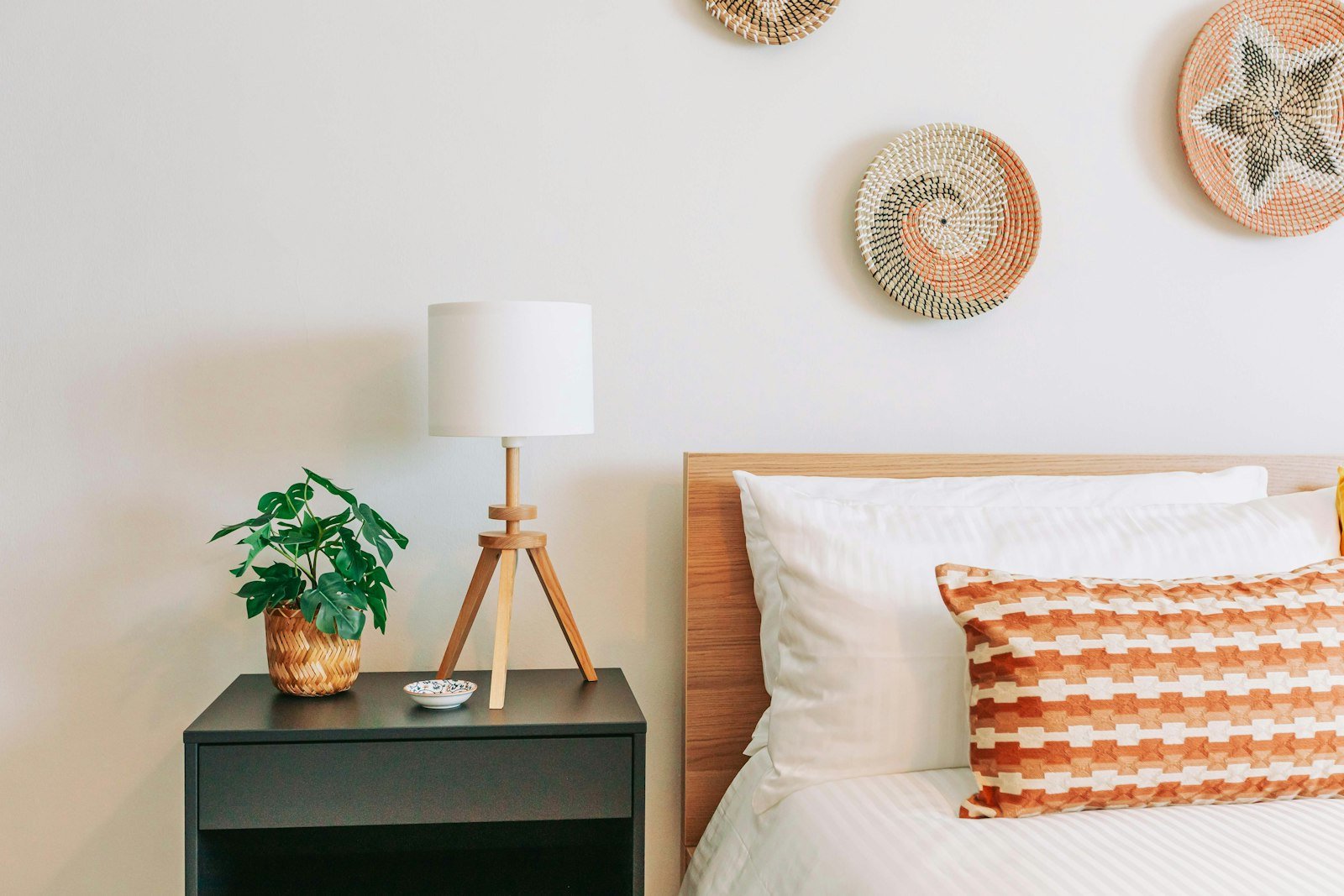
A nightstand with one drawer plus a closed cupboard below handles almost everything. Add a small drawer organiser inside so the contents do not become a jumble, and run a short charging cable through the back so phones charge inside the drawer rather than on top. Aim for a nightstand surface that holds three things at most: a lamp, a glass or a candle, and one book.
Use Vertical Space Without Making the Room Feel Busy
Walls are free storage, but bedrooms punish visual noise more than any other room, because you look at them while trying to fall asleep. The rule that keeps vertical storage restful is simple: closed above eye level, open only below it, and never both on the same wall.
- Floating shelves with a cupboard front above the door frame, for luggage and seasonal boxes.
- Wall-mounted bedside shelves in place of nightstands, which frees the floor and makes a small room feel larger.
- Slim hooks inside the wardrobe door for bags, belts and scarves instead of on the back of the bedroom door.
- A single tall, narrow cabinet rather than two wide low ones, because height draws the eye up and takes less floor.
If you want the room to feel bigger as well as tidier, the same logic that drives neutral and earthy bedroom schemes applies here: keep storage the same colour as the wall behind it and it visually disappears.
Make the Wardrobe Work Harder Before Buying More Furniture
Most wardrobes are badly used rather than too small. A single hanging rail with one shelf above it wastes the entire lower half of the space to a curtain of shirt tails. Fixing the interior is far cheaper than adding a chest of drawers to a room that has no room for one.
Three Changes That Roughly Double Wardrobe Capacity
- Add a second hanging rail below the first for shirts, jackets and folded trousers. Anything not full length only needs about forty inches of drop.
- Put matching fabric boxes on the top shelf, labelled on the front edge, for the things that currently sit loose up there.
- Add a shallow drawer unit or stacked baskets to the wardrobe floor for knitwear, so it stops being a shoe pile.
Use one style of hanger throughout. It sounds cosmetic, but slim matching hangers reclaim genuine rail space and make an open wardrobe look deliberate rather than chaotic, which matters if your wardrobe has no doors.
The Ottoman at the Foot of the Bed
A storage ottoman or blanket box at the end of the bed is one of the few pieces that solves a real problem while also finishing the room visually. It catches the two things that otherwise end up on the floor: extra blankets, and the clothes that are neither clean nor dirty. Give it a rule, such as blankets on the bottom and the day’s clothes on top, and it stops becoming a second laundry pile.
In a small room, a narrow bench with baskets underneath does the same job with less bulk. Either way, choose something you can sit on, because a piece with two functions earns its footprint twice over. The same logic runs through cozy small apartment decorating, where nothing gets floor space unless it does more than one job.
Hide the Small Stuff: Cables, Jewellery and Skincare
Large clutter is obvious and gets dealt with. Small clutter is what actually makes a bedroom feel messy, because it scatters across every flat surface. Three categories cause most of it.
- Cables and chargers. Use one small tray or box per bedside with a cable routed in from behind. Everything charges inside the box, out of sight.
- Jewellery and watches. A shallow lidded dish or a drawer insert with compartments beats a bowl, because a bowl becomes a tangle nobody wants to sort.
- Skincare and grooming. Keep only what you use nightly on display, and move the rest into a lidded caddy inside a drawer or the bathroom.
The principle underneath all three is containment. Small items look like clutter when loose and look intentional the moment they sit inside a defined container, even if the quantity is identical.
Leave One Surface Deliberately Empty
This is the least intuitive rule and the one that changes a room most. Pick one surface, usually a dresser top or a windowsill, and commit to keeping it completely clear apart from a single object. The empty surface gives the eye somewhere to rest, and it makes the rest of the storage read as controlled rather than merely full.
It also functions as an early warning system. When things start creeping onto the empty surface, something upstream has run out of space, and it is time to look at what needs editing rather than what needs another box.
The Ten Minute Reset That Keeps It Working
Storage systems fail on maintenance, not on design. A short nightly reset is what keeps a bedroom looking like the day you organised it. Ten minutes, in this order: clothes to the wardrobe, hamper or ottoman, surfaces cleared into their containers, anything belonging to another room carried out, bed straightened.
Twice a year, do the longer version: empty the under-bed boxes, swap the seasonal clothing, and be honest about anything you did not touch in the last twelve months. Rotating storage this way is the same seasonal habit that keeps seasonal apartment decor from turning into permanent accumulation.
Frequently Asked Questions
How do I add storage to a small bedroom with no floor space?
Go under the bed and up the walls. Under-bed rolling boxes plus a shelf above the door frame add meaningful capacity without using any floor at all, and wall-mounted bedside shelves free the space two nightstands would occupy.
Is a storage bed worth the extra cost?
In a room under about 120 square feet, usually yes, because it replaces a chest of drawers you have no room for. In a larger room with a spare wall, a chest of drawers is cheaper and easier to access.
What is the fastest way to make a cluttered bedroom look tidy?
Clear every flat surface into one box, make the bed, and put the box away to sort later. Surfaces and bedding account for most of the visual clutter, so dealing with those two things transforms the room in under five minutes.
Should bedroom storage be open or closed?
Closed, for almost everything. Bedrooms are for rest, and visible objects create low-level visual stimulation. Reserve open shelving for a small number of things you have chosen to display, and hide the functional items behind doors, drawers or fabric.
Bedroom storage that hides clutter beautifully comes down to three habits: give every category one closed home, keep at least one surface empty, and reset for ten minutes a night. Start with the space under your bed this week, since it costs the least and returns the most, then work outward from there.