A small kitchen is one of those spaces where organisation is not optional. Unlike a living room where a little imperfection can feel cosy, a disorganised small kitchen creates genuine daily friction: things you cannot find, counter space you cannot use, and the nagging feeling that you are fighting the room every time you cook.
We have organised a lot of small kitchens in apartments, and the transformation that happens with the right systems in place is genuinely dramatic. Here is what works.
The First Step: A Ruthless Clear-Out
Before any organisation system can work, you need to know what you are actually working with. Pull everything out of every cabinet and drawer. Throw away anything expired, donate anything you have not used in a year, and be honest about the gadgets gathering dust at the back.
Most small kitchens are not lacking storage. They are storing things they do not need. The clear-out is the organisation. Everything after it is refinement.
Kitchen Counter Organisation for Small Kitchens
The Counter Belongs to Appliances You Use Daily
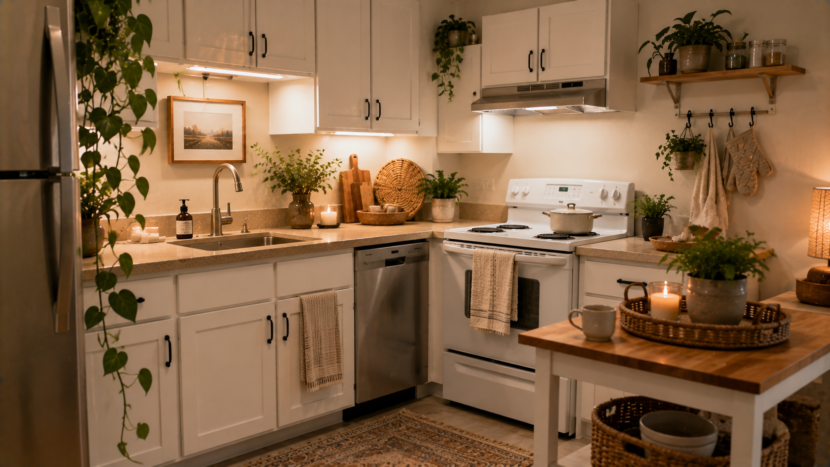
The rule we apply to kitchen counters is simple: only things used every day stay on the counter. The kettle, toaster, coffee maker, or whatever your daily appliances are. Everything else goes into a cabinet. A blender used twice a week lives in a cabinet. A stand mixer used monthly lives in a cabinet. Counter space in a small kitchen is premium and every unnecessary item on it makes the kitchen harder to use.
A Tray or Board to Group Items
Items grouped on a tray look organised even when they are slightly cluttered. A small wooden board or marble tray holding the kettle, a salt cellar, and a small plant takes the same space as those items scattered but looks ten times more intentional. Trays are one of the most impactful kitchen organisation tools.
Vertical Space on the Counter
A utensil holder, a small spice rack, or a tiered fruit stand uses vertical space rather than sprawling across the counter. Anything that lifts items off the horizontal surface and creates layers is a small-kitchen win.
Cabinet and Cupboard Organisation Ideas
Decant Dry Goods Into Matching Containers
This is the single most impactful cabinet organisation change available. Transferring pasta, rice, cereals, flour, sugar, and other dry goods from their original packaging into matching clear containers or glass jars does two things: it dramatically increases storage efficiency (packaging is wasteful of space) and it makes the cabinet look beautiful enough to leave the door open.
IKEA KORKEN glass jars (£1-3 each) and OXO POP containers are both excellent options. Label them with a label maker or simple paper labels. The result looks like a kitchen styling shoot and costs under £30 for a full set.
Stack and Layer With Shelf Risers
Standard kitchen cabinets are designed for full-height items but most of what we store is smaller than the full cabinet height. A shelf riser (£8-15 on Amazon) doubles the effective storage in any cabinet by creating a second level. Use them for plates, bowls, glasses, or canned goods. The space above short items is usually completely wasted without one.
Drawer Dividers for the Utensil Drawer
The utensil drawer in almost every kitchen is a jumbled mess. A simple bamboo drawer divider (£6-12) separates utensils, cutlery, and gadgets so everything is findable. This is a ten-minute task that saves genuine time every day.
The Corner Cabinet Problem
Corner cabinets are notoriously unusable. A lazy susan turntable (£10-20) placed inside a corner cabinet makes everything accessible with a single spin. This one purchase recovers enormous amounts of forgotten storage in almost every kitchen layout.
Under-Sink Organisation
Under the kitchen sink is usually dark, awkward, and poorly used. A two-tier sliding organiser or a tension-rod system transforms it. Spray bottles hang from a tension rod at the top (the kind that fits between the two sides of the cabinet), cleaning products group on a tiered shelf below, and a small bin or basket catches loose sponges and cloths.
See our dedicated guide to under-sink organisation ideas for more detailed approaches.
Wall and Vertical Kitchen Storage
Magnetic Knife Strip
A magnetic knife strip mounted on the wall takes knives off the counter and out of a block, freeing significant counter space and keeping knives accessible and in better condition. These cost £10-25 and install easily with two screws or strong adhesive mounting strips for renters.
Pegboard or Rail System
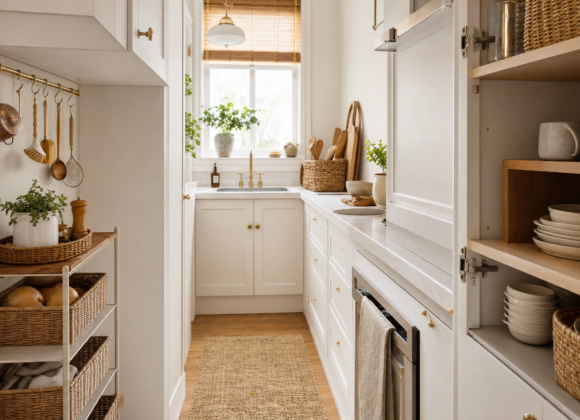
A kitchen pegboard or rail (like the IKEA KUNGSFORS stainless rail system) mounts on a wall above the counter and holds pots, pans, utensils, and spice tins on hooks and shelves. This moves items off the counter and out of overcrowded drawers and makes them more accessible during cooking. In a small kitchen, a pegboard can replace an entire cabinet’s worth of storage.
Floating Shelves for Display Storage
Open floating shelves in a kitchen pull double duty as storage and decor. Stack your prettiest crockery, group spices in small terracotta pots, add a small plant at the end of a shelf. The key is restraint: open shelves that are overcrowded look worse than closed cabinets. Keep them to two-thirds full maximum.
The Organisation Products Worth Buying
Products that consistently deliver the best results in small kitchens: IKEA KORKEN jars for dry goods (£1-3 each), OXO Good Grips POP containers for anything airtight (£5-15 each), a bamboo drawer divider (£8-12), shelf risers in the appropriate width (£8-15), a turntable/lazy susan (£10-20), a tension rod for under the sink (£3-5), and a magnetic knife strip (£10-25). Total investment for a complete small kitchen organisation overhaul: under £100.
For ideas that extend beyond the kitchen into other tight spaces, see our roundup of Amazon organisation products for small spaces and our small space storage ideas guide.
Making Your Small Kitchen Feel Bigger
Organisation is only part of the small kitchen equation. A few styling choices significantly affect how spacious the space feels: keep the colour palette consistent (matching containers, coordinating accessories), leave clear counter space wherever possible (a clear counter always reads larger), add one small plant for life and warmth, and use warm lighting if there is any flexibility in the kitchen’s light source.
Final Thoughts
A small kitchen that is well organised is genuinely more enjoyable to cook in than a large kitchen in chaos. The systems do not need to be complicated or expensive. Clear containers, drawer dividers, a lazy susan, and the discipline to return things to their place after use. That is the whole method.
Start with the counter. Clear it to only the daily essentials. Notice how different the kitchen feels. Then work through the cabinets one at a time.