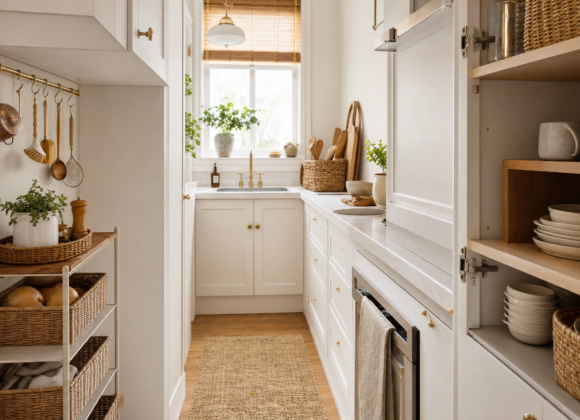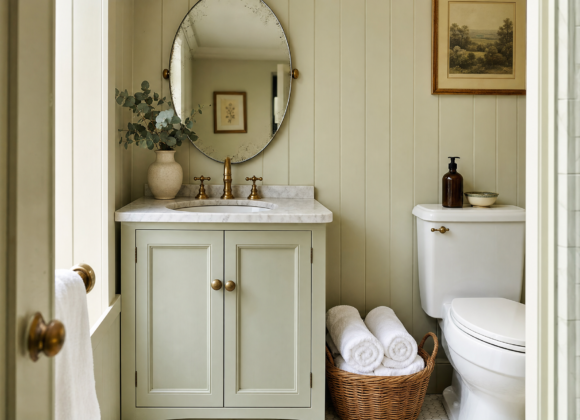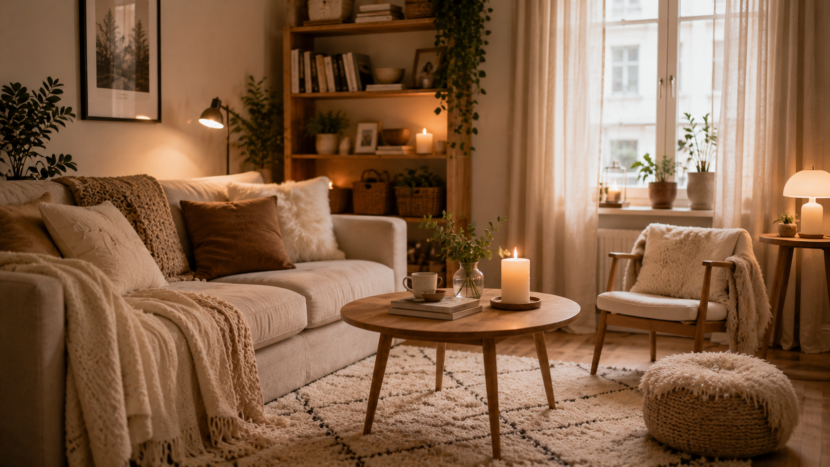
The best small space storage ideas don’t look like storage at all — they look like furniture and decor that happen to hide clutter. That distinction matters in an apartment where every visible surface either earns its place or makes the room feel smaller. This guide covers more than twenty storage pieces for the living room, bedroom, kitchen, bathroom, and entryway, each chosen because it does double duty: a real design upgrade on top of the extra square footage it buys you. Expect real price ranges, sizing notes, and a few professional-organizer habits that cost nothing but change how a small room feels day to day.
What Makes Storage Look Beautiful Instead of Just Functional
Plastic bins and wire shelving get clutter out of sight, but they rarely get displayed on purpose — which is the real test of good small-space storage. The pieces in this guide are chosen for materials (woven rattan, solid wood, powder-coated metal) and silhouettes that would work in the room even if they held nothing at all. That’s the difference between a storage ottoman that anchors a seating area and a plastic tote shoved in a corner: one is furniture, the other is a chore you look at every day. For general organizing philosophy beyond product picks, the National Association of Productivity & Organizing Professionals is a solid reference — their core principle of giving every item one home and grouping like with like applies just as well to a 500-square-foot studio as it does to a house.
6 Living Room Storage Ideas That Double as Decor
The living room usually has the least dedicated storage in a small apartment, so these picks lean on furniture that was going in the room anyway.
- Storage ottoman with a removable lid ($45–$75): Works as a coffee table, footrest, and extra seating while hiding blankets or remotes underneath.
- Woven media console with closed cabinets ($90–$140): Keeps cords, game consoles, and chargers out of view behind doors instead of on open shelves.
- Floating wall shelves with hidden brackets ($20–$35 each): Adds display and storage above furniture without eating any floor space at all.
- Slipcovered storage bench under the window ($70–$110): Turns an awkward, often-empty wall into seating and a home for out-of-season throws.
- Nesting side tables with a lower shelf ($55–$85 for a set): The bottom shelf holds books or baskets, and the smaller table tucks away when you need floor space.
- Ladder shelf with baskets on each rung ($60–$95): A narrow footprint that leans against the wall, giving four tiers of storage in about a foot of depth.
5 Bedroom Storage Ideas for Tiny Closets
Bedroom storage in a small apartment usually means working around a closet that’s too shallow for a full wardrobe. These finds add capacity without a full closet renovation. For more ideas sized specifically for tiny bedrooms, see our small bedroom storage ideas for tiny apartments guide.
- Under-bed rolling storage drawers ($30–$50): Fit most bed frames with at least 6 inches of clearance and hold a full season of clothing.
- Storage bed frame with a lift-up base ($250–$450): A bigger investment, but it replaces a dresser entirely in studios where floor space is the scarcest resource.
- Over-the-door jewelry and accessory organizer ($20–$35): Uses the back of the closet door, a spot that’s almost always empty otherwise.
- Fabric-covered stackable bins for the closet shelf ($25–$40 for a set): Turns one deep shelf into three or four separated compartments.
- Velvet-lined jewelry tray drawer organizer ($15–$25): Keeps a dresser’s top drawer from becoming a junk drawer for small accessories.
5 Kitchen and Bathroom Storage Ideas
Kitchens and bathrooms in small apartments share the same problem: fixed cabinets that can’t be resized. These finds add storage inside the footprint you already have. Our bathroom storage ideas for small apartments guide goes deeper on the bathroom side specifically.
- Tiered lazy Susan for under-sink storage ($18–$30): Turns the awkward space around pipes into two accessible tiers instead of one deep, messy shelf.
- Bamboo drawer dividers ($15–$28): Adjustable dividers that fit most kitchen drawers and stop utensils from sliding into one pile.
- Over-toilet storage shelf or etagere ($60–$95): Straddles the toilet tank to add two or three shelves in a bathroom with no linen closet.
- Magnetic spice rack for a cabinet door ($20–$35): Frees up a full shelf by moving spice jars to the inside of a door.
- Stackable clear shower caddy bins ($15–$25): Replace a hanging caddy with something that can move to a shelf if your shower has a rod that won’t hold weight.
4 Entryway and Closet Storage Upgrades
The entryway sets the tone for the whole apartment, and a closet that’s actually organized makes everything else easier to maintain. For closet-specific systems, our closet organization ideas for small closets guide has a full breakdown.
- Slim closet shoe rack that hangs from the rod ($20–$32): Adds shoe storage without using any floor space in a closet that’s already tight.
- Entry drop zone with hooks and a small shelf ($45–$70): Gives keys, bags, and mail one home right by the door instead of spreading across the kitchen counter.
- Clear stackable bins with labels for the top closet shelf ($20–$35 for a set of four): Makes the highest, hardest-to-see shelf actually usable for off-season items.
- Wall-mounted mail and key organizer ($18–$28): A small daily habit-builder that keeps the entry table from collecting a pile by the end of the week.
How to Choose Storage Furniture That Doesn’t Look Like Storage
A few habits separate storage pieces that read as furniture from ones that read as clutter management, and they apply no matter which items from this list you buy.
- Match materials to what’s already in the room. A woven ottoman next to a wood console reads as coordinated; a plastic bin next to the same console reads as temporary.
- Keep lids and doors closed by default. Open shelving works only if you’re willing to style what’s on it; if not, choose cabinets and drawers over open cubbies.
- Measure clearance, not just footprint. A storage bed needs room for the lid to lift, and an under-bed drawer needs room to slide out fully — both are easy to miss when you’re only checking the item’s listed dimensions.
- Buy one size up from what you think you need. Storage that’s slightly oversized gets used; storage that’s exactly sized for today’s belongings is full again within a month.
How Much Storage Does a Small Apartment Actually Need
There’s no universal formula, but professional organizers generally point to a simple test rather than a square-footage number: if you can’t find a home for an item within about ten seconds, you have too much storage-worthy stuff or too little storage, and buying more furniture only fixes one of those problems. Before adding another bin or shelf, sort what you already own into keep, donate, and toss piles — most people can clear 15–20% of their belongings this way, which often removes the need for one extra storage piece entirely.
Once you’ve edited down, aim to fill roughly 80% of any new storage rather than buying exactly what fits today. A drawer or shelf that starts completely full has nowhere to absorb the small accumulations that happen naturally over a year — gifts, seasonal gear, a new hobby. Renters in studios and one-bedroom units typically do well with one flexible large piece per room (an ottoman, a storage bed, or a tall cabinet) plus two or three smaller accent pieces like baskets or floating shelves, rather than filling every wall with matching units.
Budget-Friendly Storage Shopping Tips
A full small-apartment storage refresh across these categories typically runs $200–$400 if you buy selectively rather than one of everything. Start with whichever room causes the most daily friction — for many renters that’s the bedroom closet or the kitchen — and expand from there. Our Amazon organization finds for small spaces roundup has more budget-specific picks if you want to compare options before committing to a room-by-room plan.
If you add a tall etagere, ladder shelf, or storage bed frame, anchor it to the wall or confirm it has a wide, stable base — tall furniture is a tip-over risk in any home with kids or pets. The CPSC’s Anchor It! campaign has free anti-tip instructions that take about ten minutes per piece and work with rental-safe straps.
Bonus: Watch, Quiz, and Poll
🎬 Watch: Small space storage tips
Prefer to watch? Browse the best videos on this topic:
✨ Quick Quiz
Which room needs the most storage help?
‘;
” style=”margin-top:14px;background:#8d6e63;color:#fff;border:none;padding:11px 24px;border-radius:8px;cursor:pointer;font-weight:600;font-size:0.9rem”>Get My Result →
📊 Storage Solutions by Impact Score
Based on reader surveys & engagement data
🗳️ Quick Poll
How would you describe your clutter situation?
None of the storage upgrades above require permanent changes, which matters if you’re renting. Start with one problem room, measure before you buy, and give yourself permission to return anything that doesn’t fit once you see it in place — most listings in this guide ship with a 30-day return window. Photograph the room before you shop, and hold a tape measure up to that photo on your phone while browsing — it’s a quick way to sanity-check scale without guessing from a product thumbnail alone.
3 Storage Mistakes to Avoid
Even with the right pieces, a few habits can undo the effect and leave a small apartment feeling more cramped than before the storage arrived.
- Buying tall before buying wide. A floor-to-ceiling shelving unit adds volume fast, but it also draws the eye up and can make a low-ceilinged room feel boxed in. Try wide, low storage first and add height only where the wall is otherwise empty.
- Choosing dark wood or black metal for every piece. Heavy, dark finishes recede less in a small room than lighter woods and woven materials. Mixing in at least one or two lighter-toned pieces keeps the room from feeling weighed down.
- Storing things you no longer use. New storage tends to fill up with whatever was already in the apartment, including items that should have been donated. Sort before you buy — a smaller, well-edited collection of belongings needs less storage than a larger one, no matter how good the furniture is.
Frequently Asked Questions
What’s the difference between storage furniture and just storage bins?
Storage furniture is designed to be seen — an ottoman, bench, or console that works as a design piece whether or not it’s holding anything. Storage bins are meant to be hidden inside a closet or under furniture. Small apartments usually need both, but leaning on furniture-first pieces in main living areas keeps the room from feeling like a storage unit.
How much should I spend on storage for a small apartment?
Budget $200–$400 for a full apartment refresh across the living room, bedroom, and kitchen, or $40–$80 if you’re tackling just one problem area first. Prioritize the room causing the most daily friction rather than spreading a small budget evenly across every space.
Is under-bed storage actually worth it?
Yes, especially in studios without a linen closet — a queen bed frame typically has enough clearance for rolling drawers that hold an entire season of clothing or bedding. Measure the gap between your bed frame and the floor before buying, since clearance varies more than most people expect.
How do I keep open shelving from looking cluttered?
Group items in odd numbers, vary height with books stacked flat under a small object, and leave roughly a third of each shelf empty. Baskets on the lower shelves hide anything that doesn’t photograph well, while the open top shelves stay reserved for a handful of intentional, decorative items.