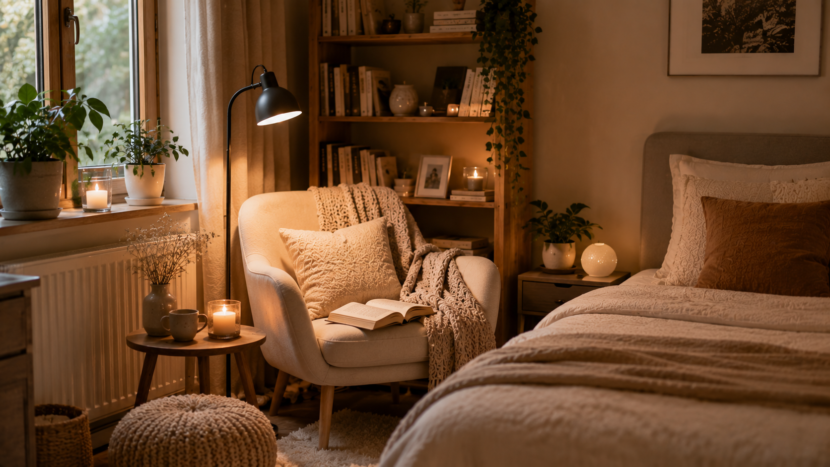
A bedroom corner dedicated to reading or relaxing is one of those small luxuries that genuinely changes how you feel in your home. Not a home cinema, not a dedicated study. Just a chair, good light, and somewhere to put a drink. In a small apartment bedroom, carving out this kind of intentional corner is both more achievable and more impactful than most people realise.
We have created reading corners in genuinely tiny spaces and the effect on how the room feels, and on how much we actually read, is remarkable. Here is how to do it well.
Why a Dedicated Corner Matters
The purpose of a bedroom reading corner is partly practical and partly psychological. Practically, it gives you a place to sit other than the bed, which is better for your sleep because you are not training your brain to associate the bed with wakefulness and activity. Psychologically, a designated space for a pleasant activity makes you more likely to do it. A chair in the corner with a lamp says: this is a place for rest and pleasure. And that invitation changes behaviour.
Choosing the Right Chair
Size in Small Bedrooms
In a small bedroom, the chair cannot be too large or it dominates the room and eliminates the sense of space. Aim for a chair with a footprint of roughly 70x70cm or smaller. Accent chairs in this size are widely available from IKEA, H&M Home, and budget retailers. Avoid wide armchairs or club chairs in spaces under 12 square metres.
What to Look For
Comfort is the main criterion. A chair you do not actually want to sit in for an hour of reading is a decoration, not a reading corner. Look for decent back support and seat depth of at least 48cm. Beyond that, choose a fabric and colour that integrates with the bedroom palette. For warm, earthy bedrooms we love boucle, linen, or a warm velvet in mushroom, dusty rose, or sage.
Where to Find Good Chairs Affordably
Facebook Marketplace and Gumtree are consistently the best sources for quality accent chairs at fraction of retail price. A solid armchair that retailed for £300 often appears second-hand for £40-80. Look for natural fabrics and solid frames. A chair that needs a new cushion cover (£10-15 on Amazon) is often a much better buy than a cheap new chair.
Lighting the Reading Corner
Lighting is the most important element in a reading corner and the one most often underestimated. Overhead lighting is too harsh and too diffuse for reading. You need directed, warm light at approximately reading-height or slightly above.
Floor Lamp
A floor lamp positioned beside and slightly behind the chair provides ideal reading light without glare. An arc floor lamp that reaches over the chair is the classic configuration and works beautifully in corners. Budget arc lamps from IKEA (HEKTARE, £45) or Amazon are good options. Use a warm white bulb (2700K) for the most comfortable and flattering light.
Wall-Mounted Reading Light
If floor space is very limited, a wall-mounted plug-in swing-arm sconce positioned at head height when seated provides excellent directed reading light without any floor footprint. For renters, plug-in sconces with adhesive mounting avoid drilling entirely. These typically cost £20-40 and are one of the most underused lighting solutions in small bedrooms.
For more bedroom lighting ideas, see our full guide on cozy lighting for warm atmospheres.
The Side Table
A reading corner needs somewhere to put a book, a drink, and a small plant. A side table at arm height (approximately 55-65cm) next to the chair is the standard solution. In tight spaces, a small drum table, a stool, or even a simple wooden crate achieves the same thing at minimal footprint and cost.
A C-shaped side table that slides under the chair arm is particularly useful in very small spaces as it takes no additional floor space beyond the chair itself. These cost £20-40 on Amazon and are genuinely clever pieces of furniture for small bedrooms.
Making the Corner Feel Complete
A Bookshelf or Book Stack
Books near the reading corner make the space feel intentional rather than incidental. A small two or three shelf bookcase positioned beside or behind the chair creates a mini library atmosphere. A stack of books on the floor beside the chair works if space does not allow a case. Either way, the presence of books tells the room what this corner is for.
A Throw and Cushion
A throw over the arm of the chair and a cushion for lumbar support make the corner genuinely inviting. Choose natural fibres in warm tones that coordinate with the bedroom palette. A chunky knit throw in oatmeal or a linen throw in dusty rose over a neutral chair is a simple combination that always looks beautiful and always feels welcoming.
One Plant
A trailing plant on the bookshelf or a small potted plant on the side table adds life and organic warmth. Snake plants, pothos, and ZZ plants all tolerate the lower light conditions of bedroom corners. A plant in a terracotta pot costs under £10 and gives the corner a softness and life that no accessory can replicate.
A Small Rug
A small rug under the chair and side table defines the corner as its own zone within the bedroom. This does not need to match the main bedroom rug exactly; a complementary texture or slightly different tone creates a deliberate layering that looks curated. A 120x170cm rug is usually sufficient for a single chair reading corner.
Reading Corners in Very Small Bedrooms
In a bedroom under 10 square metres, a full armchair may not be feasible. Alternatives that achieve the same effect in less space: a large floor cushion or meditation cushion in a corner with a wall-mounted light and a small tray on the floor for a drink, or a narrow window seat with a cushion and a wall-mounted sconce. Both create the psychological effect of a dedicated restful space without the footprint of a chair.
For more ideas on making small bedrooms work harder and feel better, see our small bedroom decor ideas guide and our roundup of bedroom organisation ideas.
Final Thoughts
A bedroom reading corner is one of the most impactful changes you can make to a small apartment bedroom. It costs relatively little, takes up less space than most people fear, and genuinely changes the texture of your daily life. A place to sit, good light, a book within reach, and something warm to drink.
That is all it takes to make a bedroom feel like somewhere you actually want to spend time in.