Seasonal decorating has a spending problem. Every September there is pressure to buy a themed collection that lives in a box for eleven months and looks slightly sad by the second year.
Fall does not need that. It is the easiest season to decorate for, because what actually makes a room feel autumnal is warmth, texture and lower light — and all three are things you can adjust with what you already own.
Most of what follows costs nothing. The rest is under $10 an item. The point is a bedroom that feels like October without a single plastic pumpkin.
What Makes a Room Feel Like Fall
Not orange. Orange is the shortcut, and it is why a lot of seasonal decorating looks cheap.
Three things do the real work:
- Texture, more of it. Summer rooms are smooth — cotton, linen, bare surfaces. Fall rooms are rough: knit, wool, corduroy, boucle, wood, dried plant material. Adding texture reads as seasonal even with no colour change at all.
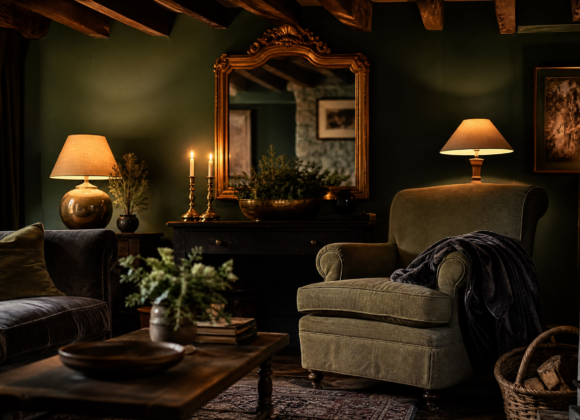
- Lower, warmer light. Days get shorter and light gets more golden. A room lit low and warm feels like autumn regardless of what is on the walls.
- Visible weight. Heavier fabrics, more layers, things that look like they would be warm to touch. This is why a folded knit throw signals the season more effectively than a decorative gourd.
Get those three and you can skip seasonal decor entirely. Everything below is an application of them.
Layer the Bed, Do Not Replace It
The bed is most of a bedroom’s visual weight, so it is where the season is set. You do not need new bedding — you need a different arrangement of what you have.
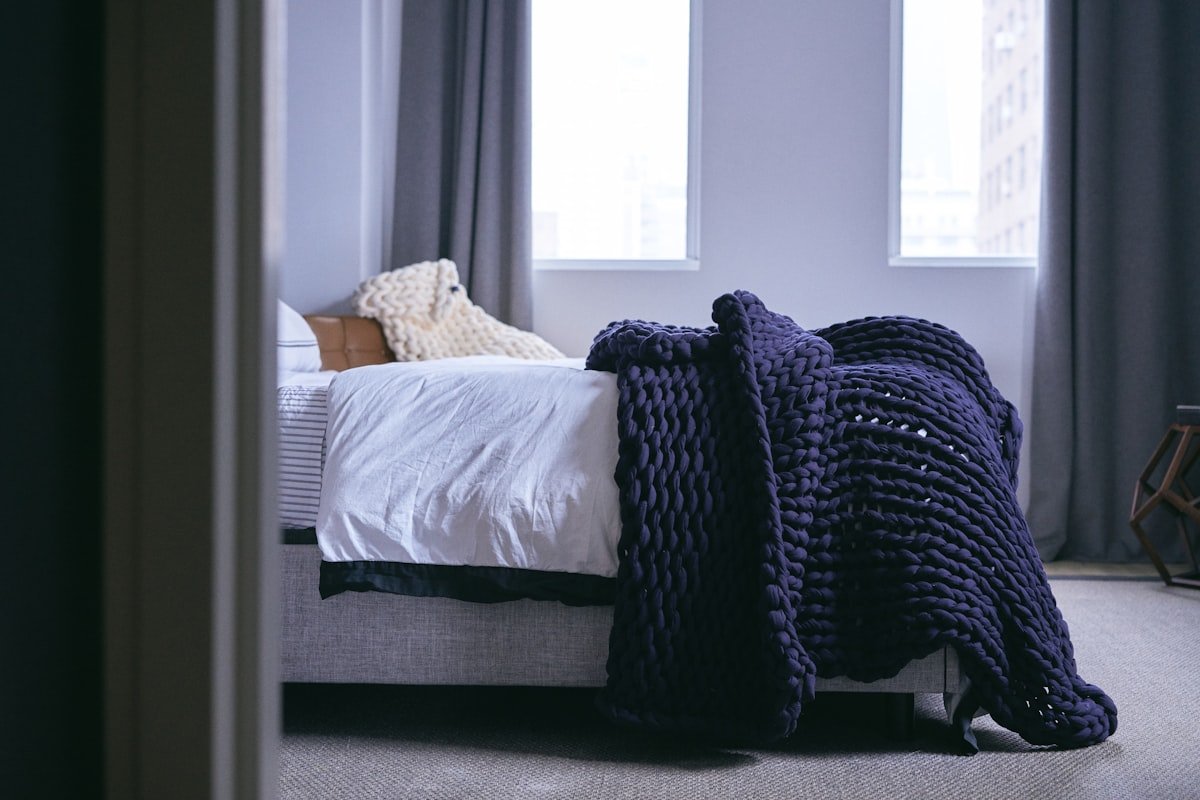
The three-layer method
Keep the summer duvet. Add:
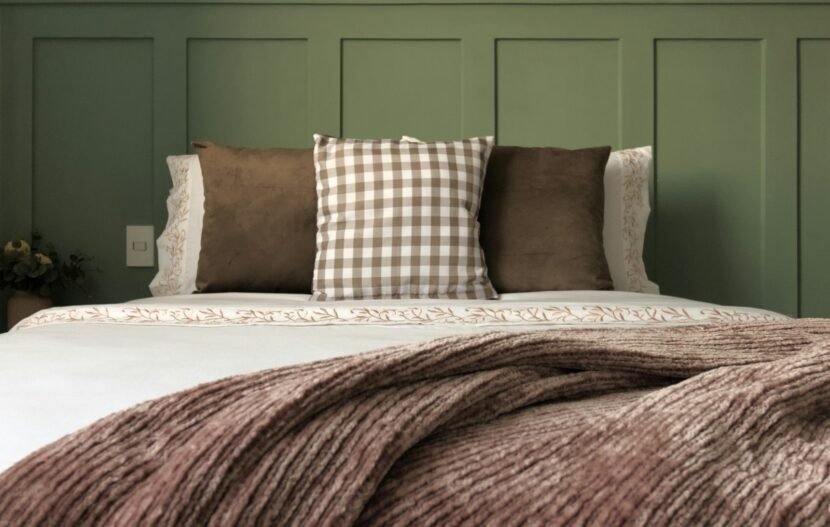
- A folded blanket across the lower third of the bed. Knit, waffle, or wool. This one move does more than anything else on the list.
- Two extra cushions in a different texture from the bedding. Not a different pattern — a different surface. Corduroy, chunky knit, velvet.
- One heavier throw over a corner or the end. Draped rather than folded, so it looks used rather than styled.
If you own a blanket and two cushions, this costs nothing. If you do not, thrift shops in September are full of knit blankets for $5 to $8, which is when to buy them.
Swap the sheets to something warmer
Flannel or brushed cotton sheets are the most genuinely seasonal upgrade available, because they change how the bed feels rather than just how it looks. A set runs $30 to $45, and unlike decorative purchases it is a thing you use every night for four months.
If that is not in budget: wash and use the heaviest sheets you already own, and add the blanket layer instead.
Rotate the palette, do not buy it
Most people already own something in a fall-adjacent colour — rust, olive, mustard, brown, deep green, cream. Pull those out of the closet and cupboard and bring them into the bedroom. A folded olive blanket you already have will do the job that a new $40 one would.
A Palette That Is Not Orange
Autumn colour works better when it is drawn from late-season landscape rather than Halloween packaging.
Pick three, maximum:
- Base neutrals: cream, oatmeal, warm grey, taupe
- Mid tones: rust, terracotta, clay, camel, olive
- Depths: deep green, plum, chocolate, dark teal
The combination that works in almost any bedroom: a cream or oatmeal base, one rust or camel mid-tone, and one deep accent. Warm, seasonal, and it does not look like a themed display.
Bright orange and black together is Halloween, not fall. It reads as costume rather than decor, and it dates the room to a two-week window. If you want Halloween, there is a section for that further down that does not require repainting your palette.
Light Is the Whole Season
Days get shorter, and how you handle that determines whether the room feels cosy or grim. This is the highest-impact and cheapest category.
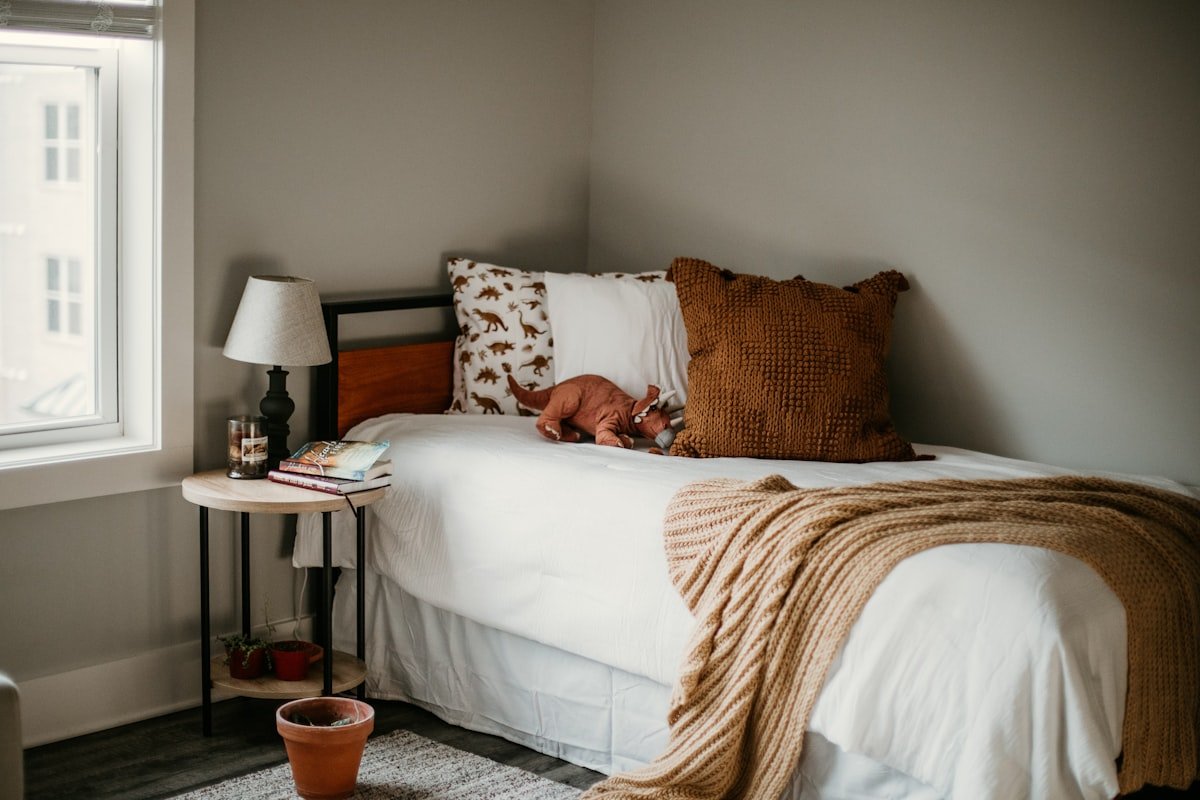
Warm the bulbs
2700K, or 2400K if you can find it. If your bedroom is currently lit at 4000K, changing this single thing will do more for the seasonal feel than every other idea here combined. Bulbs are $3.
Get the light low
Summer light comes from above. Autumn light — the kind that feels right — comes from low down. Move lamps to lower surfaces. Put one on the floor in a corner. Use a bedside lamp instead of the overhead, permanently.
Three low, warm light sources in a bedroom is the entire aesthetic. It costs whatever bulbs cost.
Candles, safely
Real candles are the classic move and are banned in most student housing and many rentals. Flameless LED candles have improved considerably and the flickering ones are convincing at a distance. A pack of six is around $12 and there is no fire risk or deposit issue.
Group them in odd numbers at varying heights — three or five, not four. It reads as intentional rather than arranged.
Curtains, heavier
If you have heavier curtains stored, hang them. If not, lining existing thin curtains with a cheap blackout panel clipped behind ($15) both blocks the early dark and makes the window look substantial.
Free Decor, Genuinely
The best fall decor is outside and costs nothing. It also looks considerably better than most of what is sold as fall decor.
Branches
Bare or leaf-bearing branches in a tall vase, jug or bottle. Free, sculptural, and lasts months once dry. Cut at an angle, strip anything below the waterline, and use them dry rather than in water — they last far longer.
Take fallen branches rather than cutting from living trees, and check local rules if you are foraging on public land.
Dried grasses and seed heads
Pampas, wheat, teasel, hydrangea heads. Roadside and field margins in September and October are full of these. Hang upside down in a dry spot for a week and they last years.
This is the single most effective free decor there is — a bundle of dried grasses in a jug is the entire fall aesthetic for zero dollars.
Pressed leaves
Collect, press between heavy books for two weeks, then either frame them or string them along a shelf edge. Framed pressed leaves look genuinely good and cost the price of the frame.
Pine cones and acorns
Bake at low heat for 30 minutes on foil to kill anything living in them before bringing them indoors. Then in a bowl, and that is it.
Firewood and logs
A few split logs stacked in a corner or a basket. Sounds odd, works well — it is texture and visible weight, which is exactly what the season is made of.
Under-$10 Swaps
If you are buying anything, these give the most per dollar:
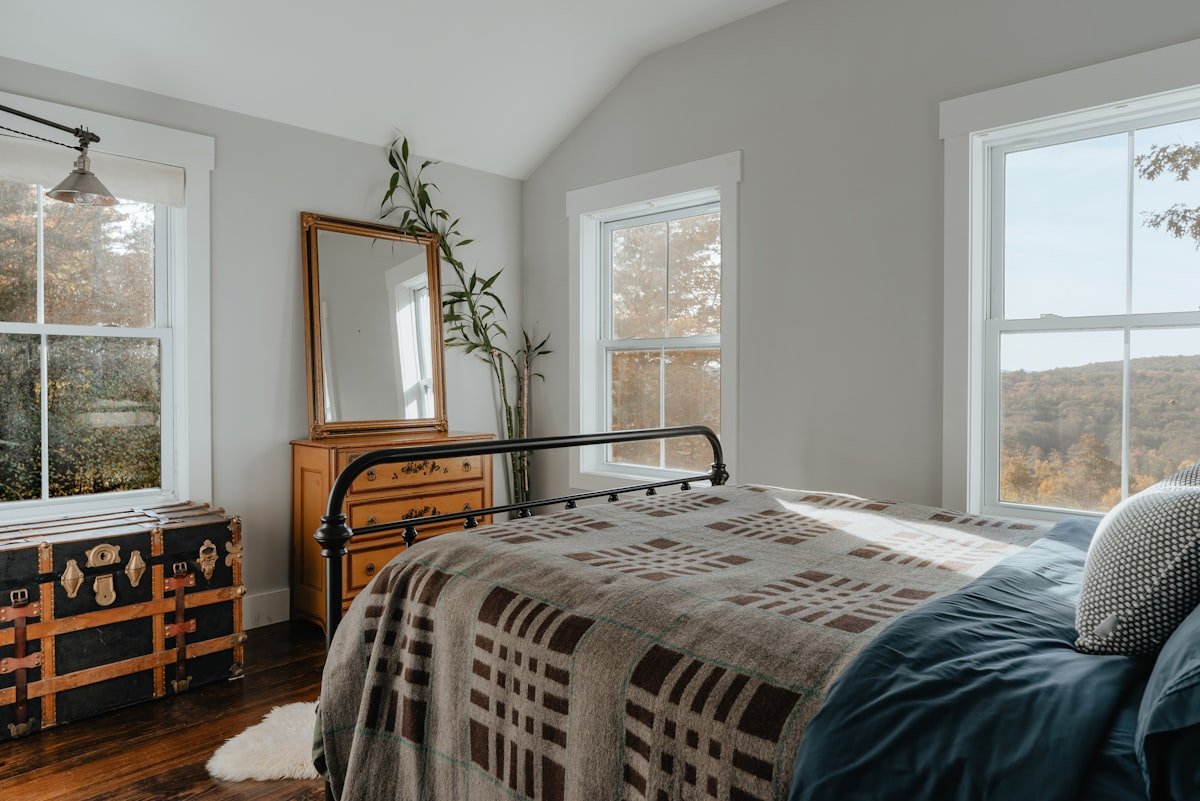
- Thrifted knit blanket — $5 to $8 in September, the highest-value seasonal purchase available
- Two cushion covers in a textured fabric — $8 to $12 the pair, and they store flat
- Warm bulbs — $3 each
- LED candle pack — $12 for six
- A jug or vase from a charity shop for branches — $3 to $5
- Dried orange slices — made in your own oven from one orange, free-ish, and they smell right
- A small basket for blanket storage — $8, and it is texture as well as function
Cushion covers are the item to prioritise if you are buying one thing. Covers rather than whole cushions means you swap them seasonally for the cost of fabric and store them in a drawer.
Two DIYs Worth the Time
Most seasonal DIY is not worth it. These two are.
Dried orange garland
Slice oranges thin, bake at the lowest oven setting for two to three hours turning occasionally, then thread on twine with a few cinnamon sticks. Costs one bag of oranges, looks better than anything comparable that is sold, and the room smells right for a week while they dry.
Fabric-wrapped canvas in a fall colour
A half-yard of textured fabric in rust or olive, wrapped around a cheap canvas or stiff cardboard and secured at the back. Large-scale seasonal wall art for under $10, swappable in December, and it stores flat.
Scent, Which Is Half of It
Seasonal feeling is more olfactory than people account for. It is also the cheapest category here.
Simmer pot — orange peel, cinnamon sticks, cloves, a little water, on the lowest heat for an hour. Scents an entire apartment for the cost of kitchen scraps, and it is the most convincing autumn smell there is.
Cinnamon sticks in a bowl — passive, lasts weeks, costs $3.
Cedar or pine offcuts — free from anywhere doing woodwork, and the scent lasts months.
Where candles or wax warmers are not permitted, these are the workarounds that actually smell like something rather than like fragrance oil.
Halloween Without Committing to It
The problem with Halloween decor is that it is unmistakably Halloween, which means it is wrong on November 1st and you have spent money on a two-week room.
The fix is to build a fall room and add three removable Halloween things on top:
- Black taper candles — LED or real. Read as Halloween in October and as moody-elegant in November. The best dual-purpose item there is.
- Deep plum or black textiles — a throw or cushion cover in plum works all autumn and skews Halloween when paired with the candles.
- One statement piece. A single well-chosen object — an antique-looking mirror, a dried floral arrangement in dark tones, one good print — rather than a scatter of small themed items.
Then on November 1st you remove one or two things rather than dismantling the room. The plum stays, the candles stay, and the room quietly stops being Halloween.
Where housing rules prohibit adhesives and open flame — which is most student accommodation — LED candles and freestanding objects handle nearly all of this.
Rolling Into Winter
Built well, a fall bedroom becomes a winter bedroom by subtraction rather than replacement.
What stays: all the textiles, the warm low lighting, the dried grasses and branches, the neutral base.
What goes: pumpkins, anything orange-dominant, Halloween-specific items.
What gets added in December: evergreen clippings in the same vase the branches were in, and something metallic or reflective. That is the entire transition, and it costs almost nothing if the autumn version was built out of texture rather than theme.
This is the argument for avoiding orange. A rust-and-cream room with knit textures works from September to February. An orange-and-black room works for three weeks.
What It Costs
| Item | Cost | Notes |
|---|---|---|
| Warm bulbs (x3) | $9 | Highest impact per dollar |
| Thrifted knit blanket | $7 | September charity shops |
| Cushion covers (x2) | $10 | Covers, not cushions — store flat |
| LED candles (x6) | $12 | Rental and dorm safe |
| Thrifted jug or vase | $4 | For branches |
| Branches, grasses, cones | $0 | Foraged |
| Dried orange garland | $4 | One bag of oranges |
| Simmer pot ingredients | $3 | Cinnamon and cloves |
| Fabric for canvas art | $8 | Half yard |
| Blanket basket | $8 | Texture and storage |
| Flannel sheet set | $38 | Optional — biggest comfort gain |
| Total with sheets | $103 | |
| Total without | $65 |
Working only with things you already own plus foraged material, a convincing version of this costs the $9 of bulbs.
Frequently Asked Questions
How do I decorate my bedroom for fall on a budget?
Layer textiles you already own rather than buying new — a folded knit blanket, two textured cushions, one draped throw. Switch bulbs to 2700K and move lamps lower. Add foraged branches or dried grasses in a jug. The whole thing can be done for under $10 if you already own a blanket.
What colours are best for a fall bedroom?
A cream or oatmeal base, one warm mid-tone like rust, terracotta or camel, and one deep accent such as forest green or plum. Three colours maximum. Avoid bright orange and black together, which reads as Halloween costume rather than autumn.
How can I make my room feel cosy in autumn?
Warm low lighting is most of it — 2700K bulbs, lamps at low heights, never the overhead. Then add texture in layers: knit, wool, corduroy. Heavier curtains and a rug if the floor is hard. Warmth and texture read as cosy far more than any specific decoration.
What can I use for free fall decor?
Fallen branches, dried grasses and seed heads, pressed leaves, pine cones and acorns. Bake cones and acorns at low heat for 30 minutes before bringing them indoors. Dried grasses in a jug are the single most effective free seasonal decoration.
How do I decorate for Halloween without it looking cheap?
Build a fall room first, then add no more than three removable Halloween elements — black taper candles, a plum or black textile, and one statement object. Skip the scatter of small plastic items. On November 1st you remove two things instead of redecorating.
Can I do fall decor in a dorm room?
Yes, and it suits dorms well because it is textile-based. LED candles instead of real ones, freestanding branches instead of anything hung, and layered bedding. Nothing here needs adhesive or fixings, which is what most housing contracts restrict.
When should I start decorating for fall?
Early to mid September for most climates, once the light noticeably shifts. It is also when charity shops receive their seasonal stock and before retail markups peak, so it is the cheapest point to buy blankets and textiles.
The Short Version
Warm the bulbs, drop the lamps lower. Add a folded knit blanket and two textured cushions to what is already on the bed. Put foraged branches or dried grasses in a jug. Pick cream, rust and one deep colour, and skip orange.
That is a fall bedroom, and if you own a blanket it costs nine dollars.