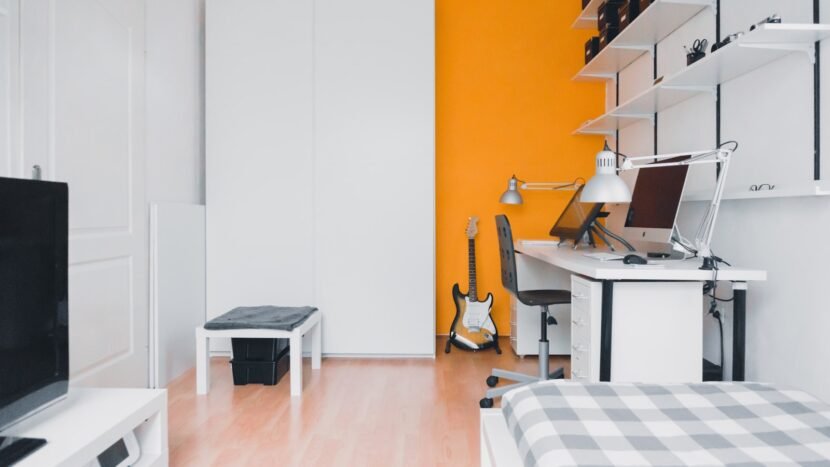
A dorm room is a small bedroom with worse walls and more rules. That is the entire problem, and it is a smaller problem than it feels like in August.
The room comes with cinder block you cannot paint, furniture you cannot remove, overhead fluorescent light, and a roommate whose taste you may not know yet. Within those limits there is still a great deal of room to work — most dorm rooms look like dorm rooms because of decisions that were free to make differently, not because of the constraints.
This covers standard doubles, lofted setups and triples, all of it damage-free and packable at the end of the year.
Work Out What You Cannot Change First
Before buying anything, get the actual dimensions. Most housing offices publish room specs, and the numbers matter more than the photos.
Find out:
- Mattress size. Twin XL in the vast majority of dorms. Standard twin sheets will not fit, and this is the most common move-in day mistake there is.
- Whether the bed lofts and to what heights. Some are fixed, some adjust, some need a work order.
- What the walls are. Cinder block takes adhesive poorly. Painted drywall takes it well. This changes your entire wall plan.
- Window dimensions and whether there is an existing blind.
- What is banned. Most schools prohibit candles, halogen lamps, extension cords without surge protection, and anything with an exposed heating element. Check before buying string lights — some campuses restrict those too.
Then coordinate with your roommate. Not the whole aesthetic — just who is bringing the rug, the fridge, the fan and the mirror, so you do not arrive with two of each and room for neither.
Bedding Does 80% of the Work
The bed is the largest object in the room and usually the only surface you fully control. It sets the tone for everything else, so it is where the budget goes.
Solid over printed, always
Printed twin XL sets are what every dorm has. They also fight with everything else you bring and look dated by spring.
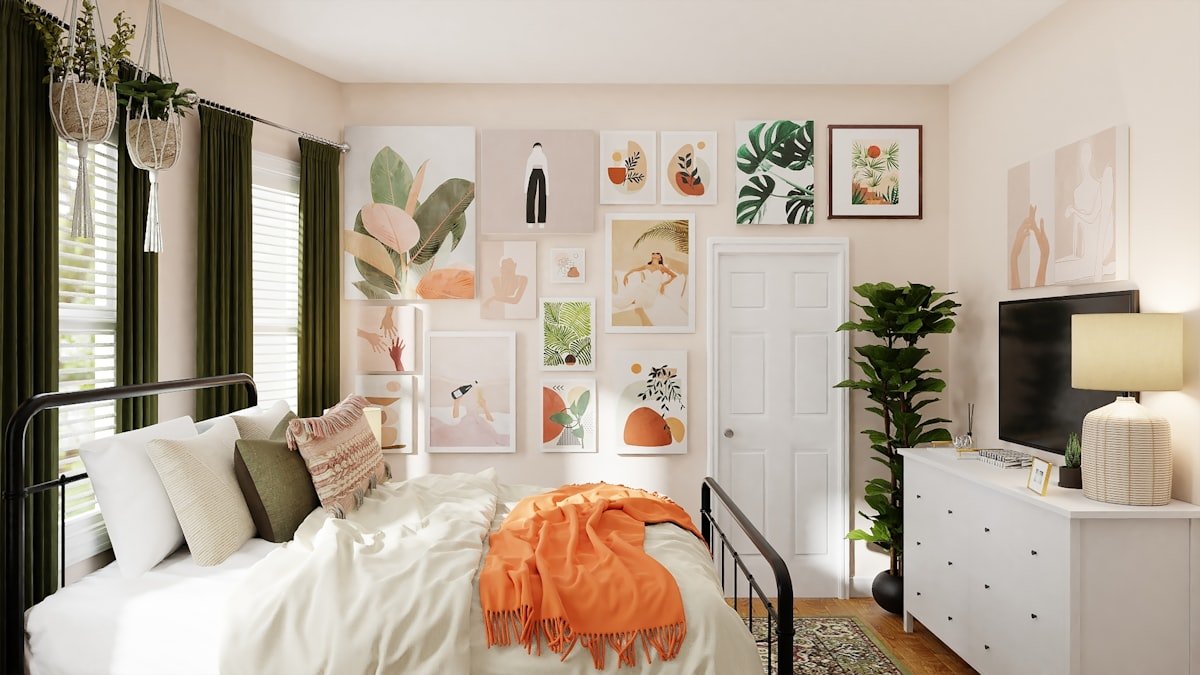
A solid duvet cover in one considered colour is the single highest-impact purchase in the room. Layer it with pillowcases in a related tone and one textured throw. That three-layer structure is what makes hotel beds look the way they do, and it costs the same as a patterned set.
Layers, specifically
The formula that reliably works in a small room:
- Fitted sheet — light neutral
- Duvet in a solid mid-tone, not white (white shows everything in a dorm)
- Two sleeping pillows, plus one or two decorative in a contrasting texture
- One chunky knit or waffle throw, folded across the lower third
Four layers, three colours. This reads as considered from the doorway, which is the only angle most people ever see your room from.
The mattress topper is not optional
Dorm mattresses are vinyl-wrapped and thin. A 2 to 3 inch memory foam topper is $40 to $60 and is the difference between sleeping well for a year and not. It also raises the bed height slightly, which helps the layered bedding sit properly.
Lofted Beds Are an Opportunity
Lofting feels like a compromise. It is closer to a free extra room, and the students who use the space underneath properly end up with the best rooms on the floor.
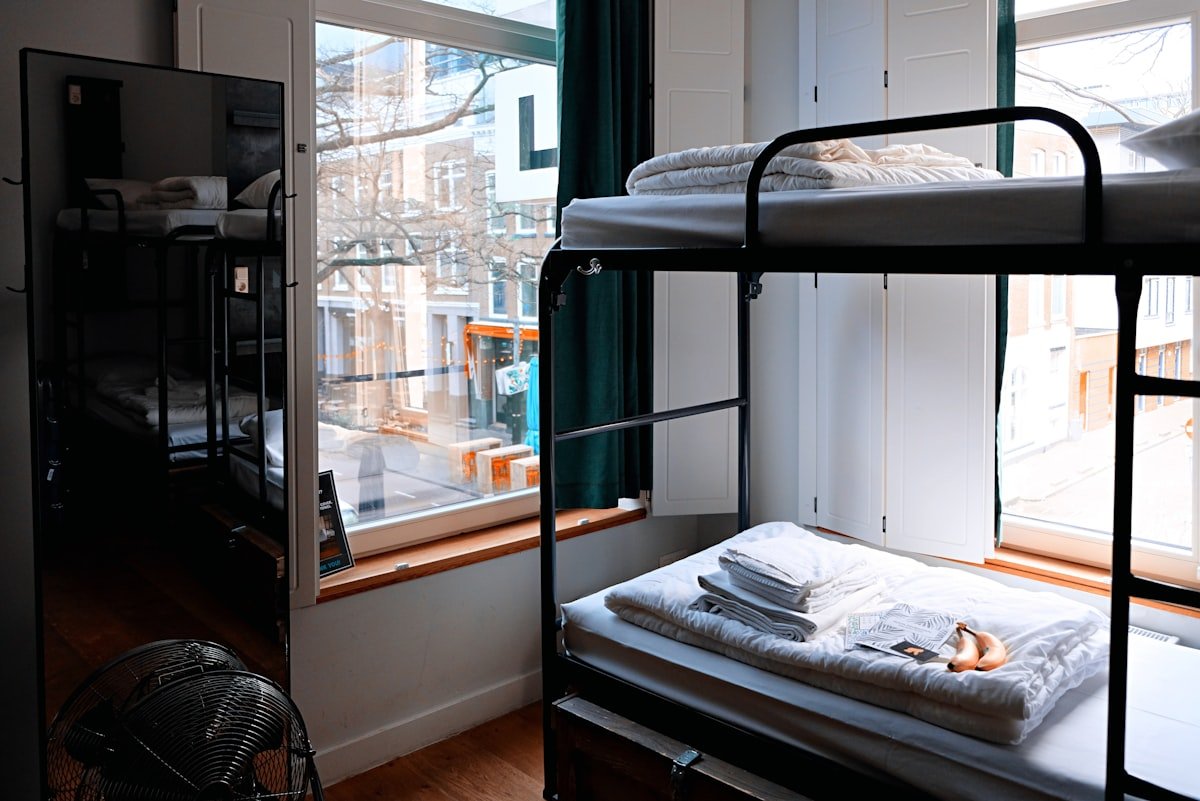
What to put under there
Pick one, do it properly:
- Desk zone. The default. Works well if you add dedicated task lighting, because under a loft is always darker than the rest of the room.
- Lounge zone. A floor cushion setup, small futon or bean bag with a rug. This is the one that makes a room feel like an apartment instead of a bedroom, and it gives you somewhere to sit that is not your bed.
- Storage wall. Best in triples or rooms with no closet to speak of. Drawer units and hanging rails, fronted with a curtain.
The mistake is using it for all three at once. Under-loft space is roughly 6ft x 3ft — it does one job well and three jobs badly.
Curtain the loft
A tension rod across the front of the loft with a curtain panel turns the under-bed area into an enclosed nook. In a shared room this is the closest thing to privacy available, and it hides whatever is under there when it is untidy.
Around $25 for the rod and panel. It is the highest-return dorm modification there is.
Light it separately
Under-loft space gets no ceiling light. A clip lamp on the bed frame plus a small desk lamp handles it. Warm bulbs, 2700K — the same rule as anywhere else.
Safety, briefly
Do not modify the loft structure yourself. No self-cut risers, no stacking anything under the legs, no removing the guardrail. Lofted bed falls are a real and recurring campus injury. If the height or stability is wrong, file a work order — housing will adjust it, and it costs nothing.
Lighting: the Fastest Fix
Fluorescent overhead light is the loudest dorm signal in the room. It is also free to stop using.
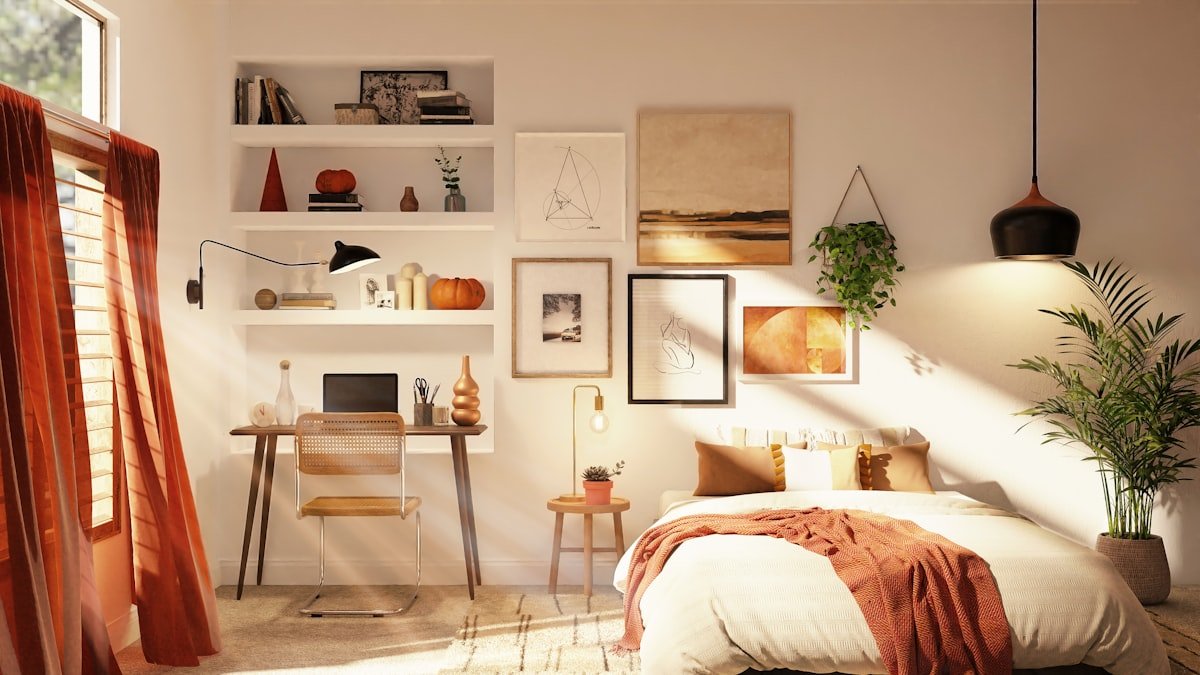
Three lamps at three heights, all 2700K:
- A desk lamp, ideally clip-on to save surface area
- A small table or shelf lamp at seated height
- Something low and ambient — a floor lamp if space allows, or a second clip light aimed at the wall
Then never touch the ceiling switch again. Bulbs are $3 each and this is genuinely the biggest visible change available for under $15.
On string lights: they are fine, but they are also the most recognisable dorm cliché there is. If you use them, run them along one line — a shelf edge, the loft rail — rather than draped across the ceiling. Warm white, not multicolour. And check they are permitted; a lot of housing contracts restrict them.
Walls Without Damage Charges
Wall damage is where dorm deposits disappear. Cinder block is the specific challenge — adhesive strips fail on it because the surface is porous and uneven.
On cinder block
- Cinder block hooks — the wire ones that clip over the mortar ridges. Zero adhesive, zero damage, hold surprisingly well.
- Poster putty for lightweight paper. Test on a corner; it can lift painted block in older buildings.
- Tension rods across alcoves and window recesses for hanging plants or fabric.
- Leaning art on the desk or dresser instead of hanging it.
On painted drywall
Adhesive strips work well. Buy above the weight rating, and remove by pulling the tab straight down slowly — pulling outward is what takes the paint with it.
What to hang
One larger piece beats a scatter of small ones in a room this size. A fabric wall hanging, a large-format print, or a tapestry hung taut and square — the crooked draped tapestry is the specific look worth avoiding.
Photo grids are common and read young. If you want photos, put them in a few matching frames rather than taping loose prints to the wall.
Triple Rooms Need a Different Plan
Triples are usually doubles with a third bed added, which means the furniture arithmetic does not work and someone always loses.
Zone rather than divide
Trying to split a triple into three equal territories fails — the room is not shaped for it. What works better is giving each person one clearly personal zone (bed plus one storage unit plus one surface) and treating the remaining floor as genuinely shared.
Rugs are the cheapest zoning tool. A small rug under each bed area visually assigns the space without any physical barrier.
Go vertical, aggressively
Triples have the same floor area as a double and 50% more stuff. Everything possible goes up:
- All three beds lofted if the furniture allows — this is the single biggest gain
- Over-door organisers on every available door
- Stacked drawer units rather than wide ones
- Hanging shelves on the closet rail to double closet capacity
Curtains for privacy
Bed curtains matter more in a triple than anywhere else. A tension rod and panel around each bunk gives each person somewhere to be alone, which in a three-person room is the thing in shortest supply.
Agree the palette
Three people decorating independently in one small room is how triples end up chaotic. Agree two shared colours before anyone buys anything; individual bedding can vary within that. It sounds fussy and it is the difference between a coordinated room and a jumble.
Storage That Actually Fits
Dorm storage is a volume problem, not an organisation problem. The strategies that work:
- Under-bed, on risers. Bed risers ($20) plus flat rolling bins is the highest-capacity storage in the room by a wide margin. Even unlofted beds gain 8 to 12 inches of usable height.
- Over-door everything. Shoes, toiletries, snacks, chargers. Doors are unused vertical surface.
- Closet doubling. A hanging rail extender or a set of hanging fabric shelves converts dead vertical closet space into usable space.
- Drawer dividers. Dorm drawers are deep and shapeless. Dividers or small bins inside them are the difference between a drawer and a pit.
- Seasonal off-site. If you can leave winter clothes at home over the first semester, do. Half the storage problem is storing things you will not touch for four months.
DIY Worth Doing
Most dorm DIY is more effort than it is worth. These four are not:
Fabric-wrapped canvas art
A yard of fabric you like, stretched over a cheap canvas or a piece of cardboard, stapled or taped at the back. Large-scale wall art for under $12, in exactly your colours. This is the best value DIY in the room.
Photo ledge from a floating shelf
One narrow shelf, several leaned frames. Rearrangeable, one fixing instead of six, and it reads as a curated shelf rather than a photo collage.
Painted storage bins
Cheap plastic bins in one coat of spray paint (done outside, before move-in) become storage that matches your palette instead of shouting the retailer’s brand colour. Around $5 a bin.
No-sew cushion covers
Fabric, folded envelope-style around a cheap cushion insert, secured with fabric tape or a few stitches. Custom textiles for a few dollars, and you can change them mid-year.
What It Costs
| Item | Cost | Priority |
|---|---|---|
| Mattress topper (2–3in memory foam) | $50 | Essential |
| Twin XL sheet set | $30 | Essential |
| Solid duvet cover + insert | $60 | Essential |
| Warm bulbs + 2 lamps | $50 | Do this first |
| Bed risers | $20 | High |
| Under-bed rolling bins (x3) | $35 | High |
| Loft curtain + tension rod | $25 | High (if lofted) |
| Small rug | $40 | Medium |
| Over-door organiser | $18 | Medium |
| Throw + decorative cushions | $45 | Medium |
| Cinder block hooks / adhesive strips | $15 | Medium |
| DIY fabric canvas art | $12 | Lower |
| Drawer dividers | $15 | Lower |
| Total | $415 |
Splitting the rug, fridge, fan and mirror with a roommate takes a meaningful chunk off that. The $50 of lighting at the top does more visible work than anything below it.
Move-In Day Order of Operations
- Photograph every wall, the furniture and the floor before unpacking. This is your damage-charge defence in May.
- Decide bed height and file the loft work order immediately — the queue gets long fast.
- Make the bed completely, including layers. The room feels manageable the moment one thing is finished.
- Set up lighting and stop using the ceiling fixture.
- Storage next — risers, bins, over-door units.
- Walls last, once you know what the room actually looks like in use.
Do not buy decor before move-in beyond bedding and lighting. Rooms are never the shape the photos suggested.
Frequently Asked Questions
How do I make my dorm room not look like a dorm?
Stop using the overhead light and use three warm lamps instead, layer solid-colour bedding rather than a printed set, and hang one large piece of wall art instead of several small ones. Those three changes cost under $120 combined and do most of the work.
What size are dorm beds?
Twin XL in most schools — 38 x 80 inches, five inches longer than a standard twin. Standard twin sheets will not fit. Confirm with your housing office before buying, as a minority of dorms use standard twin.
Are dorm room string lights allowed?
It varies by school. Many permit LED string lights but prohibit incandescent ones, and some ban them entirely. Check your housing contract before buying. Where permitted, running them in one clean line looks better than draping them across the ceiling.
How do I decorate a lofted dorm bed?
Curtain the front with a tension rod for privacy, add dedicated clip lighting since the area gets no ceiling light, and commit the space underneath to one purpose — desk, lounge or storage. Never modify the loft structure yourself; file a work order instead.
How do three people share a dorm room?
Loft all three beds if possible, give each person one defined zone rather than splitting the room in thirds, use bed curtains for privacy, and agree two shared colours before anyone buys decor. Vertical storage is essential — a triple has a double’s floor area and half again as much stuff.
How do I hang things on cinder block walls?
Cinder block hooks that clip over the mortar ridges hold well with no adhesive or damage. Adhesive strips generally fail on block because the surface is porous. Poster putty works for lightweight paper but should be tested on a hidden corner first.
What should I not bring to a dorm?
Candles, halogen lamps, anything with an exposed heating element, and extension cords without surge protection are banned nearly everywhere. Beyond the rules: a full-size printer, more than a week of clothes for the season, and any decor bought before you have seen the room.
The Short Version
Three warm lamps, ceiling light off. Solid bedding in layers, not a printed set. One large piece on the wall instead of six small. Everything possible lifted off the floor. Under the loft, one purpose only.
The constraints are real, but the room looking like a dorm is mostly optional — and the fixes that matter most are the cheapest ones on the list.