The short version
Modern cottagecore keeps the warmth, materials and softness of cottage style but applies minimalist discipline to how much of it appears at once. Same oak, linen, ceramic and dried botanicals — fewer of them, better spaced, in a tighter palette. It suits new builds and rentals with flat walls and square rooms, where full cottagecore can look like a costume the architecture is not wearing.
What modern cottagecore actually is
Traditional cottagecore is additive. It layers pattern on pattern, fills shelves, and treats abundance as the point. That works beautifully in a room with beams, uneven plaster and small windows.
Put the same approach in a new-build flat with flat white walls and a square ceiling, and it reads as decoration applied to a surface rather than a room that grew that way.
Modern cottagecore solves this by keeping the materials and dropping the density:
| Traditional cottagecore | Modern cottagecore | |
|---|---|---|
| Pattern | Several florals layered | One pattern, or none; texture instead |
| Surfaces | Filled and layered | One or two groups, lots of empty space |
| Palette | Wide and warm | Three colours, tightly held |
| Furniture | Antique, curved, mismatched | Simple lines in warm materials |
| Feeling | Storybook | Calm, but not cold |
The three-item rule
The most useful constraint in this style: no surface holds more than three groups, and one of them must have height.
A console table gets a lamp, a small stack of books, and a ceramic vase. Not a lamp, books, a vase, a tray, a candle, a bowl and a small framed print. The materials in both versions are identical. Only the count changes, and the count is what separates the two styles.
If you find that hard, remove one thing and wait a week before deciding whether to put it back. It usually stays off.
The palette that bridges both
Modern cottagecore lives on three colours plus wood:
- Warm white on walls. Not brilliant white, not grey-white. Something with a hint of yellow or red in the base.
- Oatmeal or natural linen for the largest soft surfaces — sofa, curtains, bedding.
- One quiet accent. Pale sage, soft clay or muted blue-green. One. Not three.
- Warm oak as the structural material throughout.
The mistake that turns this style twee is a second and third accent colour. Held to one, it reads deliberate. At three it reads like a nursery.
Our guide to warm neutral living room ideas on a budget covers building this palette cheaply, and earthy interior design goes deeper on the material side.
The oak and linen combination
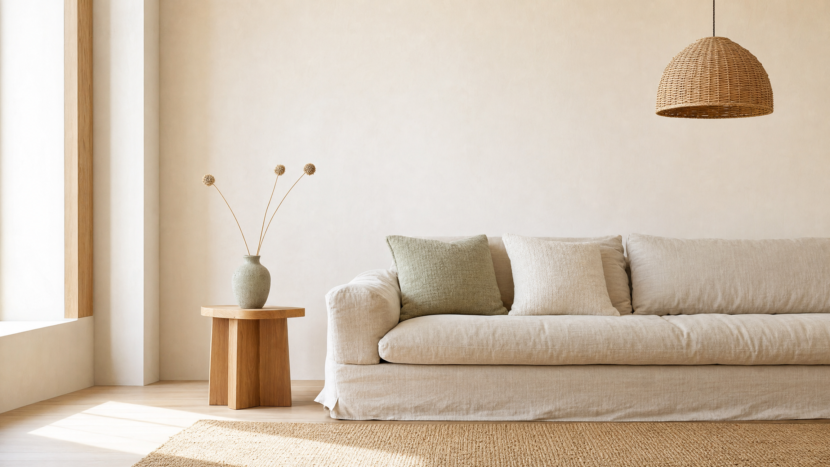
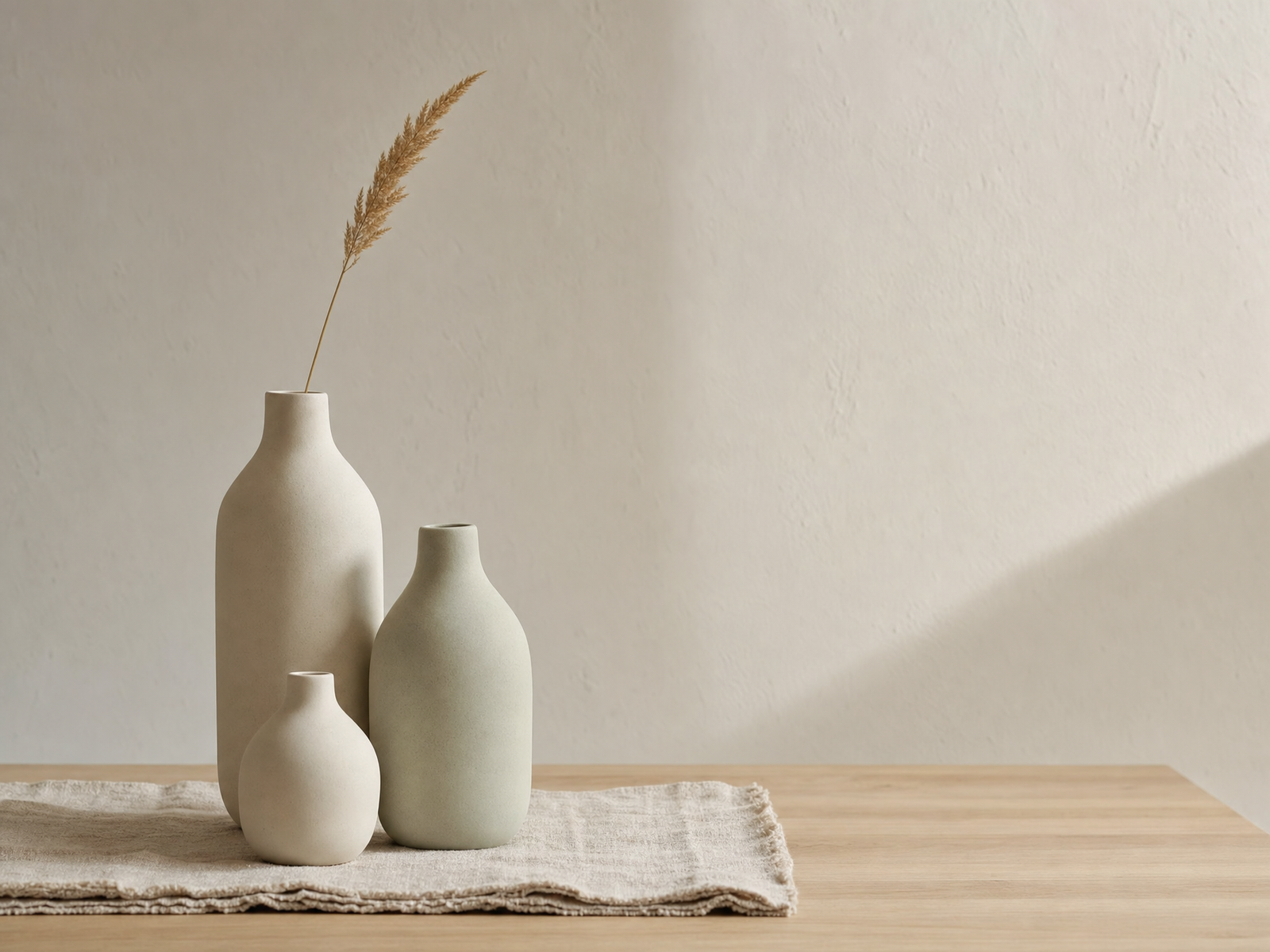
If you take one thing from this article: warm wood plus natural linen is the bridge. It is the only combination that reads as both minimalist and cottage simultaneously, because linen supplies softness and imperfection while oak supplies structure and warmth without ornament.
Practical applications:
- A linen slipcover on an otherwise plain sofa. The rumple is the point — do not iron it.
- Oak side tables and shelving rather than painted or lacquered finishes.
- Linen curtains hung high and wide, floor length, in oatmeal rather than white.
- A jute or wool rug to ground the room and stop pale floors feeling clinical.
Room by room
Living room
Linen sofa, oak coffee table, jute rug, one rattan pendant, and a single ceramic vase group. Keep the walls nearly bare — one large piece of art rather than a gallery wall. Our warm modern minimalist decor guide covers the minimalist half of this in more depth.
Bedroom
This is where modern cottagecore is easiest, because bedding does most of the work. Linen bedding in oatmeal or the palest sage, an oak or cane headboard, two lamps, and nothing on the walls above the bed. See warm restful minimalist bedroom ideas for layout.
Kitchen
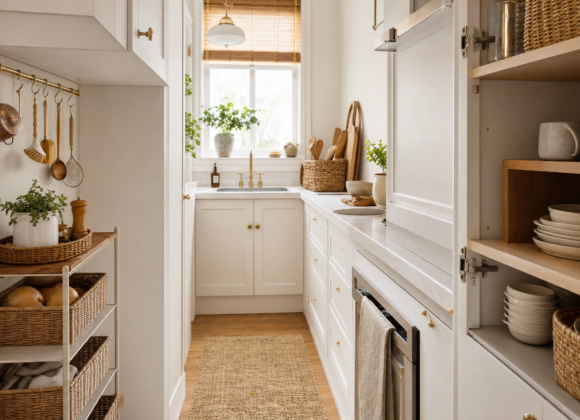
Warm white or pale sage units, wooden boards, a single group of ceramics, and nothing else on the counter. This is the strictest room — kitchens accumulate, and modern cottagecore falls apart the moment counters fill. Our cottagecore kitchen ideas covers the editing method in detail.
Making it work in a new build
New builds give you flat walls, square corners, high-output downlights and no architectural character. All fixable without touching the structure:
- Kill the downlights. Or at least stop using them. Three lamps at different heights will transform a square room more than any furniture purchase.
- Add texture to one wall — limewash paint, a textured plaster effect, or a single piece of unframed linen art.
- Hang curtains high and wide, well above the window frame, to break the boxy proportion.
- Choose one curved object per room. An arched mirror, a round table, a curved lamp base. New builds are all straight lines and a single curve softens the whole space.
Frequently asked questions
What is modern cottagecore?
Modern cottagecore keeps cottage style’s natural materials and warm palette — oak, linen, ceramic, dried botanicals — but applies minimalist restraint to quantity and arrangement. Fewer objects, more space between them, and a tighter three-colour palette. The result reads calm rather than storybook.
How is it different from regular cottagecore?
Density, mostly. Traditional cottagecore layers pattern and fills surfaces; modern cottagecore uses the same materials but limits each surface to two or three groups and usually drops floral pattern in favour of texture. The palette is narrower too, typically three colours rather than an open warm range.
Does modern cottagecore work in a small apartment?
Better than traditional cottagecore does. The restraint suits small rooms, where layered pattern and filled surfaces close a space in quickly. Keep the palette tight, hang curtains high, and stick to the three-item rule per surface.
What colours should I use?
Warm white on walls, oatmeal linen on the large soft surfaces, one quiet accent — pale sage, soft clay or muted blue-green — and warm oak throughout. Adding a second and third accent is the most common way this style tips into looking twee.
Can I mix modern cottagecore with what I already own?
Usually yes. Most of the shift is subtractive rather than additive: remove objects, consolidate what is left into groups, swap cool bulbs for warm ones and add linen. Those four moves cost very little and get you most of the way there before you buy any furniture.
Is this the same as Scandinavian or Japandi style?
They overlap but are not identical. Scandinavian style runs cooler and more functional; Japandi is more austere and darker in its wood tones. Modern cottagecore is warmer and softer than both, and keeps the organic, slightly imperfect elements — dried stems, aged ceramic, rumpled linen — that the other two tend to edit out. Our hygge living room guide covers the Scandinavian side.
Where to take this next
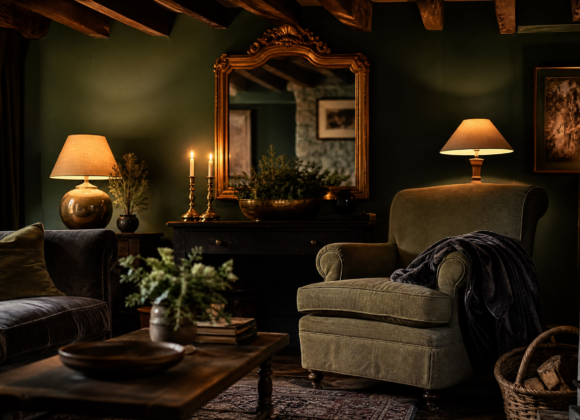
For the fuller, more layered version of the aesthetic see our storybook cottagecore living room ideas, or cottagecore decor for modern apartments. If you want the opposite direction entirely, dark cottagecore takes the same materials into a much moodier palette.