The short version
Cottagecore kitchen ideas only work when you edit. The aesthetic looks abundant in photographs, but the kitchens that actually feel good to stand in follow one rule: fewer objects, grouped deliberately, with real empty space between the groups. This guide covers the palette, how to style open shelves without creating visual noise, the handful of objects that carry the whole look, and what to do if you rent and cannot touch the cabinets.
Collected versus cluttered: the actual difference
Both look full. The difference is intent and breathing room.
A cluttered kitchen has objects everywhere because they had nowhere else to go. A collected kitchen has objects on display because someone chose them, and left space around them so the eye can rest. Same number of things, sometimes. Completely different feeling.
Three tests before anything stays on a counter or shelf:
- Would you photograph it on purpose? If it is there because the cupboard is full, it belongs in the cupboard.
- Does it have a neighbour? Single objects scattered evenly read as mess. Objects in groups of two or three read as intentional.
- Is there a gap after it? Every group needs empty space beside it. Without gaps you have a shelf, not a vignette.
That is the entire method. Everything below is applying it.
Start with the palette, not the props
People buy the ceramic canisters first and wonder why it still looks off. The colour underneath does most of the work.
| Colour | Where it works | Watch out for |
|---|---|---|
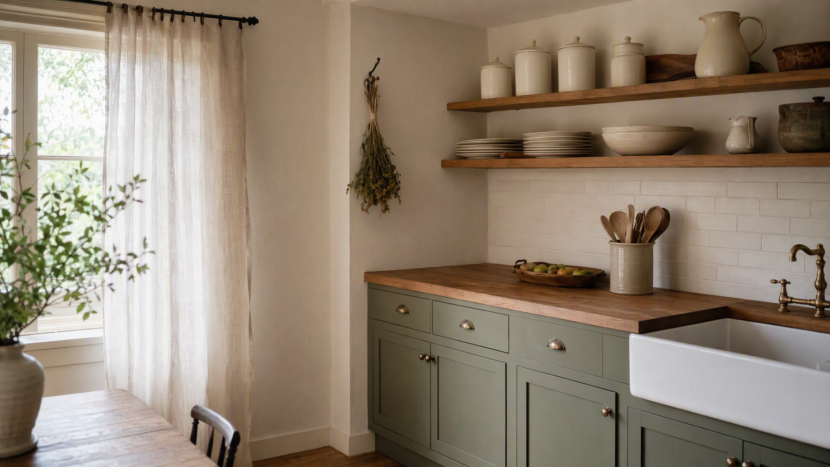
| Sage green | Cabinets, especially lower units | Goes cold in a north-facing room; pick a sage with a yellow base |
| Warm white | Walls and upper cabinets | Cool whites read modern, not cottage |
| Cream | Full cabinet runs in darker kitchens | Yellows over time next to bright white appliances |
| Putty and mushroom | A quieter alternative to sage | Can look flat without wood or brass nearby |
| Warm oak | Counters, shelving, small boards | Orange-toned wood dates fast; look for a neutral grain |
Warm white or cream? Cream ages more gracefully in a room with poor natural light because it already contains the warmth the room lacks. Warm white is safer in a bright room where cream can tip yellow. If you are painting units yourself, our guide to painting kitchen cabinets in a rental covers doing it reversibly.
Open shelving without the visual noise
Open shelving is the single most photographed cottagecore kitchen idea and the easiest to get wrong. The failure mode is always the same: the shelf becomes storage.
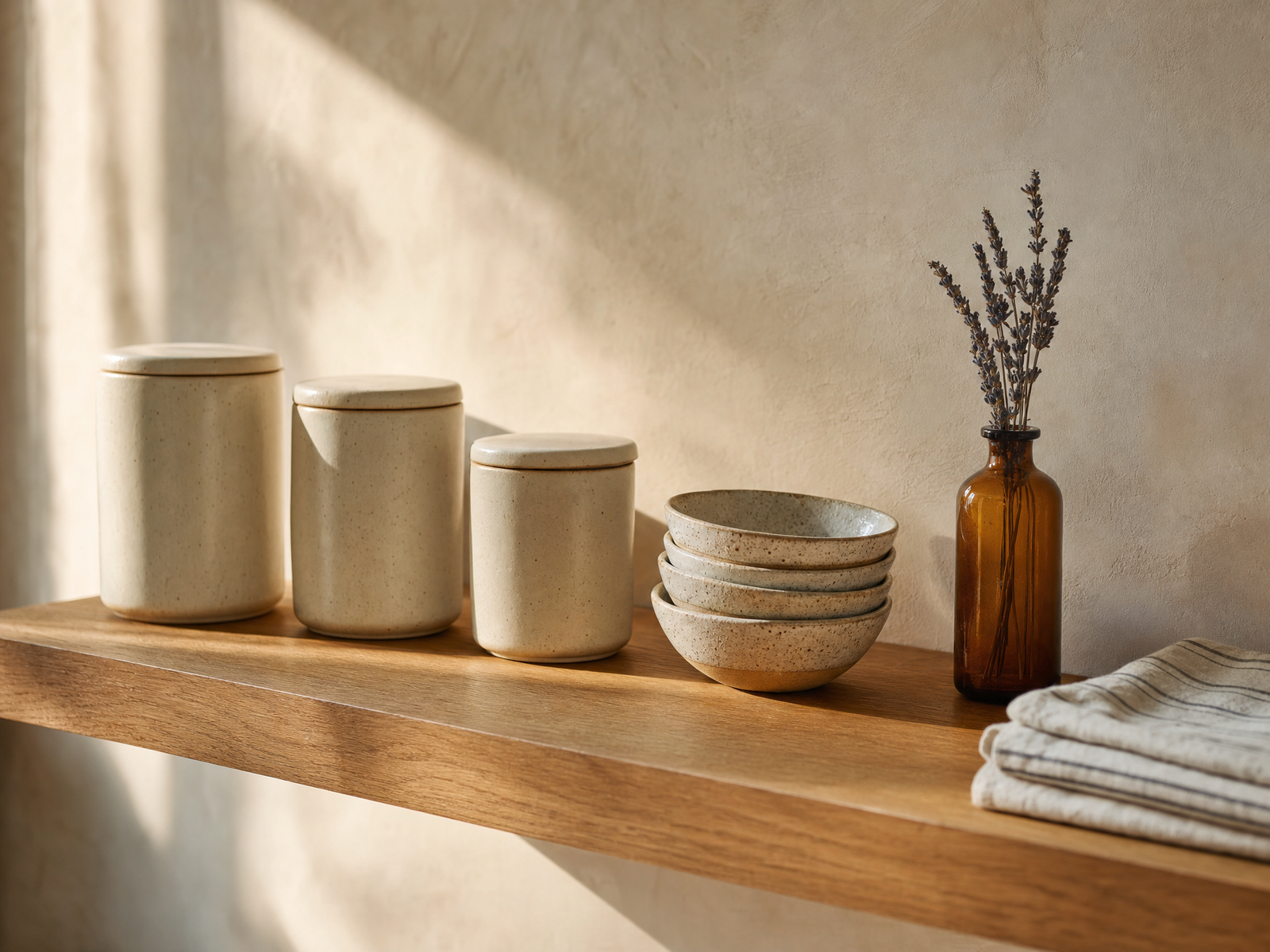
Style it in three groups per shelf, maximum:
- One tall thing. A pitcher, a vase with dried stems, a bottle. This sets the height.
- One stack. Plates or bowls, four to six high. Stacks read as calm because the eye counts them as one object.
- One small thing. A single mug, a tiny bud vase, a folded tea towel.
Then leave roughly a third of the shelf empty. That empty third is what separates collected from cluttered, and it is the part almost everyone skips.
Practical caveat: open shelves collect kitchen grease and dust. Keep everyday plates there so they cycle through the dishwasher, and put the decorative-only pieces on the highest shelf where they are seen but rarely touched.
The objects that carry the look
You need fewer than you think. These are the pieces that do the heavy lifting.
| Object | Why it reads cottage | Rough spend |
|---|---|---|
| Ceramic utensil crock | Hides the ugliest clutter on any counter in one move | Low |
| Vintage pitcher | Height, curve and a bit of age; works empty or with stems | Low if thrifted |
| Stoneware bowl set | Stackable, useful, and the speckle reads handmade | Medium |
| Wooden boards | Warmth and vertical interest leaned against a backsplash | Low |
| Linen tea towels | Softness and a place for pattern without commitment | Low |
| Rattan basket | Absorbs the overflow that would otherwise sit out | Low |
| Dried herbs or eucalyptus | The organic element; costs nothing if you dry your own | Very low |
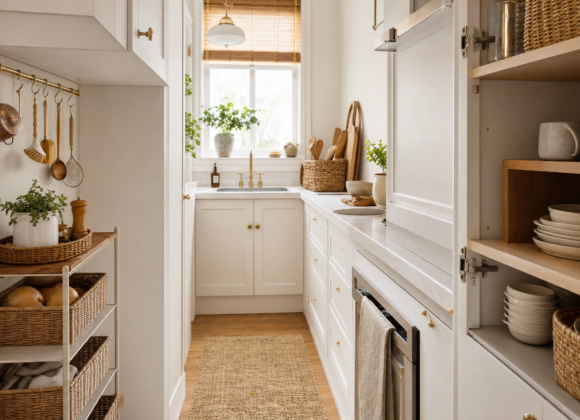
The genuinely free version: hang a bundle of herbs from a hook, decant dry goods into jars you already own, and lean a wooden board against the wall. That is three cottagecore signals for nothing.
If you rent and cannot touch anything
Almost all of this works without a screwdriver.
- Linen curtain instead of a blind. Softens a hard modern window instantly and comes down when you leave.
- Peel-and-stick tile for a backsplash. Small floral or plain square formats read cottage; avoid anything glossy and grey.
- A freestanding shelf or cart rather than fixed shelving, which gives you the open-shelf look with no wall damage.
- Swap nothing structural, change everything soft. Textiles, ceramics and one light source will move a rental kitchen further than new hardware.
For the bigger renter picture, see our rental kitchen makeover ideas with no renovation and what to do about cabinets in a small apartment.
Lighting is the step people skip
A single bright ceiling light will flatten every other decision you have made. Cottage kitchens are lit low and warm.
- Put a small lamp on the counter. It sounds odd in a kitchen and it is the single biggest atmosphere change available.
- Use warm bulbs around 2700K. Anything cooler kills sage and cream instantly.
- If you can change a fitting, a rattan or ceramic pendant over the sink or table does more than a ceiling spotlight ever will.
Our guide to warm lighting for a cosy atmosphere applies directly here.
What to leave out
The fastest way to tip from collected into twee:
- Signs with words on them. No exceptions.
- Matching sets bought all at once. Collected means gathered over time. Mix two or three sources.
- Fake flowers in bright colours. Dried beats artificial every time.
- Gingham on everything. One pattern in the room, not four.
- Filling every surface. Worth repeating, because it is the only mistake that actually matters.
Frequently asked questions
What makes a kitchen cottagecore?
Three things in combination: a soft warm palette (sage, cream, warm white), natural materials on show (wood, ceramic, linen, rattan), and visible signs of use rather than showroom perfection. No single object makes a kitchen cottagecore; the combination does.
Can you do cottagecore in a modern apartment kitchen?
Yes, and the contrast usually works in your favour. Flat modern cabinet fronts act as a quiet backdrop for warm textiles and ceramics. Focus on softening: a linen curtain, a counter lamp, wooden boards and one or two ceramic groupings. Our guide to cottagecore decor in modern apartments covers the whole home.
What colours work best for a cottagecore kitchen?
Sage green, warm white, cream, putty and soft clay, with warm oak and aged brass as the supporting materials. Avoid cool greys and stark bright whites, which read contemporary rather than cottage.
How do I stop open shelves looking messy?
Limit each shelf to three groups, keep one group as a stack, and leave about a third of the shelf empty. Store anything with loud packaging behind a cabinet door and decant what you can into plain jars or ceramic containers.
Is cottagecore expensive to do?
It is one of the cheapest aesthetics to achieve because age and imperfection are features rather than flaws. Charity shops and marketplace listings are better sources than new homeware for pitchers, bowls and boards. The only place worth spending is on one good ceramic crock and decent linen.
What is the difference between cottagecore and farmhouse?
Farmhouse leans on high contrast, black metal and shiplap. Cottagecore is softer, more floral and more organic, with warmer colour and a collected rather than coordinated feel. Farmhouse is styled; cottagecore is gathered.
Where to take this next
If you are extending the look beyond the kitchen, our cottagecore kitchen and living room ideas for modern apartments covers how the two rooms connect, and the storybook cottagecore living room takes the aesthetic further. For the sleeping side, see cottagecore bedroom ideas on a budget.
And once the styling is settled, kitchen organisation for small kitchens keeps it from drifting back toward cluttered.