When I first moved into my 320 sq ft studio, I thought my kitchen cabinets were just a fact of life I had to accept. They were that nondescript builder’s beige, the hardware was flimsy, and opening and closing them felt like a chore every single time. But I learned something that changed how I thought about kitchen cabinets in rentals: you don’t have to replace them to make them feel like yours. In this guide, I’ll walk you through the most practical ways to refresh kitchen cabinets on a budget without touching your lease or your deposit.
This post contains affiliate links. I may earn a small commission if you buy through my links, at no extra cost to you.
TL;DR
- Most of these ideas cost under $50 and none require drilling or permanent changes to walls or cabinets
- Cabinet paint and hardware swaps have the highest impact-to-cost ratio for renters
- Peel-and-stick organizers and labels transform the inside without changing the outside
- The best cabinet refresh combines one visible change (paint or hardware) with one organizational change (interior systems)
How to update kitchen cabinets on a budget
The most straightforward approach to updating kitchen cabinets is a combination of paint, hardware, and smart organization. I recommend starting with one visible element, then working inward. If your cabinets are already in decent condition structurally, paint or hardware is your entry point. If the insides are chaotic, interior organizers will make the biggest functional difference.
Paint is the fastest, cheapest way to refresh cabinets. A quart of quality cabinet paint costs $25 to $40, and you can cover most apartment kitchen cabinets with a single coat or two. The key is using paint designed for cabinets, not regular wall paint. Cabinet paint needs to be more durable and adhere to glossy surfaces. Rust-Oleum Cabinet Transformations is a renter favorite because it comes as a kit with primer and finish in one system.
Hardware swaps are my second-choice refresh because they require zero skill and take about 20 minutes for an entire kitchen. Swapping out knobs and pulls from basic builder-grade to something with character makes cabinets feel intentional. A set of 10 to 15 new pulls costs $15 to $40 depending on the style. Keep the old hardware in a ziplock bag – when you move, swap them back and take your new ones with you.
Interior organizers address the chaos inside. Over-the-cabinet shelves, drawer dividers, and pull-out baskets create systems without any permanent installation.
Who this works for: renters and small apartment dwellers with standard cabinet layouts
Renter note: Cabinet paint is renter-safe if you use removable primer and finish. Hardware swaps require only a screwdriver. No drilling needed.
Kitchen cabinet colors for small spaces
The color you choose for your cabinets matters more in a small kitchen because the cabinets take up visual real estate and set the tone for the whole room. Light, warm colors make small kitchens feel less cramped. Dark colors can make the space feel heavier, but the right dark shade can also feel sophisticated and cosy.
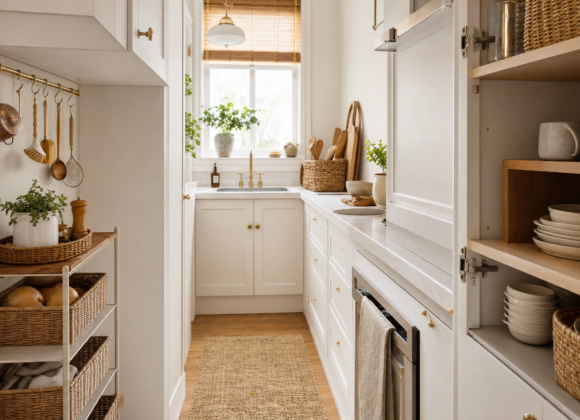
White or off-white cabinets open up a small kitchen instantly. They reflect light and create visual separation between the cabinet boxes and the wall. This is my top choice for truly tiny kitchens.
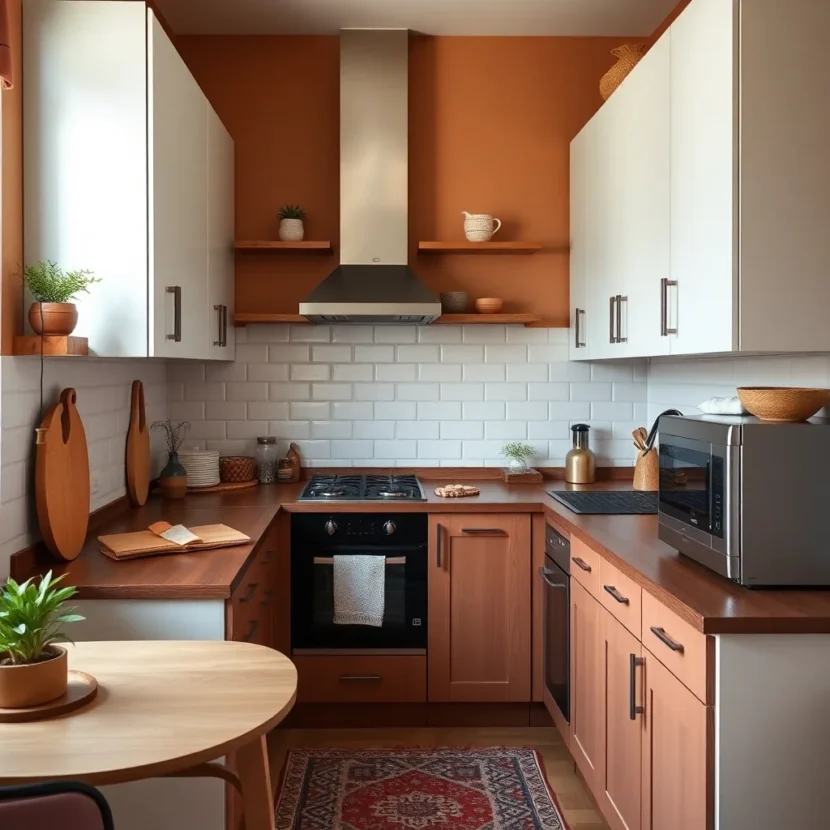
Warm neutrals (warm gray, light taupe, soft greige) are my current preference for small apartment kitchens. They feel less sterile than pure white but still reflect light and keep the space open. They pair well with warm-toned hardware like brass or gold.
Soft sage or muted green is underrated for small kitchens. It sounds bold, but a soft, grayed-out green feels calm and natural without darkening the space. It pairs beautifully with white countertops and stainless steel hardware.
Avoid pure black or very dark colors in a small kitchen unless it’s one accent wall or a single cabinet unit. Dark colors can make a cramped kitchen feel more cramped.
Who this works for: renters with cabinets they can paint
Renter note: Always check your lease for painting restrictions. Many landlords allow cabinet paint as long as you restore original color before moving out.
Should you paint or swap hardware? Kitchen cabinet refresh strategies compared
| Approach | Best for | Budget | Time | Renter-friendly |
|---|---|---|---|---|
| Cabinet paint | Tired, mismatched, or very plain cabinets | $25-$60 | 2-3 days | Yes, if landlord approves |
| Hardware swap | Cabinets in good condition that just need personality | $20-$50 | 30 minutes | Yes, always |
| Interior organizers | Chaotic or unstructured cabinet interiors | $15-$80 | 1-2 hours | Yes, always |
| Cabinet refacing | Damaged doors or significant wear | $300-$800 | 1-2 weeks | No |
| Full replacement | Structural damage or planning to stay long-term | $1,500-$5,000 | 3-5 days | No |
Renter-friendly kitchen cabinet ideas that don’t damage your deposit
Renter-friendly: Removable shelf liners transform the inside of cabinets without any adhesive. Lay them down to protect shelves, add color, or create a clean baseline. A roll of shelf liner costs $8 to $15 and covers multiple cabinets.
Renter-friendly: Pull-out cabinet organizers are the secret to making small kitchen cabinets feel spacious. A single pull-out basket that slides into a cabinet base instantly creates a dedicated zone. They cost $15 to $40 depending on size.
Renter-friendly: Peel-and-stick labels for the inside of cabinet doors are my favorite functional touch. Label shelves by category (baking supplies, everyday dishes, glasses). It looks intentional and helps whoever else uses your kitchen find things. A pack of label sets costs $5 to $10.
Renter-friendly: Over-the-door cabinet organizers hang on the interior face of a cabinet door and hold everything from plastic wrap to foil to small bottles. Installation is literally hanging a hook on the door frame – zero damage. These are usually under $15.
Renter-friendly: A tiered shelf riser doubles your usable shelf space without any tools. Stack plates on the bottom tier and bowls on the elevated tier above. A good metal or bamboo riser costs $12 to $25.
Homeowner only: If you own your home, adding pull-out drawers or sliding shelves inside base cabinets is possible. This requires some carpentry and is not renter-safe.
Who this works for: all renters; especially useful in kitchens with inadequate shelving
Renter note: None of these require drilling, adhesive, or landlord permission (except cabinet paint, which may need approval).
Affordable kitchen cabinet hardware that transforms the whole look
Hardware is a one-step way to change the personality of your kitchen. The same plain cabinet becomes modern, or cosy, or eclectic, depending on what you hang on it. A 10-piece hardware set costs $20 to $40 from Amazon or hardware stores. Your kitchen probably has 10 to 20 cabinet faces, so you might need one or two sets.
Brass or gold hardware feels warm and slightly vintage. It works especially well with warm-toned cabinets (warm white, taupe, or sage) and brings out warmth in wood cabinets. Look for brushed brass rather than shiny gold – it feels more contemporary.
Black or matte black hardware feels modern and grounding. Pair it with white or light gray cabinets for a clean look, or with dark cabinets for a moody, sophisticated feel.
Stainless steel hardware is the safe, neutral choice. It feels modern and clean. It is the most forgiving option if your cabinets are a color you are still uncertain about.
Natural wood hardware (sometimes called leather-wrapped or wood pulls) is warm and very on-trend. These feel handcrafted and work well with boho or cottagecore styles.
Product recommendations
Under $30:
- LONTAN stainless steel cabinet hardware comes in packs of 10 and costs around $20. They are straightforward, modern, and durable.
- Wayfair basics brass knobs are under $2 per knob if you buy in bulk, and they feel premium for the price.
- Liberty Hardware 10-pack mixed finishes at around $35 to $50 gives you flexibility in style.
- Hickory Hardware traditional brass pulls cost around $40 to $60 for a 10-pack and feel heirloom-quality.
- Anthropologie-style ceramic knobs are hand-painted and unique, around $12 to $20 each.
- Rejuvenation mid-century brass or leather pulls are around $15 to $25 per piece.
Renter note: You keep the hardware when you move. Always store the original hardware in a labeled bag and reinstall it before your final walkthrough.
How to organize kitchen cabinets in a small apartment
Organization directly impacts how functional your kitchen feels. A small kitchen with chaotic cabinets feels even smaller. The same small kitchen with organized cabinets feels intentional and spacious.
Start by removing everything from one cabinet and sorting into keep, donate, and use elsewhere. Be ruthless. Small kitchens cannot handle overflow. If it does not have a designated spot, it becomes clutter.
Group items by use: everyday dishes together, baking supplies together, glasses in one zone. This is not aesthetic organization – it is functional. You want to be able to reach for what you need without moving three other things.
Use vertical space. Stack plates, bowls, and glasses on top of each other (use a separator) rather than spreading them out horizontally. A single shelf can hold far more if you stack vertically.
Store items you use daily at eye level. Items you use occasionally can go higher or lower. Heavy items stay at the bottom to prevent cabinet sagging.
Who this works for: small apartment dwellers with standard cabinet depth (usually 12 inches)
Renter note: Organizers are fully reversible and require no installation beyond placing them in the cabinet.
Interior cabinet organizers that actually fit small apartment kitchens
Small apartment kitchens have small cabinets, so organizers need to be slim and multifunctional.
Slim pull-out baskets (about 3 inches wide) slide into base cabinets and create hidden zones. They work beautifully for plastic wrap, foil, or small appliances. Cost: $15 to $30 for a set of two.
Tiered shelf risers double your shelf space by creating a second tier. A good riser is 8 to 12 inches wide and costs $12 to $20.
Over-the-cabinet door organizers hang on the inside of cabinet doors and hold spices, oils, or cooking spray. Cost: $10 to $20.
Drawer dividers for inside cabinets create individual compartments. A bamboo divider set costs $15 to $25.
Lazy Susan turntables for corner cabinets or back corners make everything accessible. You rotate the turntable instead of reaching into the back. Cost: $10 to $20.
Expandable shelving fits between existing shelves and creates a new tier. Cost: $15 to $30.
The best organizational approach combines one vertical element (a riser or expandable shelf) with one hidden element (a pull-out basket or door organizer).
Who this works for: renters with standard cabinet depths (about 12 inches) and standard cabinet heights (about 30 inches per shelf)
Renter note: All of these are fully reversible and remove without damage.
If you only do one thing, swap your cabinet hardware. For under $30, you get maximum personality change with zero commitment and zero risk. It is the single best budget-to-impact ratio in a small kitchen refresh.
Frequently Asked Questions
Can you paint kitchen cabinets in a rental apartment?
Cabinet paint is usually allowed in rental apartments, but you need to check your lease or ask your landlord first. If you get permission, make sure to use cabinet-specific paint (not wall paint) and keep the original hardware so you can restore everything to its original state before moving out.
How much does it cost to refresh kitchen cabinets in a small apartment?
A complete refresh combining paint and hardware costs $50 to $100. If you only swap hardware, expect to spend $20 to $50. If you add organizers and shelf liners, another $30 to $60. Most renters get a meaningful refresh for under $75.
What is the best color for small kitchen cabinets?
White or warm white opens up a small kitchen the most and reflects light. Soft greige or warm gray is my second choice because it feels slightly less sterile while still keeping the space feeling large. Avoid very dark colors because they can make a small kitchen feel darker and smaller.
Is peel-and-stick wallpaper safe for kitchen cabinets?
Peel-and-stick wallpaper works on cabinet doors in dry rooms only. In kitchens, steam and humidity from cooking cause the adhesive to fail, and edges start peeling within months. Stick to paint or hardware changes for kitchen cabinets.