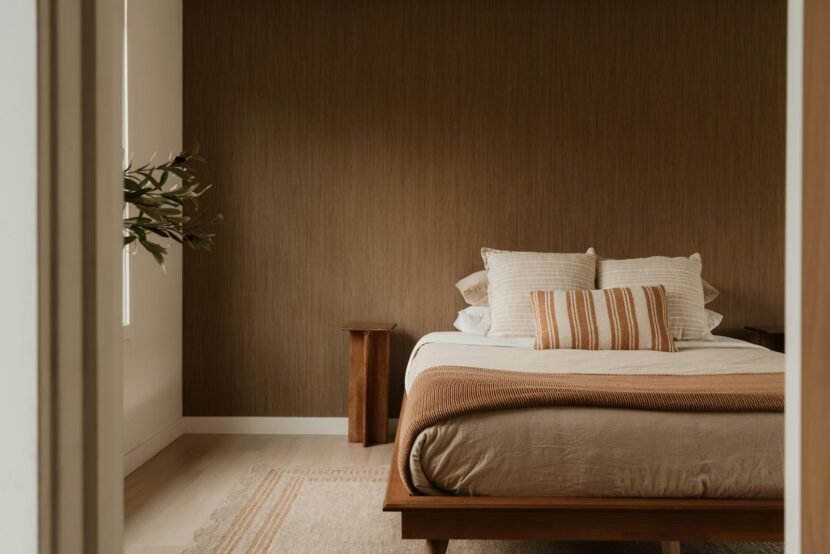
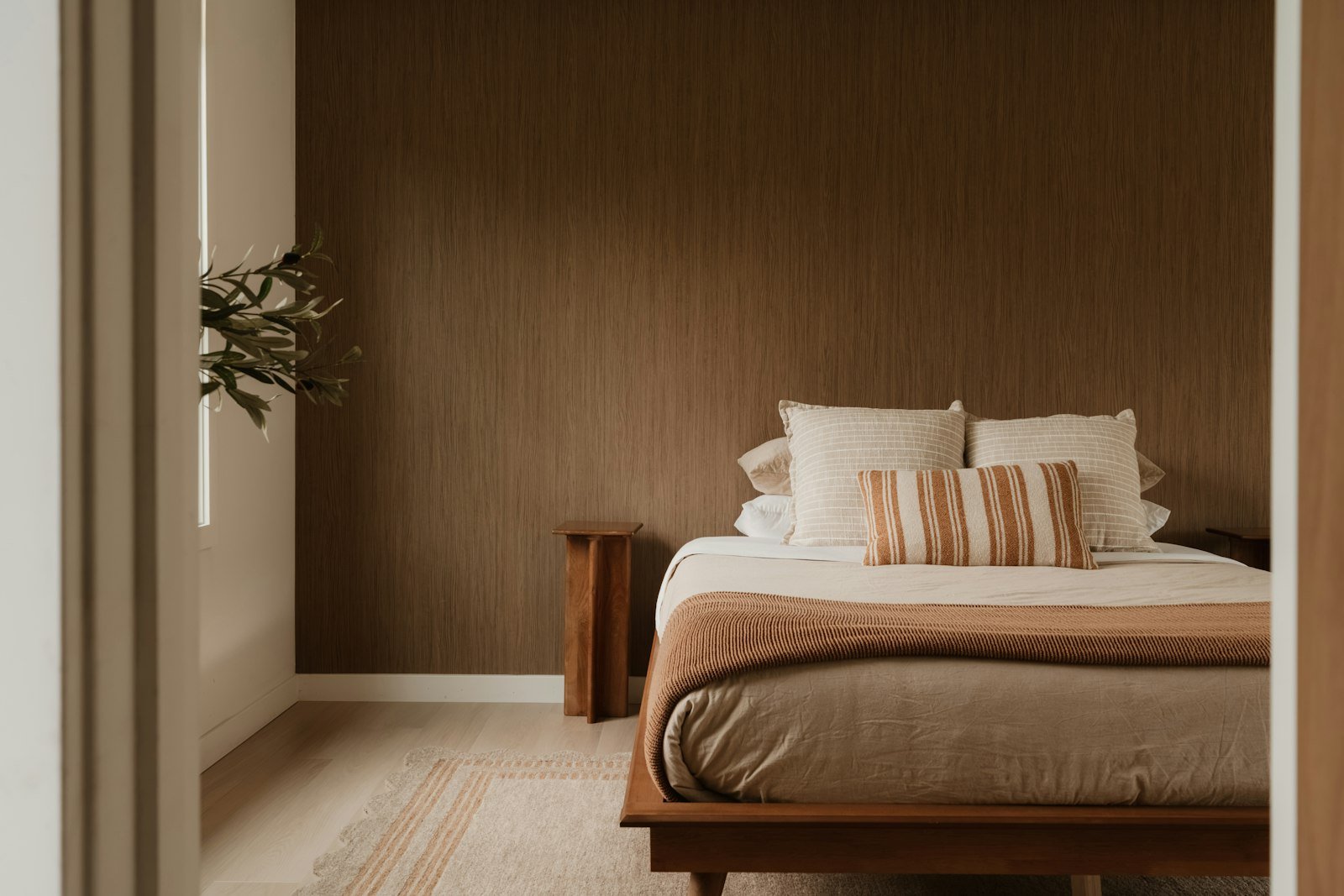
Minimalism gets a bad reputation in bedrooms. Strip a room back too far and it stops feeling restful and starts feeling like a waiting area: white walls, a bare bed, nothing soft anywhere. The minimalist bedroom ideas that feel warm and restful work differently. They keep the low object count and the clear surfaces, but they replace visual decoration with texture, warm light and natural materials, so the room reads as calm rather than empty. Here is how to get the quiet without the coldness.
Why Most Minimalist Bedrooms Feel Cold
A room feels cold for reasons that have very little to do with how much furniture is in it. Three things do most of the damage, and all three are fixable without adding a single decorative object.
- Cool-toned white. Bright white paint with a blue base reflects light in a way that reads clinical, especially in a north-facing room.
- Hard, flat surfaces. Painted walls, a laminate floor and smooth bedding give sound nowhere to soften and give the eye nothing to catch on.
- One overhead light. A single ceiling fixture flattens everything and casts the room in the least flattering light available.
Warm minimalism fixes all three while keeping the discipline. You are not adding stuff back. You are changing the temperature, the texture and the lighting of what is already there.
Start With a Warm Neutral, Not White
The fastest change is paint. Move off pure white and onto a warm neutral with a yellow, beige or greige undertone. Soft oatmeal, warm plaster, mushroom and pale clay all keep a room bright without the clinical edge, and they make wood and linen look considerably better than a cool white ever does.
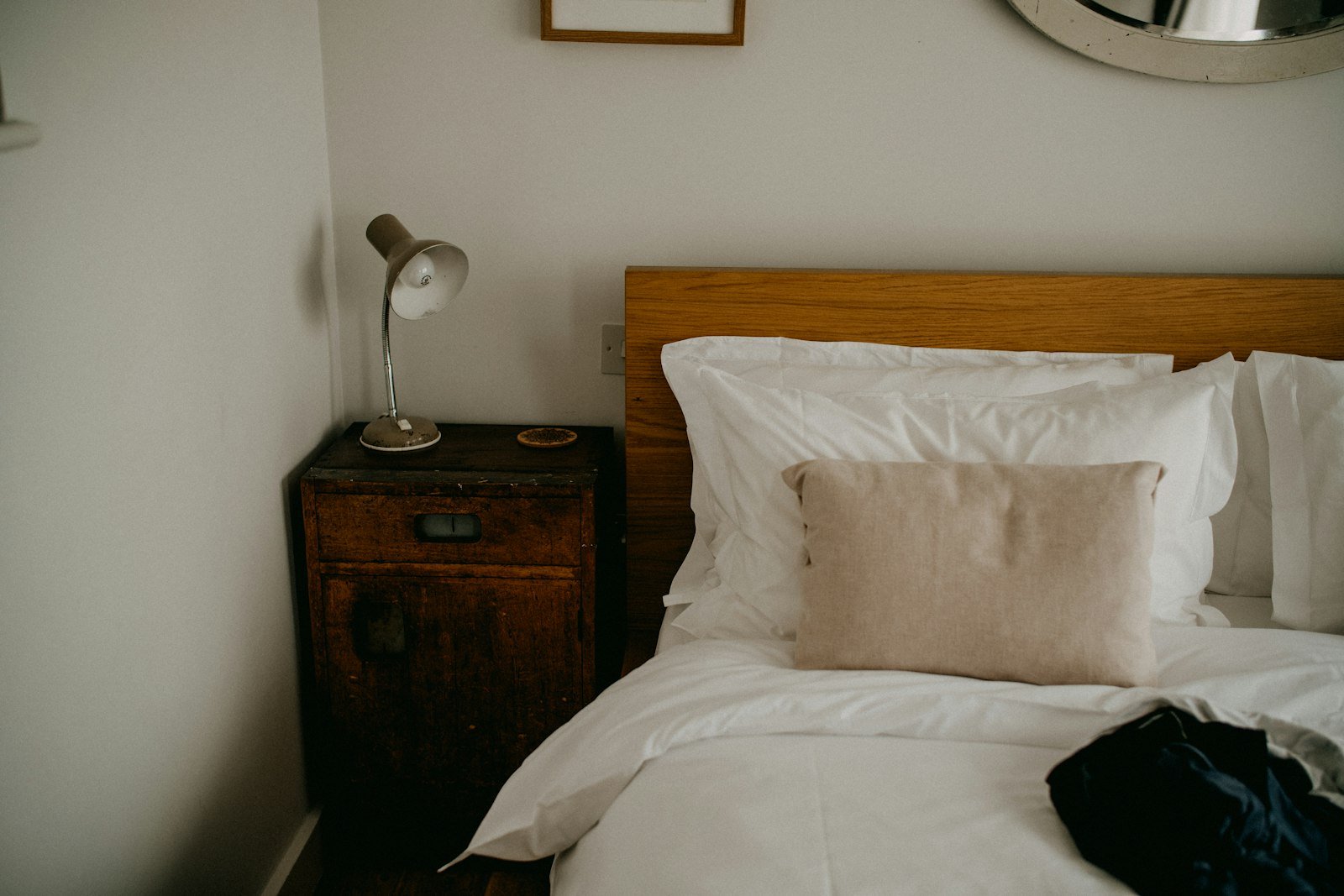
Test properly before committing. Paint a large sample directly on the wall, not on a card, and look at it in morning light, afternoon light and lamplight before deciding. Undertones shift dramatically across the day, and a colour that looks warm at noon can turn grey and flat by six o’clock. If you want a fuller walkthrough of building a scheme this way, the approach behind neutral and earthy bedroom ideas covers the same ground in more depth.
Let Texture Do the Job Decoration Usually Does
This is the central move in warm minimalism. In a conventional room, interest comes from pattern, colour and objects. In a minimalist room, interest has to come from surface. When every material in a room is different to the touch, the eye stays engaged even though almost nothing is on display.
Four Textures Worth Building Around
- Washed linen bedding. The slight irregularity and soft crumple do more for warmth than any cushion arrangement.
- Wool or bouclé. One chunky throw at the end of the bed, or a single wool cushion, adds depth without adding clutter.
- Unpainted wood. A visible-grain bedside table, bed frame or floor introduces natural colour variation that paint cannot.
- Woven natural fibre. A jute or wool rug underfoot absorbs sound and stops the floor reading as a hard plane.
Keep all four in the same tonal family. Texture provides the variety, so the colours can stay almost identical. That restraint is what separates warm minimalism from a room that has simply accumulated beige things.
Fix the Lighting Before Anything Else
Lighting is where the largest gap sits between a bedroom that photographs well and one that feels good to be in at eleven at night. The rule is simple: never rely on a single overhead source, and keep every bulb in the room warm.
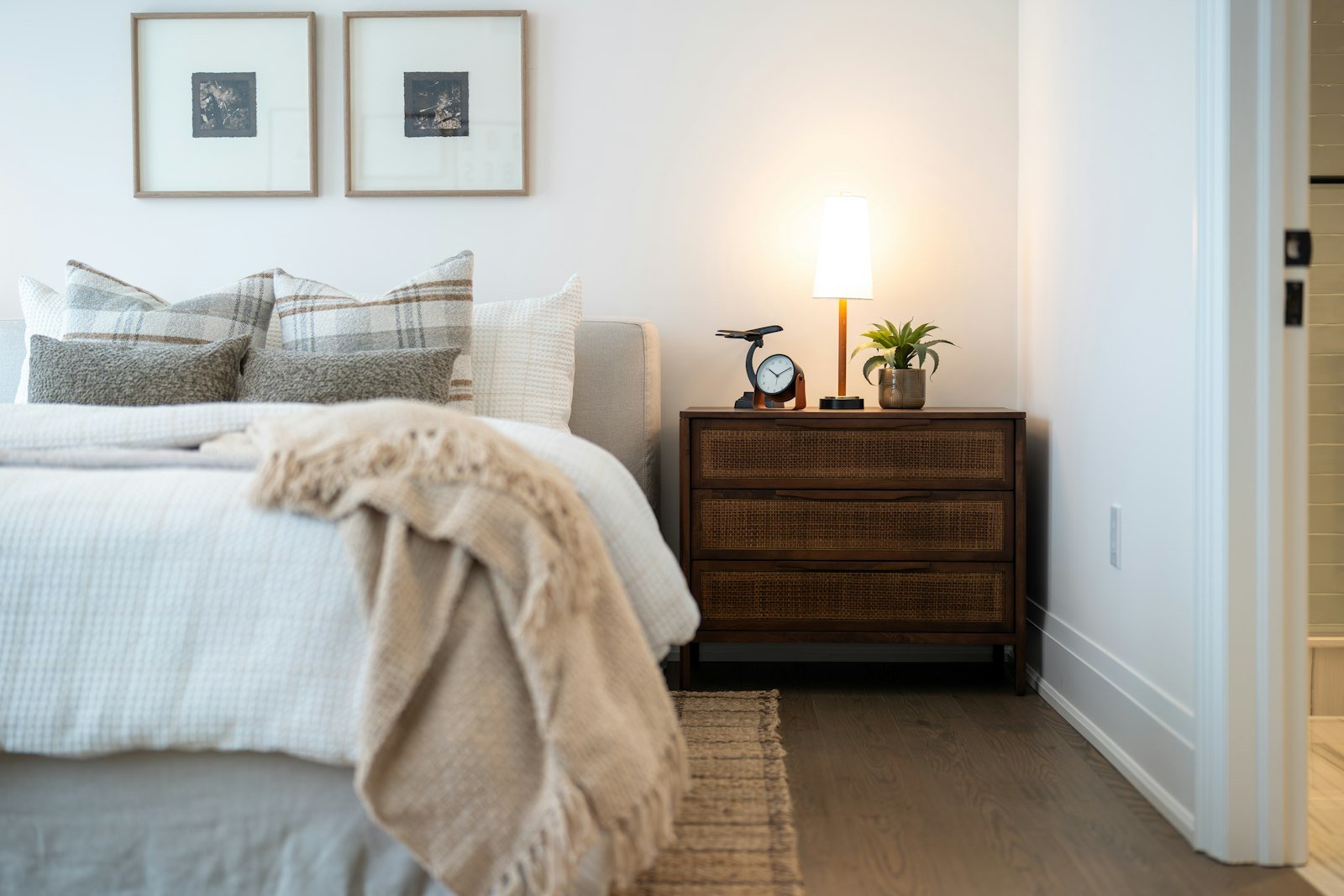
- Choose bulbs at 2700K or below. Anything at 4000K and above reads as office lighting and will undo warm paint instantly.
- Aim for three light sources at different heights: a bedside lamp, something low such as a floor lamp or a candle, and the overhead only when you need it.
- Put the main light on a dimmer, or replace it with a plug-in dimmer module if you rent.
- Use shades in fabric, paper or opal glass rather than bare bulbs, so light diffuses instead of glaring.
This is the cheapest high-impact change on the list. A set of warm bulbs and one extra lamp will do more for a cold minimalist bedroom than new furniture.
Layer the Bed Properly, Then Stop
The bed is roughly sixty percent of the visual weight in a bedroom, so it carries most of the warmth. But layering has a point of diminishing returns, and a bed with eleven pillows is neither minimalist nor restful, because you have to dismantle it every night.
A layering formula that works: fitted sheet, flat sheet or light duvet, one heavier duvet or quilt folded at the foot, two sleeping pillows, and at most two decorative cushions. Vary the weight and weave between layers rather than the colour. A linen top sheet against a cotton percale duvet against a wool throw gives three distinct textures reading as one calm surface.
Keep Surfaces Clear, But Not Bare
Minimalism is often read as empty surfaces, which is what tips a room from restful into austere. The better rule is one object per surface, chosen for material rather than decoration.
- A ceramic lamp with a linen shade on the nightstand, and nothing else.
- One stoneware vase or bowl on the dresser, ideally with a single stem or branch in it.
- A stack of two books, not six, if you actually read them.
To keep surfaces this clear you need somewhere for everything else to go, which is why warm minimalism depends on closed storage. If your nightstand cannot hide the cables and the hand cream, no amount of styling will hold. The practical side of that is covered in these bedroom storage ideas that hide clutter.
Choose Fewer, Better Pieces of Furniture
A warm minimalist bedroom typically holds a bed, one or two bedside tables, one storage piece and possibly a chair. That is the whole list. Because there is so little, each piece has to hold up on its own, which means material quality matters more than it would in a busier room.
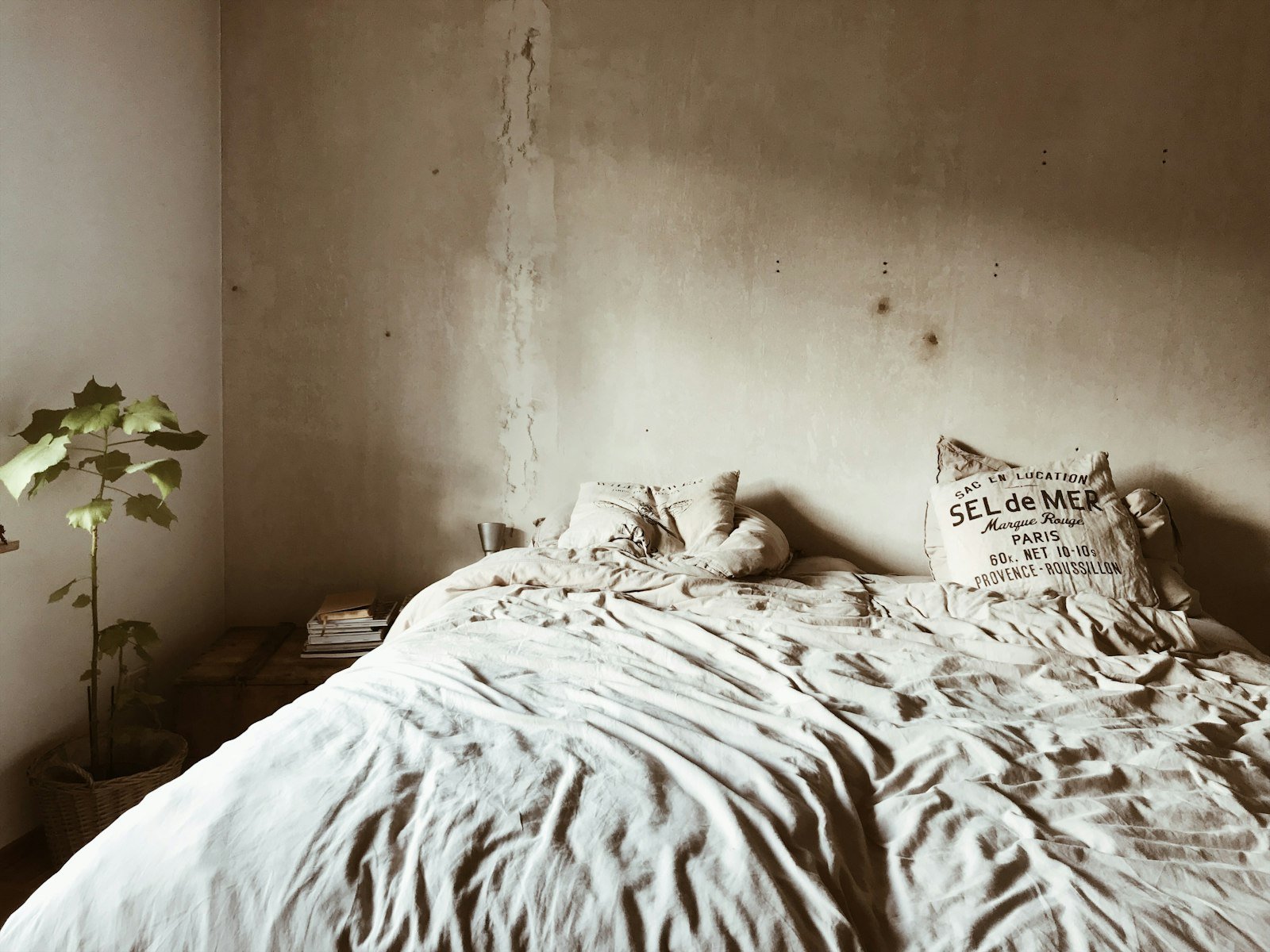
Favour solid or veneered wood over high-gloss finishes, upholstery in a natural fibre over synthetic weave, and matte metal over chrome. Rounded edges and low profiles read as softer than sharp rectangles, which is why an upholstered headboard or a curved bedside table does disproportionate work in a pared-back room. If the budget will not stretch, the IKEA hacks that look custom approach gets you to a similar place for far less.
Soften the Hard Surfaces You Cannot Change
Renters usually inherit the two coldest elements in a bedroom: a hard floor and a bare window. Both can be softened without any permanent change.
- A large rug, sized so the front two thirds of the bed sit on it, absorbs sound and warms the floor visually and literally.
- Floor-length curtains hung wide and high, in linen or a heavy cotton, frame the window and add a full wall of soft texture.
- A woven or upholstered headboard, even a freestanding one propped against the wall, breaks up a large flat surface behind the bed.
Hanging curtains close to the ceiling rather than just above the frame also lifts the perceived height of the room, which is worth doing whether or not you care about warmth.
Add One Living Thing
A single plant is the exception to the low-object rule, because organic shape and living colour do something no manufactured object does in a spare room. One well-placed plant in a matte ceramic pot, or a branch in a tall vase, is usually enough. Two is fine. Seven turns the room into a different style altogether.
Give the Room One Quiet Focal Point
A room with nothing on the walls does not read as minimalist so much as unfinished. The fix is not a gallery wall. It is one deliberate focal point that the eye lands on and then rests, which is usually a single large piece rather than several small ones.
- One oversized artwork above the bed or on the wall opposite it, in tones already present in the room.
- A large round or arched mirror, which adds light and depth while staying visually quiet.
- A textile hanging, linen panel or woven piece, which contributes texture as well as focus.
- The window itself, if the view earns it, framed with full-length curtains and left otherwise undressed.
Scale is what makes this work. A small frame on a large wall reads as an afterthought, while a piece roughly two thirds the width of the bed below it reads as intentional. If you are choosing between two sizes, take the larger one.
Keep the Floor as Clear as the Surfaces
Floor clutter undoes a minimalist bedroom faster than anything sitting on a dresser, because it interrupts the clean lines that make the room feel spacious in the first place. Shoes, laundry baskets, bags and charging cables are the usual offenders.
Two habits keep it under control. First, give shoes and bags a home outside the bedroom wherever possible, or inside the wardrobe if not. Second, choose furniture with visible legs rather than pieces that sit flush to the floor. Seeing the floor continue underneath a bed or a chest of drawers makes a room feel noticeably larger and lighter, which matters more when there is so little else in the space to look at.
Sound, Scent and Temperature Do Real Work
Restful is not only a visual quality. A minimalist room with hard floors and bare walls tends to be acoustically live, meaning sound bounces and the space feels sharper than it looks. A rug, floor-length curtains and an upholstered headboard between them absorb enough sound to change how the room feels within a few seconds of walking in.
Scent works the same way. One candle, a small diffuser or a bowl of dried lavender adds a layer of warmth that occupies no visual space at all, which makes it perfectly suited to a room where you are trying to own fewer things. Keep it to one scent source so it stays subtle.
A Simple Warm Minimalist Checklist
If you want to work through the room in order rather than all at once, this sequence puts the cheapest and highest-impact changes first.
- Swap every bulb in the room for 2700K or warmer, and add a second lamp at a lower height.
- Clear all surfaces completely, then return one object to each.
- Test a warm neutral paint colour on the largest wall and live with the sample for two days.
- Add one genuinely tactile textile, usually washed linen bedding or a wool throw.
- Lay a rug large enough that the bed sits partly on it.
- Hang curtains high and wide in a natural fibre.
- Choose one focal point for the main wall, sized generously.
- Add one plant, and stop there.
Most people find the room turns a corner somewhere around step four, before any furniture has changed at all. That is the point of warm minimalism. The warmth comes from light and material, not from filling the space back up. The same principle carries into the rest of the home, which is why modern minimalist home decor that still feels warm follows almost identical rules in a living room.
Frequently Asked Questions
What is warm minimalism?
Warm minimalism keeps the low object count and clear surfaces of classic minimalism but replaces cool whites and hard surfaces with warm neutral colour, natural materials and layered texture, so the space feels calm rather than clinical.
What colours make a minimalist bedroom feel warm?
Warm neutrals with yellow or red undertones: oatmeal, warm plaster, greige, mushroom, pale clay and soft taupe. Avoid bright white and any grey with a blue base, both of which read as cold under artificial light.
How many things should be in a minimalist bedroom?
There is no fixed number, but a workable guide is four to five pieces of furniture and one object per visible surface. Everything else lives behind a door or in a drawer.
Can a minimalist bedroom work on a small budget?
Yes, and often more easily than a maximalist one, because you are buying fewer things. The three cheapest high-impact changes are warm bulbs, a warm neutral paint colour and one good textile, usually linen bedding or a wool throw.
Minimalist bedroom ideas only feel warm and restful when texture, warm light and natural material replace the decoration you have taken away. Change the bulbs this week, test a warm neutral on the wall, and add one genuinely tactile textile. That combination does most of the work before you spend anything on furniture.