There is a specific look that says student apartment before anyone has said a word. String lights taped to the ceiling. A tapestry hung slightly crooked. A futon that has clearly moved twice. None of it is bad — it is just loud about being temporary.
The gap between that and a place that feels genuinely grown up is smaller than it looks, and it is almost never about money. It is about a handful of decisions that cost nothing to make differently: where the light comes from, how many things are touching the floor, whether the stuff you own matches the stuff you own.
What follows is a full walkthrough of a first apartment — living room, bedroom, kitchen, bathroom, entry — built to look considered on a real student budget. Everything here is renter-safe. Nothing needs a drill, a landlord conversation, or a security deposit you are not getting back.
What “Grown Up” Actually Means Here
Worth defining, because it is not the same as expensive and it is not the same as minimal.
A room reads as adult when the decisions in it look deliberate. That is the whole thing. A $30 lamp placed where it needs to be looks more intentional than a $300 one lighting nothing. Three cushions in the same colour family look more expensive than seven in seven colours, and cost less.
Four rules do most of the work:
- Get the light off the ceiling. Overhead light is the single strongest dorm signal. It flattens everything and makes cheap surfaces look cheaper.
- Pick three colours and stop. One neutral for the big surfaces, one deeper tone for furniture and textiles, one accent. That is the whole palette.
- Raise things off the floor. Mattresses, clothes, electronics. Anything sitting directly on the floor reads as unfinished, even when it is clean.
- Fewer, bigger. One large piece of wall art beats six small ones. One good throw beats a pile of thin ones.
Every idea below is an application of one of those four.
Start With the Living Room
This is the room people see, so it earns the first slice of the budget — but not in the way most people spend it.
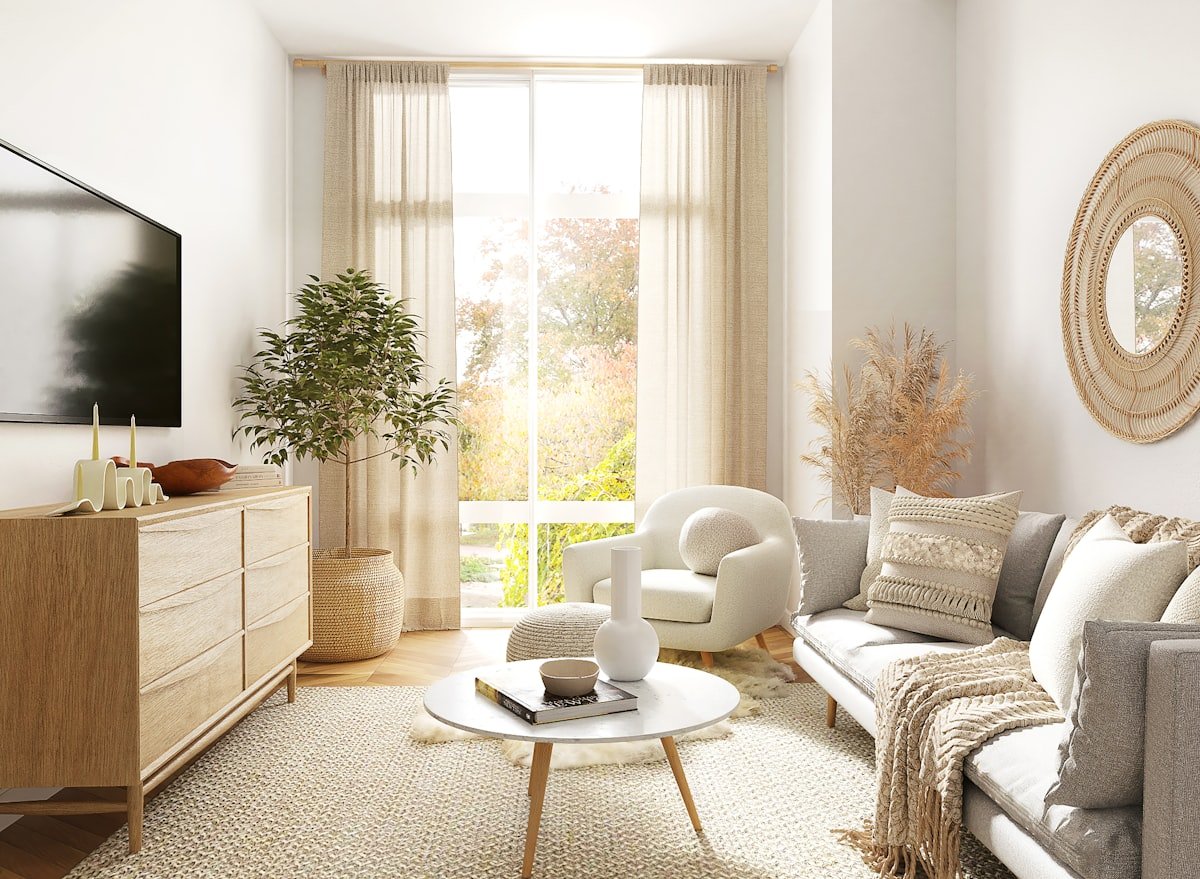
Do not buy the sofa first
Sofas eat budgets. A new one takes $400 to $800 and instantly becomes the most expensive thing you own in a place you will leave in nine months. Buy it used or inherit it, then spend the saved money on everything around it.
A tired second-hand sofa in a decent shape is fixable. A cheap new sofa in a bad shape is not. Look for straight arms, legs you can see, and a back that sits below window height. Sagging cushions can be re-stuffed for under $40. Ugly upholstery is what throws are for.
Fix the lighting before anything else
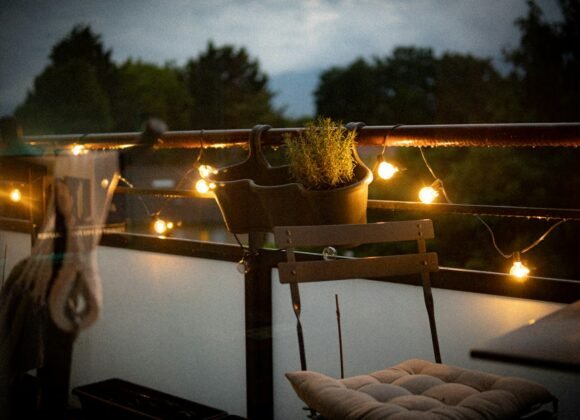
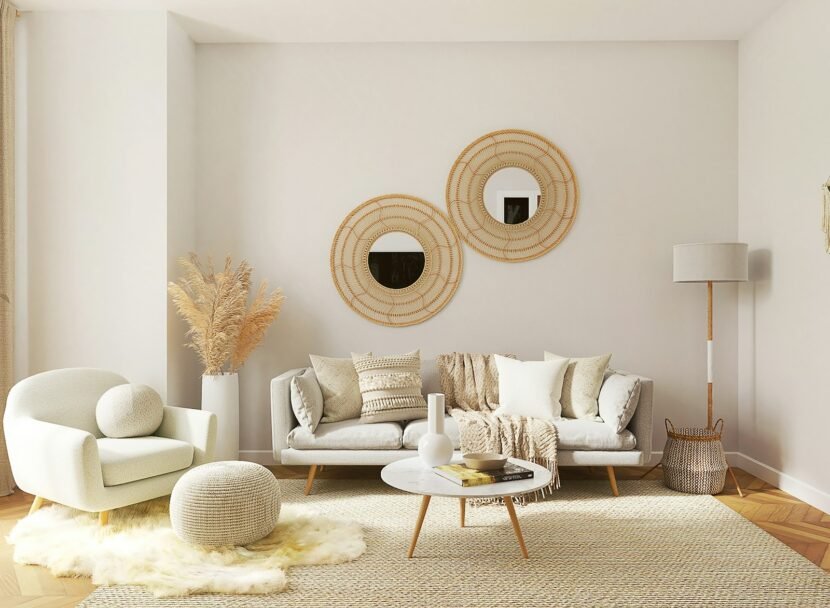
If you do one thing in the living room, do this. Two or three lamps at different heights, all with warm bulbs, will transform a room more than any furniture purchase.
The target is 2700K on the bulb box — sometimes labelled “soft white” or “warm white.” Anything at 4000K or above is the blue-white light of a lecture hall, and it will undo everything else you do. Bulbs are $3 each. This is the highest-return $12 in the entire apartment.
Placement: one floor lamp in the corner behind the seating, one table lamp at roughly seated eye level, and one low light — a small lamp on a shelf or a clip light aimed at a wall. Three sources at three heights. Then leave the ceiling light off permanently.
The rug is doing more than you think
Hard floors bounce sound and make rooms feel like waiting areas. A rug fixes acoustics and defines the seating zone in one move.
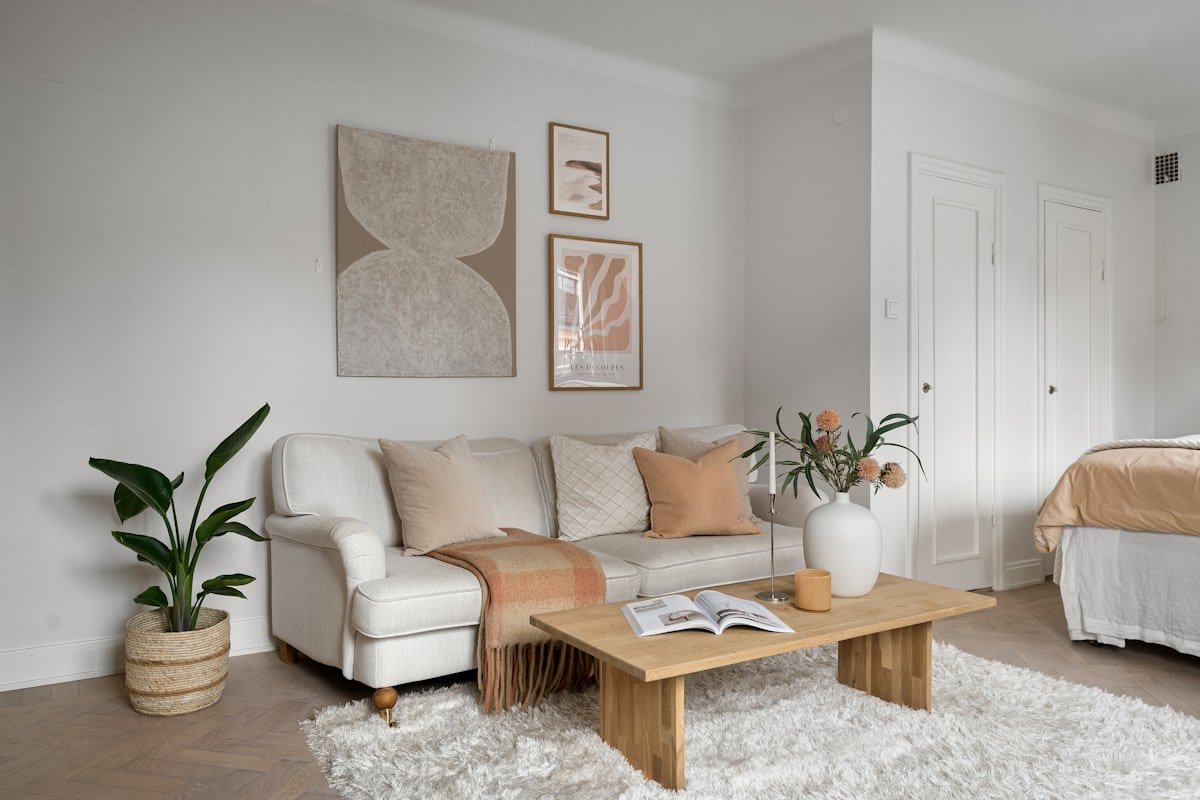
The common mistake is buying too small. A rug that only reaches the coffee table makes the room look smaller. Get one large enough that the front legs of your seating sit on it. A 5×7 is usually the minimum for a small living room; 8×10 if the room allows.
Washable flatweaves run $50 to $120 in those sizes. Skip anything shaggy — it traps everything and looks matted within a semester.
Cover the storage problem honestly
Student living rooms accumulate: books, cables, controllers, mail, shoes, a printer nobody wanted. Open shelving displays all of it.
Closed storage is worth paying for. A low cabinet or two stacked storage cubes with fabric bins hides the mess and doubles as surface area. Around $60 to $100, and it is the difference between a room that can be tidied in four minutes and one that cannot.
The Bedroom Is Not a Dorm Room
You are out of the dorm. The bedroom should stop performing like one.
Bedding is the whole room
The bed is 40% of the visual weight of a small bedroom. Whatever is on it sets the tone for everything else.
The upgrade that costs nothing extra: buy one solid duvet cover in a colour you actually like, instead of a printed set. Prints date fast and clash with everything. Solid colours layer. A $40 solid cover with $15 of contrasting pillowcases looks more expensive than a $70 patterned set, every time.
Then add one textural layer — a chunky throw folded at the foot, or a quilt under the duvet. That single layer is what separates “made bed” from “styled bed,” and it is why hotel rooms look the way they do.
Get the mattress off the floor
Non-negotiable. A mattress on the floor is the loudest possible signal of a temporary space, and it collects dust and moisture underneath.
A basic metal frame is $50 to $90. A slatted platform is $100 to $150. Either works. If the budget genuinely is not there this month, a set of bed risers under a boxspring is $20 and buys you both height and under-bed storage.
Curtains, hung wrong on purpose
Most renters hang curtains inside the window frame, which makes windows look smaller and rooms look shorter.
Hang the rod high — close to the ceiling, not the frame — and wide, extending past the window on both sides. The window reads as much larger, the ceiling reads as higher, and nobody can tell where the actual frame is. Tension rods work if drilling is out; adhesive rod brackets rated for the weight work for lighter panels.
Blackout panels run $25 to $50 a pair and also solve the streetlight problem.
One surface, kept clear
A nightstand does not need to be a nightstand. A stool, a stacked crate, a small side table. What matters is that there is one surface next to the bed and that it holds three things maximum: a lamp, a glass, one other item.
Clear surfaces are the cheapest luxury signal there is.
Kitchen and Dining on a Student Budget
Rental kitchens are usually the worst room in the apartment and the one you can change least. Work around it.
Get things off the counter
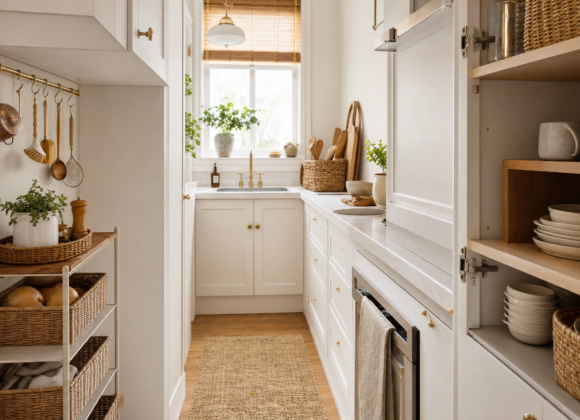
Counter clutter is what makes a small kitchen feel unusable. A wall-mounted rail with hooks, a magnetic knife strip, and a single tray to corral oils and salt will reclaim most of the working surface.
Adhesive rails hold enough for utensils and mugs. Command-style hooks rated to 3lb handle most of what a student kitchen needs to hang.
Match your dishes
Mismatched inherited dishes are the fastest way to make a kitchen look like a share house. A 16-piece set in one plain colour is $30 to $40 and instantly reads as a functioning adult household. White or a single muted tone. Donate the rest.
Contact paper, used sparingly
Bad rental countertops and cabinet fronts can be covered with removable contact paper for around $20. This works well in small doses and badly in large ones — it looks best on a backsplash strip or the inside of open shelving, and worst wrapped over an entire counter where every seam shows.
Test the removal on a hidden corner before committing. Older laminate can lift.
The table problem
Most first apartments have nowhere sensible to eat. Options in ascending cost: a folding bistro table for two ($50), a drop-leaf table against a wall ($90 to $140), or a narrow console with two stools that doubles as a desk. Any of these beats eating on the sofa every night, which is a habit that makes the living room permanently untidy.
The Bathroom Nobody Plans For
Budgets run out before the bathroom. It is also the room where small money goes furthest, because everything in it is small.
Replace the shower curtain immediately
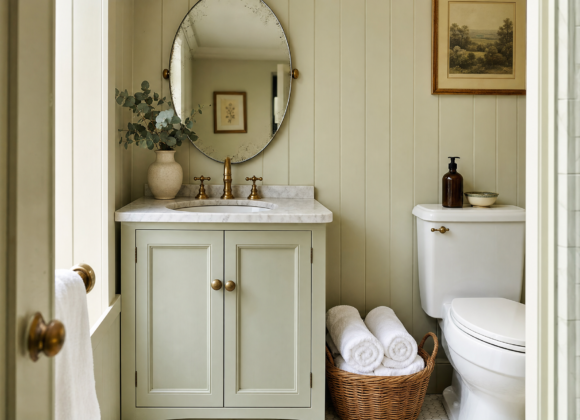
The clear plastic liner that came with the place is doing real damage. A fabric curtain in a solid colour is $20 and is the single biggest visual change available in a rental bathroom.
Hang it high — same principle as the windows. The ceiling reads higher and the room reads larger.
Decant the plastic
Bathroom shelves are a wall of competing brand labels. Moving shampoo, conditioner and body wash into three matching pump bottles ($15 for a set) removes all of that noise for almost nothing. It is the most visible cheap trick in the entire apartment.
Vertical storage
Rental bathrooms have no storage. An over-the-toilet shelf unit ($40) or a tension-rod corner caddy uses the vertical space nobody is using. Add two or three matching baskets to hide the rest.
Towels, all the same
Same rule as dishes. Four towels in one colour, $25. Mismatched towels from three different households is the specific look you are trying to leave behind.
The Entryway You Probably Do Not Have
Most apartments open directly into the living room. Building a boundary there — even a suggested one — makes the whole place feel more organised.
The minimum viable entry: a small mat, hooks at shoulder height, and a tray or bowl for keys. Under $30 for all three. It stops shoes and bags migrating into the living room, which is what actually makes small apartments feel chaotic.
If there is wall space, a narrow console or a floating shelf gives you a landing surface and a spot for a lamp. That lamp, on a timer or a smart plug, means you never walk into a dark apartment — a small thing that makes a place feel considerably more like a home.
Walls, Without Losing the Deposit
Wall damage is where deposits die. Everything here is reversible.
- Adhesive strips for anything under 16lb. Rated by weight — check the pack and do not push it. Remove by pulling the tab straight down, slowly.
- Leaning, not hanging. A large framed print leaned on a shelf, dresser or the floor looks intentional and puts zero holes in anything.
- Removable wallpaper on one wall. $40 to $80 for a small feature wall. Test a corner first — it lifts poorly from fresh or badly-primed paint.
- Tension rods in alcoves and window recesses for hanging plants, curtains or shelving with no fixings at all.
On what to actually put up: one large piece beats a gallery wall in a small apartment. Gallery walls need space to read properly and require more holes. If the budget is thin, a large-format print in a cheap frame, or fabric stretched over a canvas, does the job for under $30.
What This Actually Costs
A realistic build for a one-bedroom, assuming a second-hand or inherited sofa and bed frame. Prices are US averages and will vary.
| Item | Cost | Priority |
|---|---|---|
| Warm bulbs (x6, 2700K) | $18 | Do this first |
| Floor lamp + table lamp | $70 | Do this first |
| Living room rug (5×7) | $80 | High |
| Solid duvet cover + pillowcases | $55 | High |
| Bed frame or risers | $20–90 | High |
| Curtains + rod | $45 | Medium |
| Closed storage (2 cubes + bins) | $70 | Medium |
| Dish set (16pc, one colour) | $35 | Medium |
| Fabric shower curtain | $20 | Medium |
| Matching towels (x4) | $25 | Medium |
| Bathroom shelf unit + baskets | $50 | Lower |
| Entry hooks, mat, tray | $30 | Lower |
| Large wall art | $30 | Lower |
| Throw + cushion covers | $45 | Lower |
| Total | $593–663 |
Spread across a semester that is roughly $150 a month. The first two rows — $88 of lighting — deliver more visible change than the remaining $500 combined, which is why they are at the top.
Where to Actually Buy It
Order of value for a student budget:
- Marketplace and campus groups. Best value by a wide margin, especially in the two weeks around move-out. End-of-semester listings are close to free because people are desperate.
- Thrift and charity shops. Reliable for lamps, frames, mirrors, dishes, small furniture. Poor for upholstery and mattresses.
- Discount home retailers. Good for textiles and storage where you want new and matching.
- Flat-pack. Fine for storage and frames. Buy used flat-pack rather than new where you can — it is the same item at a third of the price.
Two things worth buying new regardless: the mattress and anything textile that goes against skin. Everything else, used is fine.
Five Mistakes Worth Avoiding
- Buying everything in the first week. Live in the space a month before committing to large pieces. You will get the layout wrong otherwise.
- Too-small rug. Undersized rugs make rooms look smaller. Go larger than feels right.
- Cool-white bulbs. Undoes every other decision. Check the Kelvin number on the box.
- Matching furniture sets. Reads as showroom, not home. Mix materials and eras.
- Decorating before decluttering. No amount of styling fixes a room with too much in it.
Frequently Asked Questions
How much should a college apartment cost to furnish?
$500 to $800 for a one-bedroom if you buy the sofa and bed frame second-hand. Under $400 is achievable if you inherit more pieces or split costs with a roommate. Spread it across a semester rather than buying everything at move-in.
How do I make my apartment look expensive on a budget?
Warm lamp lighting instead of overhead, a limited three-colour palette, closed storage instead of open, one large art piece instead of several small, and clear surfaces. None of those cost more than the alternative — they are placement and restraint, not spending.
What should I buy first for a new apartment?
Warm bulbs and two lamps, roughly $88 total. It changes how every other surface in the apartment looks and costs less than a single piece of furniture. Rug and bedding next.
How do I decorate a rental without losing my deposit?
Adhesive strips rated above the item’s weight, leaning art instead of hanging, tension rods in recesses, and removable wallpaper tested on a hidden corner first. Photograph the walls at move-in so pre-existing damage is documented.
Can I make a college apartment look grown up with roommates?
Yes, but agree the shared palette before anyone buys anything. Three colours for communal rooms, and everyone decorates their own bedroom however they like. Most share-house chaos comes from four people buying independently for the same room.
What is the biggest mistake in student apartments?
Relying on the ceiling light. It is the single decision that makes an otherwise well-decorated apartment look institutional, and it is free to fix.
The Short Version
Warm lamps at three heights. Three colours, no more. Nothing on the floor that should not be. Fewer, larger pieces. Surfaces kept clear.
Those five things are most of the distance between a student apartment and a home, and together they cost less than a sofa. Start with the $18 of bulbs this week and see how much changes before spending anything else.