TL;DR
- Decide sofa position before buying anything — it determines every other layout decision in the room.
- Pull furniture away from walls slightly (30-45cm) — counterintuitively, this makes a small room feel larger.
- A rug that is too small makes the room look smaller. All sofa legs on the rug, or at minimum the front two.
- Keep circulation paths to one side only — crossing the room should not require navigating furniture.
- The TV wall layout (TV + floating shelves) is the most space-efficient arrangement for most small living rooms.
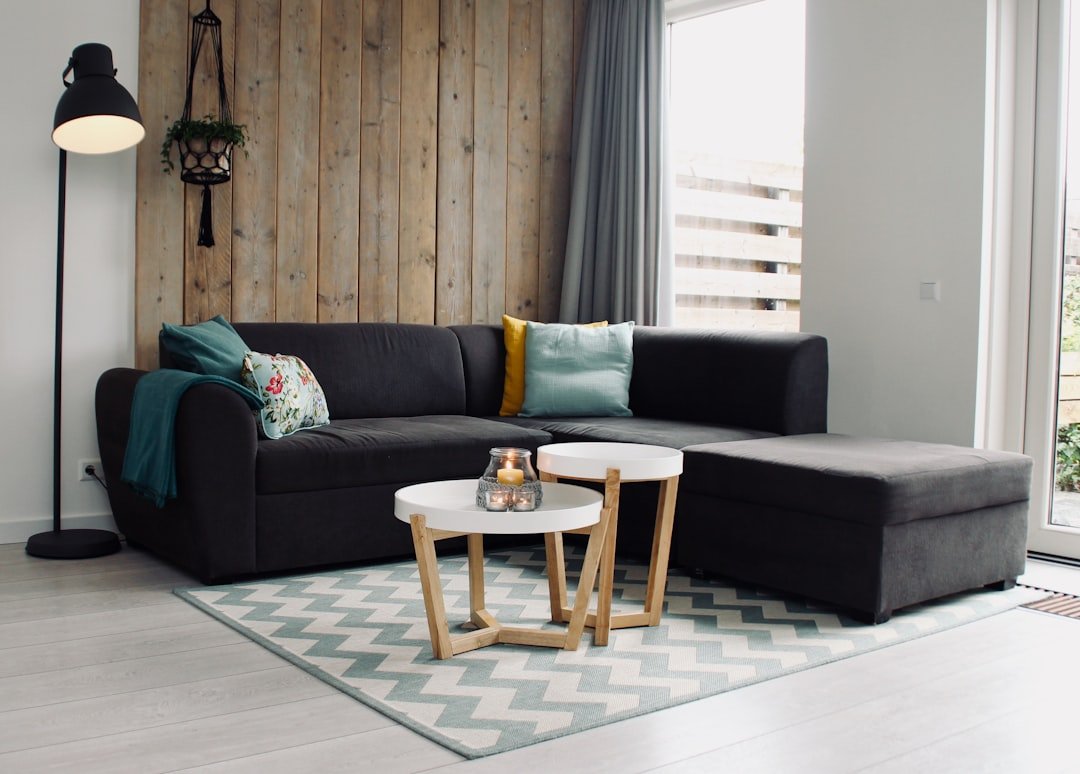
Layout is the difference between a small living room that works and one that does not. The furniture might be right, the decor might be good — but if the layout forces you to squeeze past the coffee table every time you cross the room, or leaves half the sofa facing a wall, nothing else compensates for it.
These small living room layout ideas address the specific constraints of rooms under about 25 square metres — the dimensions, traffic flow, and furniture scale decisions that determine whether a small room feels livable.
1. Measure before you move or buy anything
What are the minimum measurements that matter in a small living room layout? Three numbers: the sofa-to-coffee-table gap (minimum 45cm), the coffee-table-to-opposite-wall gap (minimum 90cm), and the circulation path width (minimum 75cm).
Tape out the sofa position on the floor before moving it. If the dimensions do not work on paper, they will not work in practice. A sofa that is 10cm too long for the wall it sits against will block a walkway or make the room feel impassable. Getting this right before any furniture moves saves enormous effort.
2. Use the TV wall layout as your starting point

What is the most space-efficient small living room layout? Sofa on the longest wall, TV mounted on the opposite wall with floating shelves flanking it, coffee table or storage ottoman in between, floor lamp in one corner. This arrangement keeps all furniture to two walls and leaves the room’s central floor space open.
Mounting the TV on the wall (rather than using a TV unit) frees the floor immediately beneath it. Add two floating shelves on either side of the TV for storage and display — this creates a built-in effect that makes the room feel finished without using any additional floor space. The shelves can hold books, plants, remotes, speakers, and decorative objects all in one organized zone.
3. Pull the sofa away from the wall
Should a sofa in a small room go against the wall? Usually not. Pulling the sofa 30-45cm away from the wall creates a sense of depth behind the seating and makes the room feel larger, not smaller — which is counterintuitive but consistently true.
The gap behind the sofa can be used productively: a slim console table or sofa table placed behind the sofa (at the same height as the sofa back, roughly 80-90cm) gives you a surface for lamps, plants, and display without touching the walls. This floating sofa arrangement works particularly well in rooms that also need a dining or work zone — the sofa back defines the living area boundary without a physical partition.
4. Choose the right rug size
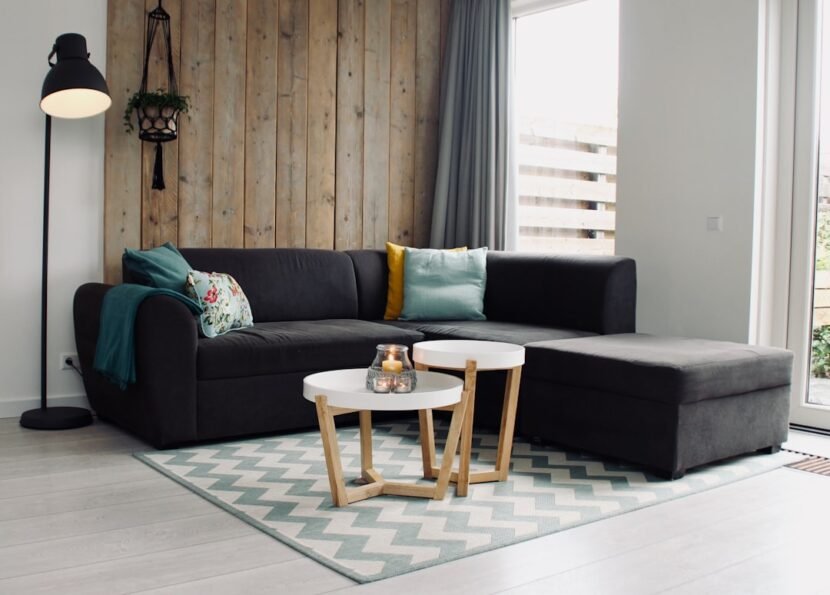
What size rug works in a small living room? Larger than most people expect. A 160x230cm rug is the starting point for most small living rooms. A 200x290cm rug is usually better. The front two legs of the sofa should sit on the rug at minimum — all four legs is ideal.
A rug that only sits in front of the sofa (not under it at all) reads as an afterthought and makes the room feel under-furnished. A correctly sized rug that the sofa sits on defines the seating zone as intentional and gives the room a clear sense of where the living area is, even in an open-plan apartment space.
5. Simple living room ideas for small spaces: the less-is-more rule
How many pieces of furniture does a small living room need? Fewer than you think. A sofa, one or two chairs or a small armchair, a coffee table or ottoman, a floor lamp, and a rug. That is a complete, functional small living room.
Every piece beyond these six should earn its place by solving a specific problem — additional seating, additional storage, or a specific functional need. Decorative furniture that serves no function (a side table that holds nothing, a bookcase that is too small to be useful, a chair that cannot be sat in because it is in the way) makes a small room feel crowded without adding livability.
6. Modern small living room ideas: slim profiles and visible legs
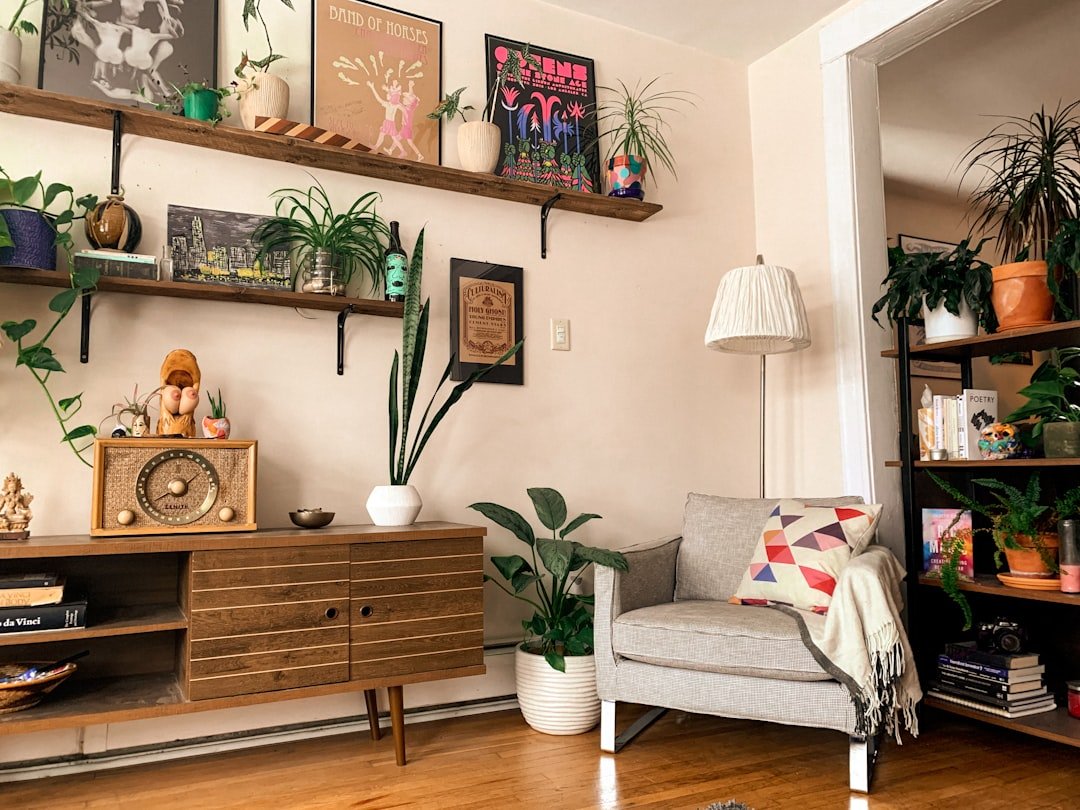
What furniture style works best in a small living room? Pieces with slim profiles and visible legs. Low-slung sofas with exposed legs, armchairs with tapered wooden legs, glass or acrylic side tables, and coffee tables with open shelving beneath — all of these read as lighter and take less visual space than chunky, solid-base equivalents.
A glass or acrylic coffee table is particularly effective in a small room — it provides the surface function of a coffee table while being visually almost transparent. The floor reads as continuous beneath and around it, making the room feel more open than it would with a solid wood or upholstered piece.
7. Small living room layout with TV in corner
Can a TV go in the corner of a small living room? Yes, and in some room shapes it is the better option. A corner TV position frees the longest wall for the sofa and eliminates the compromise of having either the TV or the sofa in an awkward position.
A corner TV mount (available from $20 to $40 on Amazon) positions the screen at a 45-degree angle from the corner, angled toward the seating. This works well in square rooms where neither wall is clearly dominant, and in L-shaped layouts where the seating wraps around two sides. The corner position also means neither the TV nor the sofa is the primary focal point from the room’s entrance — the room reads as more balanced.
8. Elegant small living room ideas: focal point and symmetry
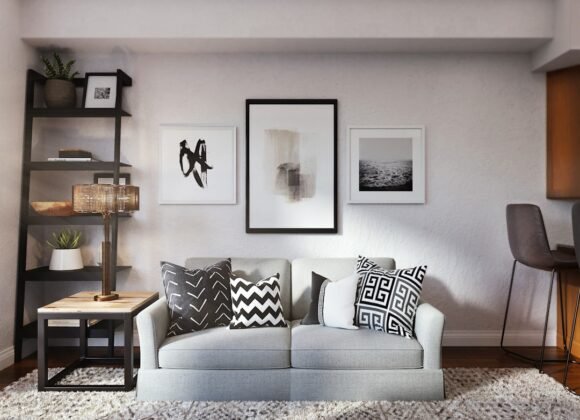
How do you make a small living room look elegant rather than cramped? With a single strong focal point and symmetry around it. A fireplace, a gallery wall, or a TV wall with flanking shelves becomes the visual anchor — everything else in the room faces or frames it.
Symmetry on either side of the focal point (matching lamps, matching plants, matching shelves) creates a sense of order that reads as intentional design rather than improvised arrangement. You do not need expensive furniture for an elegant small living room — you need consistent visual logic.
9. Small living room IKEA layout ideas
What IKEA furniture works best in a small living room? The KIVIK two-seater sofa (a compact 190cm width), the LACK floating shelves (inexpensive, lightweight, wall-mounted), the KALLAX shelving unit as a room divider or storage wall, and the POÄNG chair as a secondary seat with a small footprint.
IKEA’s BESTA range is well-suited to TV wall layouts — modular units that can be wall-mounted or floor-standing, in consistent finishes, that create a built-in effect without the built-in cost. A wall-mounted BESTA unit under a mounted TV with two LACK shelves flanking it creates a complete media wall for around $150 to $250.
Frequently asked questions
How do you arrange furniture in a small living room?
Start with the sofa position against the longest wall, TV on the opposite wall, and one clear circulation path. All front sofa legs on the rug. Pull the sofa 30-45cm from the wall. Keep the coffee table narrow enough to allow 45cm of clearance to the sofa on both sides. Add a floor lamp in one corner. Stop there.
What makes a small living room look bigger?
A large mirror opposite the main window, a correctly sized rug, furniture with visible legs, a mounted TV (no floor-based TV unit), and keeping the central floor space as clear as possible. Light wall colors and warm layered lighting amplify all of these effects.
Should furniture in a small living room be pushed against the walls?
Usually no. Pulling the sofa 30-45cm from the wall creates depth behind the seating and makes the room feel larger. It also allows for a console table behind the sofa, adding a functional surface without using the walls. Only push furniture to the wall if the room is so narrow that any gap would make circulation impossible.
Pulling it together
A small living room layout works when the sofa position is decided first (based on measurement, not preference), the rug is the right size, and everything beyond the core pieces earns its place. The editing restraint matters as much as the layout decisions.
For the apartment-wide layout approach, see our small apartment living room layout ideas guide. For furniture and decor, see our small apartment living room ideas guide.