Standing in the middle of a small living room trying to figure out where the couch, the TV, and somehow also a place to actually walk are all supposed to go is one of the most common decorating headaches out there. The good news is that small living room ideas that maximize style and space aren’t about cramming in less furniture or living with a room that feels bare and unfinished. With the right layout choices, multi-purpose pieces, and a few visual tricks, a compact room can feel just as stylish and functional as one twice its size. Here’s exactly how to make that happen.
Rethink Your Furniture Layout First
Before buying anything new, look hard at how your current furniture is arranged. The biggest space killer in small living rooms isn’t the size of the furniture, it’s furniture pushed against every wall, which actually makes the center of the room feel like a dead, awkward void.
- Float your sofa a few inches off the wall if you can, even six inches of breathing room makes a room feel more intentional.
- Angle a chair or two instead of lining everything up in straight rows. Slight angles make a small room feel more dynamic and less like a waiting room.
- Choose one clear focal point, whether that’s a TV wall, a fireplace, or a big window, and arrange seating around it rather than scattering attention across the whole room.
Choose Furniture That Pulls Double Duty
In a small living room, every piece of furniture should be working overtime. This is where style and space maximizing really overlap, since multi-purpose furniture tends to look more streamlined too.
Smart Picks That Save Real Space
- A storage ottoman that works as a coffee table, extra seating, and a place to stash blankets or remotes.
- A console table behind the sofa that holds lamps and decor on top with baskets or drawers underneath for real storage.
- A daybed or a sleeper sofa with slim, tapered legs instead of a bulky sectional, especially if the room doubles as a guest space.
- Nesting tables that can separate for extra surface area when you have people over, then tuck back together the rest of the time.
Scale Furniture to the Room, Not the Showroom
Furniture always looks smaller in a big showroom than it will in your actual living room. A common mistake is buying a deep, oversized sectional because it looked great in the store, only to have it swallow the entire room at home. Measure your space first, tape it out on the floor if you have to, and look for pieces with slimmer arms, exposed legs, and a lower profile. Furniture that lets you see a bit of floor underneath it, rather than boxy pieces that sit flush to the ground, makes the whole room feel lighter and more open.
Use Mirrors and Light to Trick the Eye
This is one of the oldest tricks in the book because it genuinely works. A large mirror placed across from a window bounces natural light around the room and creates the illusion of a second window, instantly making the space feel bigger and airier.
Beyond mirrors, prioritize layered lighting over a single overhead fixture. A floor lamp in one corner, a table lamp near the sofa, and maybe a picture light over art all add depth and warmth without taking up meaningful floor space, and a well-lit room always reads as more spacious than a dim one.
Go Vertical With Storage and Decor
When floor space is limited, the walls become your best friend. Small living room ideas that maximize style and space almost always lean heavily on vertical thinking.
- Install floating shelves above a console or sofa to display books and decor without eating into floor space.
- Choose a tall, narrow bookcase instead of a short, wide one, since height draws the eye up and makes ceilings feel higher.
- Hang curtains close to the ceiling rather than right above the window frame, which makes windows, and the whole room, feel taller.
Keep the Color Palette Light but Not Boring
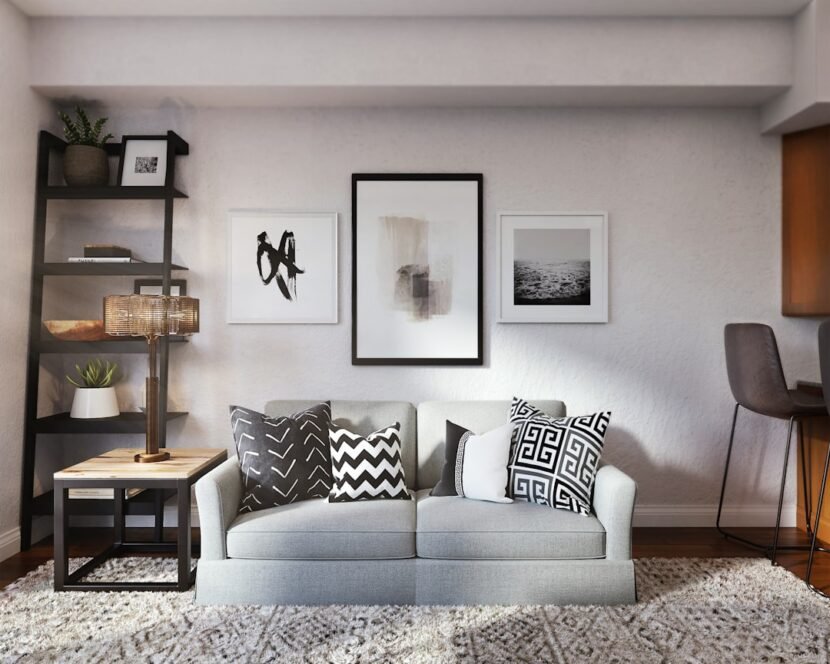
Light, soft colors on walls and larger furniture pieces help a small room feel open, but an all-white room can feel sterile and cold fast. Add depth and personality through smaller elements: a patterned rug, colorful throw pillows, or a piece of bold art. Keeping the large surfaces light while letting smaller accessories carry color and pattern gives you the spaciousness of a neutral palette without sacrificing personality.
Edit Ruthlessly and Give Everything a Home
Small rooms show clutter instantly in a way larger rooms can hide. This doesn’t mean stripping the room of personality, it means being intentional about what earns a spot. Baskets, closed cabinets, and drawer units keep everyday items like remotes, chargers, and mail out of sight, while a few well-chosen decorative pieces get to actually shine instead of competing with visual noise. A general rule that works well is to keep one or two statement items per surface rather than filling every inch with knickknacks.
Define Zones Without Adding Walls
If your small living room shares space with a dining area or entryway, use a rug to visually define the living room zone rather than physically dividing the space with furniture or screens. A rug that anchors the seating area, with all the front legs of your furniture sitting on it, pulls the whole layout together and signals clearly where one zone ends and another begins, all without making the room feel chopped up or smaller than it is.
A small living room can absolutely be one of the coziest, most stylish rooms in your home once you stop fighting its size and start designing with it in mind. Pick one change to start with this week, whether that’s floating your sofa off the wall or finally hanging that mirror across from the window, and watch how much bigger and more put-together the room starts to feel.