TL;DR
- Modern minimalist is not about owning less — it is about displaying less. Storage is essential; visible clutter is not.
- One accent color, repeated in three places maximum. Everything else neutral.
- Natural materials (wood, linen, stone, rattan) add warmth that stops minimalist from feeling cold.
- One large plant does more for a minimalist living room than five small decorative objects.
- Cozy minimalist is the goal: calm and intentional, not sterile and empty.
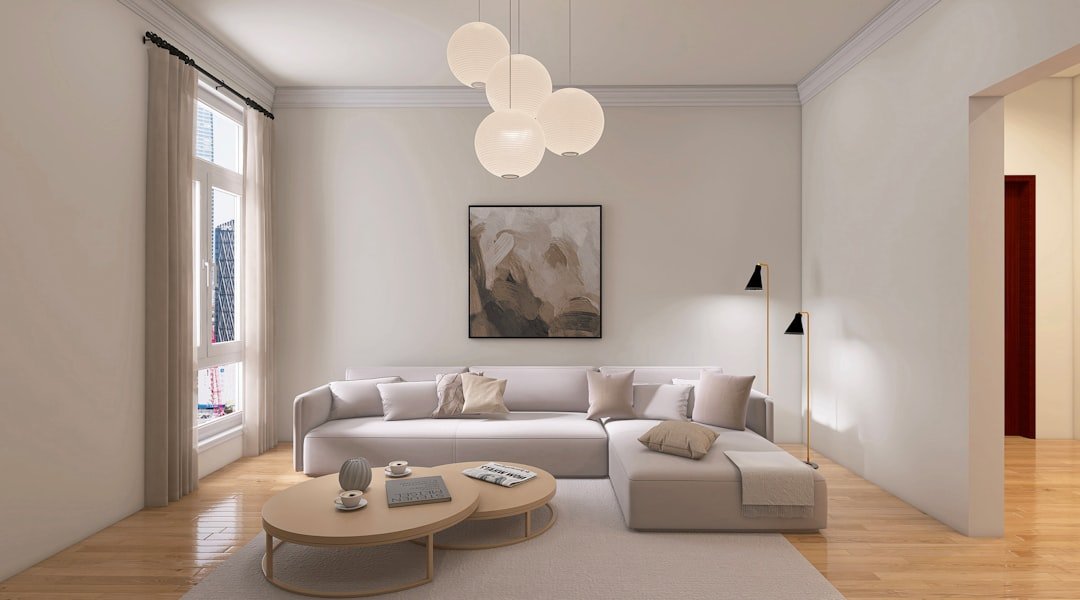
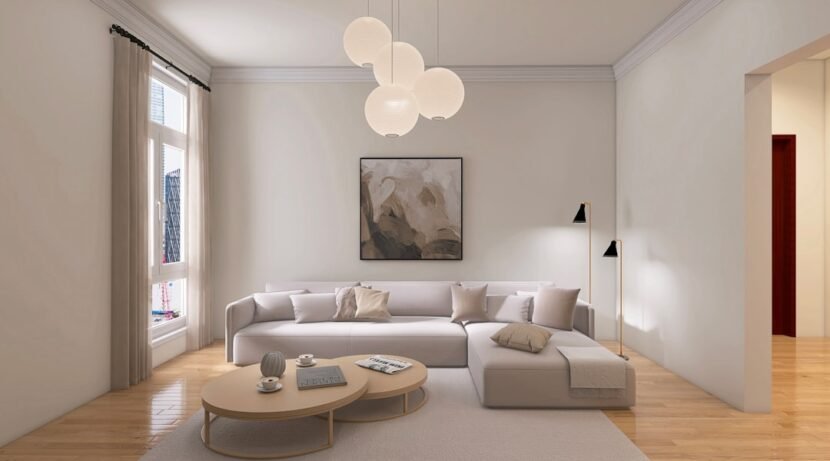
The version of minimalism that most people actually want is not the stark white room with one chair and a cactus. It is a living room that feels calm, deliberate, and easy to be in — where every object has a reason for being there, the furniture fits the space properly, and there is no visual noise competing for attention.
Modern minimalist living room ideas are not about deprivation. They are about making better choices with what stays.
1. Start by removing, not adding
What is the first step in creating a minimalist living room? Removing everything that does not need to be there, rather than buying new things to make the space look better.
Take everything off every surface. Everything off every shelf. Then look at the room empty. What comes back earns its place by being genuinely used or genuinely loved — not just vaguely nice. Most people find that 30 to 50% of what they had on surfaces was there because it had always been there, not because it needed to be. The edit is the whole design.
2. Choose a neutral palette with one accent color
What colors work in a modern minimalist living room? A neutral base — white, warm cream, soft greige, warm gray — with one accent color repeated in two or three places across the room.
The accent color works through repetition. A terracotta cushion, a terracotta pot, and a terracotta-toned art print: three objects, one color, visible consistency. The same terracotta spread across ten objects reads as cluttered. Three objects reads as intentional. Pick the accent color first, then limit its appearances strictly.
Warm neutrals are better than cool neutrals for most minimalist living rooms. Warm white (slightly cream-toned) feels livable. Cool white (blue-toned) reads as clinical without other warm materials to offset it. The difference is visible immediately in a paint chip but even more visible on four walls of a room.
3. Add warmth with natural materials
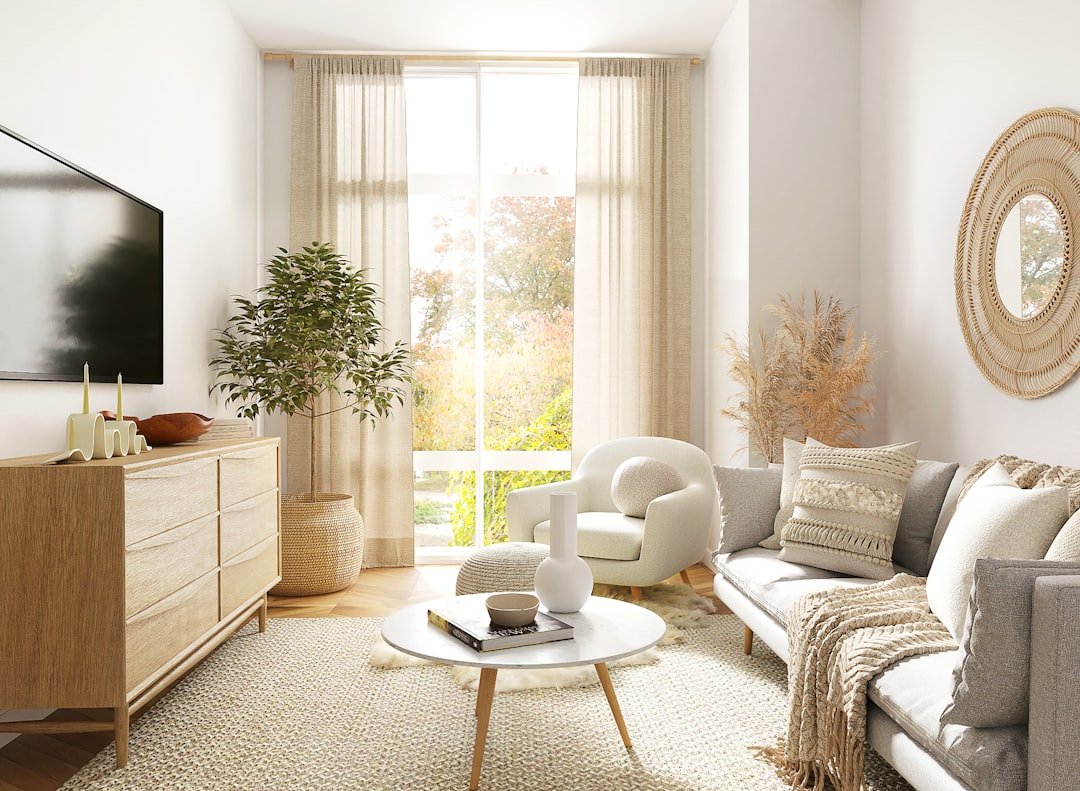
How do you make a minimalist living room feel cozy rather than cold? Natural materials — wood, linen, stone, rattan, cotton, jute — add tactile warmth that paint color and furniture alone cannot achieve.
A wooden coffee table or side table, a linen or cotton sofa, a jute or wool rug, and rattan accessories: each of these adds a layer of warmth and texture that makes the neutral palette feel welcoming rather than sterile. The minimalist aesthetic with all-synthetic, all-smooth surfaces tends toward the clinical. Natural materials solve this by introducing variation that the eye reads as warmth rather than noise.
This is the cozy minimalist formula: clean lines and a neutral palette (the minimalist part), with natural textures and warm materials (the cozy part). Neither alone achieves the goal.
4. Choose furniture for clean lines and slim profiles
What furniture fits a modern minimalist living room? Pieces with clean lines, slim profiles, and visible legs. No ornate detailing, no tufting, no heavy carving. The furniture should read as simple and intentional from across the room.
A low-profile sofa with straight arms and tapered wooden legs, a rectangular wooden coffee table with no lower shelf (keeps the floor plane clear), floating shelves rather than a freestanding bookcase, and a floor lamp with a simple straight shade. Each piece is chosen for what it is without decoration. The simplicity of each individual piece allows the overall room to read as cohesive.
Minimalist living room furniture does not need to be expensive. IKEA’s SÖDERHAMN sofa, the STOCKHOLM range, and the BESTÅ storage system all fit the aesthetic at accessible price points. The quality of the edit matters more than the quality of the individual pieces.
5. Minimalist living room without sofa alternatives
Does a minimalist living room need a sofa? No. Floor cushions, a daybed, a pair of armchairs, or a low Japanese-style seating arrangement can replace a conventional sofa in a minimalist room — particularly in small spaces where a full sofa takes up disproportionate floor space.
A low tatami-style platform with oversized floor cushions and a low wooden coffee table creates a genuinely distinctive minimalist living room that most people have not seen executed well. The floor-level arrangement makes the ceiling feel higher and the room feel more spacious. Combined with a wall-mounted TV and floating shelves, the floor space is almost entirely clear — the most minimalist possible arrangement for a functional living room.
6. One large plant instead of many small ones
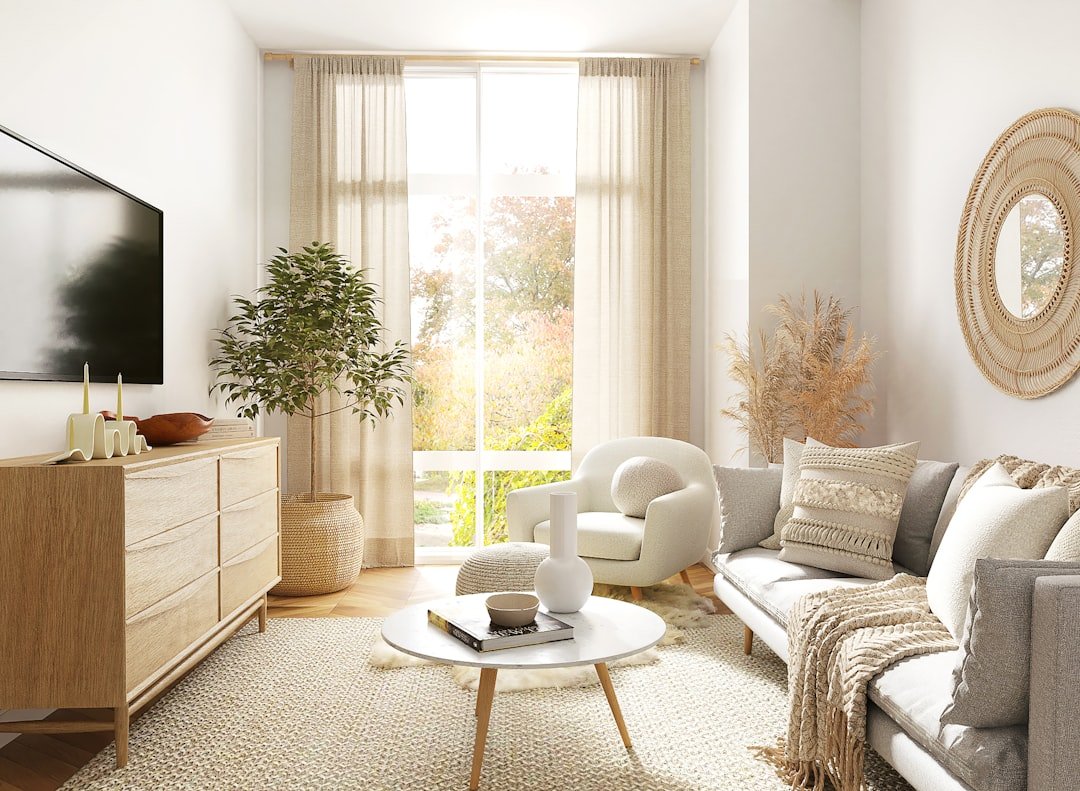
How do plants work in a minimalist living room? One large plant in a good pot does more than five small ones scattered around. The single large plant reads as a deliberate design choice — an object with presence. Five small plants read as an accumulation.
A large monstera, fiddle leaf fig, snake plant, or olive tree in a concrete, ceramic, or simple white pot in one corner or beside the sofa adds life, organic warmth, and scale to a minimal room without adding visual noise. It is the one exception to the minimalist rule about limiting objects — a plant earns its presence in a way that a collection of decorative objects usually does not.
7. Minimalist living room with TV — keeping it clean
How do you incorporate a TV into a minimalist living room without it dominating? Mount it on the wall at the right height, keep cables hidden, and surround it with as little furniture as possible.
The TV should be mounted so the center of the screen is at eye height when seated — typically 100-110cm from the floor for a standard sofa height. All cables run down the wall inside a flat cable cover (adhesive, paintable, $10 on Amazon) or inside the wall if installation is possible. A single slim media unit or two floating shelves beneath the TV holds everything else — media players, speakers, remotes — without adding bulk to the floor level.
8. Minimalist living room small space version
How do you apply minimalist principles to a very small living room? The same rules apply but the stakes are higher — every unnecessary object has more impact in a small room, and every well-chosen element does more work.
In a small minimalist room: one sofa (no armchairs unless the sofa is a two-seater), one rug (correctly sized), one plant, no coffee table (storage ottoman instead), floating shelves for storage (no freestanding bookshelves), mounted TV (no floor TV unit). That is the complete room. Each piece counts for more in a small space, which means each decision matters more. See our small apartment living room ideas guide for the full layout approach.
Frequently asked questions
What is modern minimalist living room decor?
Clean-lined furniture in neutral colors, a limited palette with one accent color, natural materials for warmth and texture, hidden storage for everything that does not need to be visible, and one or two plants. The restraint in the number of objects is the defining characteristic — everything visible is there because it earns its place.
How do you make a minimalist living room feel cozy?
Natural materials (linen, wood, jute, rattan), warm lighting at multiple levels (floor lamp, table lamp, candles — not just a ceiling fixture), one large plant, a textured rug underfoot, and a throw on the sofa. The cozy minimalist aesthetic keeps clean lines and a neutral palette but adds enough tactile warmth that the room feels livable rather than aspirational.
What furniture does a minimalist living room need?
A sofa, a rug, a coffee table or ottoman, a floor lamp, and somewhere to store things that are not on display. That is the complete functional list. Every additional piece beyond these should solve a specific problem — additional seating, a specific storage need, or a functional requirement — rather than simply filling space.
Pulling it together
A modern minimalist living room is not a room with fewer things — it is a room where everything that is there has been chosen deliberately. The edit is the design. The restraint is the aesthetic. And the natural materials, warm lighting, and one good plant are what stop it from feeling like a showroom rather than a home.
For the lighting side specifically, see our cozy living room lighting ideas guide — the warm-bulb and multi-source principles apply directly to minimalist rooms.