TL;DR
- Define zones with rugs and lighting before buying any furniture — a zone without a rug is just furniture floating in a room.
- The sofa back is your best zone divider. Pull it from the wall and it creates a natural boundary between living and sleeping.
- A curtain track from ceiling to floor is the most flexible, removable, renter-friendly room divider available.
- Each zone needs its own light source. Shared overhead lighting kills the sense of separate spaces immediately.
- Less furniture than you think. Two zones in one room succeed when each is deliberately under-furnished, not when both are crammed full.
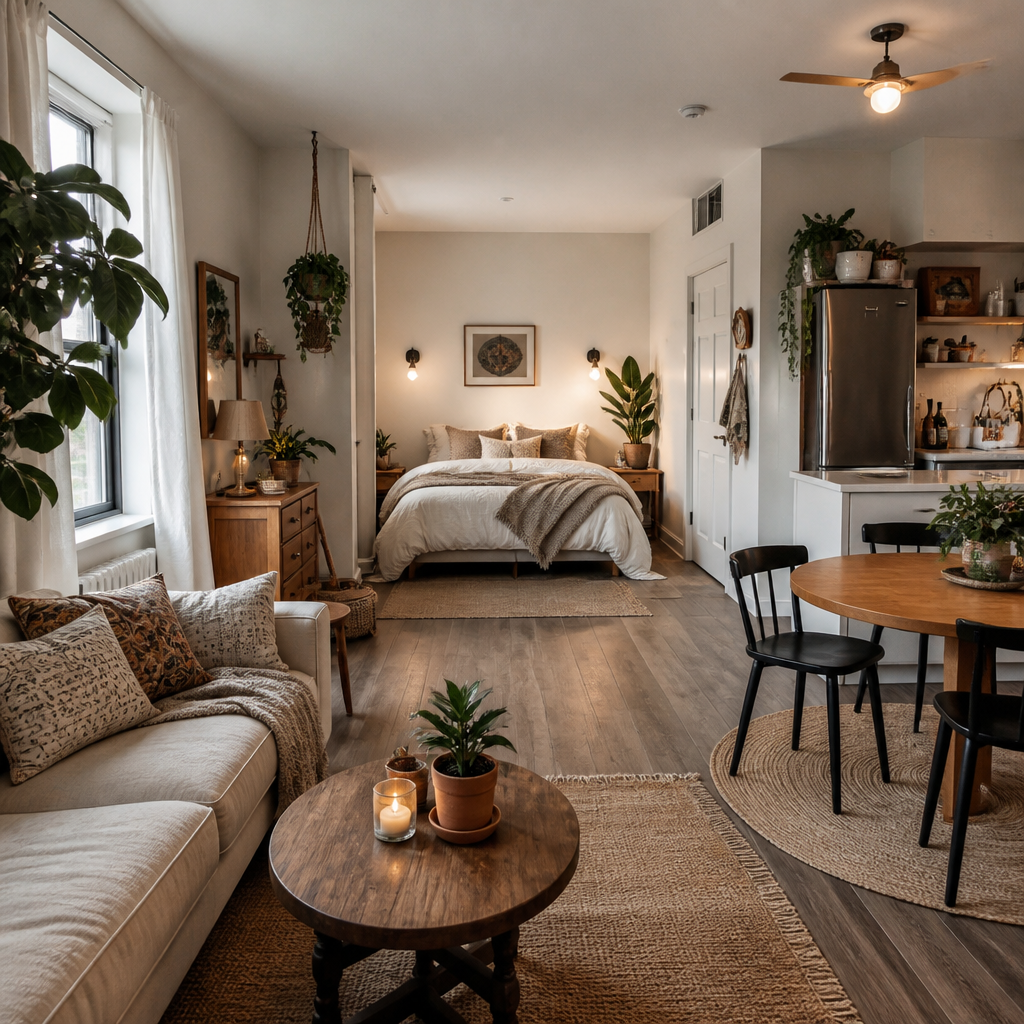
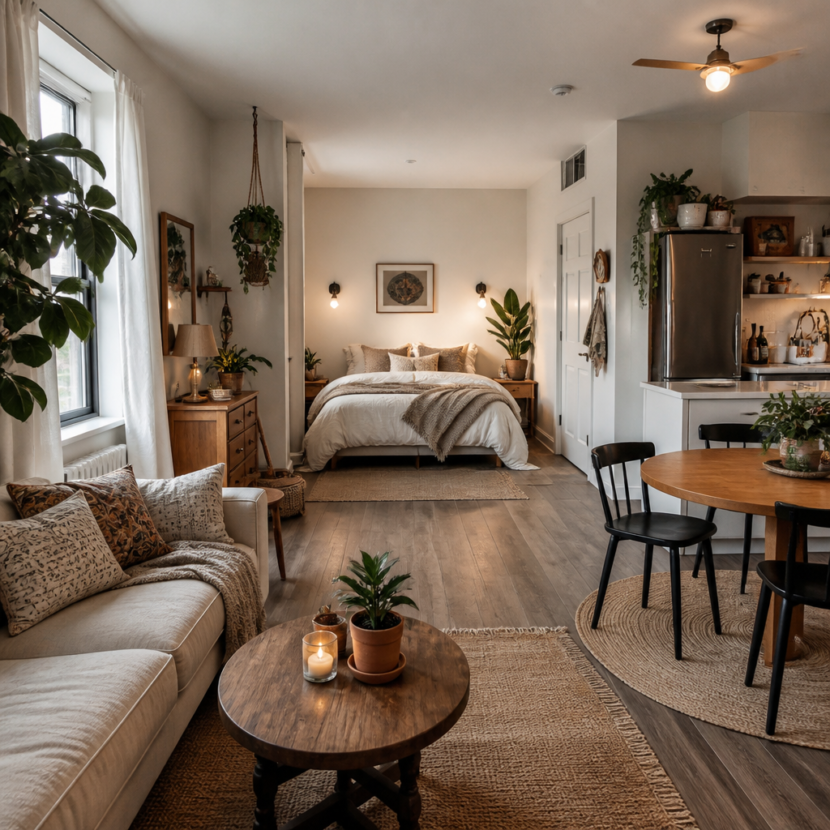
The studio apartment is the ultimate space-planning challenge: one room that needs to be a bedroom, a living room, a dining room, and often a home office simultaneously. The difference between a studio that works and one that feels claustrophobic is almost entirely zone definition — whether each part of the room reads as its own space, or whether everything blurs into one undifferentiated area.
These studio apartment decorating ideas focus on zone separation first, decoration second. Get the zones right and the styling almost takes care of itself.
The zone-first principle
What is the most important principle for studio apartment decorating? Define zones before buying furniture. Every piece of furniture should belong clearly to one zone — living, sleeping, dining, or working — rather than ambiguously floating between them.
A studio apartment without zone definition reads as one large messy room regardless of how clean it is. A studio with clear zones reads as a small apartment with multiple rooms — the perception of space is dramatically different even when the square footage is identical. Zone definition costs almost nothing: it requires a rug, a light source, and furniture positioned with intention rather than convenience.
1. Define every zone with its own rug
How do rugs define zones in a studio apartment? A rug signals where a zone starts and ends without any physical partition. Two rugs in one studio apartment — one under the sofa area, one under the bed — create two distinct spaces from a single open floor plan.
The rugs do not need to match. In fact, different textures or patterns for different zones reinforce the zone distinction — a warm jute rug under the living area and a softer cotton rug beside the bed make each zone feel distinct in texture as well as visually. Keep both rugs within the same color family so the room reads as cohesive rather than conflicted.
A dining zone gets a rug too — a round rug under a small round table and two chairs defines the dining zone completely. The three rugs together create three zones in one room with no furniture, no partitions, and full reversibility for renters.
2. Use the sofa back as your zone divider
What is the best furniture-based zone divider in a studio? The sofa, positioned with its back facing the sleeping zone. A sofa pulled away from the wall so its back defines a boundary is the most natural and functional zone divider available — it divides the space, adds seating, and requires no extra purchase.
A console table placed directly behind the sofa back (at sofa-back height, typically 80-90cm) reinforces the boundary and adds a surface on the sleeping-zone side for a lamp and plant. This creates a visual “headboard” for the bed zone and a natural transition between the two areas — you know instinctively when you have moved from the living space to the sleeping space.
The sofa should face the living zone’s focal point (TV or window), not the bed. A sofa facing the bed means every time you sit in the living area, you are looking directly at the bedroom — which eliminates the psychological separation that makes a studio feel livable.
3. Give each zone its own light source
Why does lighting matter so much in a studio apartment? Because a single overhead light illuminates the whole room equally and destroys any sense of zone separation. When all zones are equally lit simultaneously, they read as one room. When each zone has its own light source, you can activate only the zone you are using.
Living zone: a floor lamp in the corner behind or beside the sofa. Sleeping zone: bedside sconces or a bedside lamp. Dining zone: a pendant light above the table (plug-in pendants with a cord that runs along the ceiling work for renters). Working zone: a dedicated desk lamp. Turning on only the desk lamp creates a work environment. Switching to the floor lamp and bedside lamp creates an evening living environment. The zones activate and deactivate with the lights.
4. Studio apartment decorating ideas on a budget: curtain dividers
What is the most flexible partition for a studio apartment? A ceiling-mounted curtain track with floor-length curtains. It divides the sleeping zone from the living area completely when drawn, disappears visually when open, requires no permanent installation for renters (tension rod systems work in most ceilings), and costs $30 to $80 in materials.
Linen curtains in a warm neutral tone work best — they diffuse light rather than blocking it, so the sleeping zone feels separate without feeling like a closet. Blackout curtains on the bedroom side add the additional function of light control for sleeping. The curtain track on a ceiling-mounted tension rail costs around $25 to $40 at IKEA (KVARTAL system) and installs in an afternoon without tools.
5. Keep the sleeping zone minimal
What furniture does the sleeping zone of a studio need? A bed, a bedside surface, and a lamp. Nothing else. The sleeping zone in a studio apartment works when it is the most edited zone in the room — the living and dining areas do more visual work, so the sleeping zone can be spare.
A bed with under-bed storage drawers or a lift-up base solves most of the storage problem in a studio apartment without adding any extra furniture. A wall-mounted bedside shelf (not a freestanding nightstand) keeps the floor clear and makes the sleeping zone feel less crowded. White or cream linen bedding keeps the bed visually light — a dark duvet cover in a studio can make the sleeping zone feel like a heavy anchor in the room.
The bed position matters: ideally against a wall rather than floating in the middle of the room, with at least one side accessible. This maximizes the circulation space in the remaining zones.
6. Choose compact dining furniture
What dining furniture works in a studio apartment? A small round table (60-80cm diameter) with two chairs, or a wall-mounted fold-down table that disappears when not in use.
A round table takes less floor space than a rectangular one at the same capacity and allows chairs to be pushed in from any angle — useful when the dining zone is compact. A 60cm round table seats two comfortably and fits in a remarkably small footprint. IKEA’s LISABO and DOCKSTA tables both work well in studio dining zones from $80 to $130.
A fold-down wall table is the most space-efficient option: it provides a full dining surface when needed and takes zero floor space when folded. IKEA’s NORBERG wall-mounted drop-leaf table folds to 10cm depth and costs around $50. Combined with two folding chairs stored flat against the wall or hung on hooks, this solution uses almost no permanent floor space for the dining zone.
7. Small apartment decorating ideas: the working zone
Where does a home office go in a studio apartment? In the corner least used by other zones — usually beside the dining area or in the corner opposite the bed. A wall-mounted floating desk (30-40cm deep) creates a complete working zone without a freestanding desk footprint.
The working zone needs physical and psychological separation from the living zone to function well. A pegboard above the desk holds supplies and signals visually that this area is for work. A different chair from the living zone seating reinforces the distinction. Even a small distinction — the desk lamp switches on, the floor lamp switches off — creates enough zone change to support focused work in a studio apartment.
For a more detailed breakdown of home office setup in small spaces, see our small home office ideas for tiny spaces guide.
8. Modern apartment living room ideas within a studio
How do you make the living zone of a studio feel like a real living room? By giving it the same elements a separate living room would have: a sofa, a rug, a floor lamp, a plant, and one piece of wall art — all within the defined zone boundary.
The living zone of a studio apartment should be the most complete-feeling zone. It is the space seen from the entrance and the space used most often. A well-defined living zone with a sofa, rug, and floor lamp makes the entire studio feel more like an apartment and less like a single room.
Frequently asked questions
How do you separate zones in a studio apartment?
Rugs (one per zone), the sofa back as a physical divider, ceiling-mounted curtain tracks for a more complete partition, and dedicated light sources for each zone. Used together, these four tools create genuinely distinct spaces without any permanent construction.
What furniture does a studio apartment need?
A bed with under-bed storage, a compact sofa, a small round dining table with two chairs, a floor lamp, a desk lamp, and a wall-mounted floating desk if a working zone is needed. Every piece should belong clearly to one zone. Avoid any furniture that serves no specific zone function.
How do you make a studio apartment feel bigger?
Clear zone definition makes a studio feel bigger than it is — rooms within a room read as more spacious than one undifferentiated space. Beyond zoning: a large mirror in the living zone, light wall colors throughout, ceiling-height curtains on the windows, and keeping the floor as visible as possible in all zones.
Pulling it together
A studio apartment that works is one where each zone feels intentional — where you can sit in the living area and feel like you are in a living room, not a bedroom with a sofa in it. The zone-first approach means deciding where each zone lives before buying a single piece of furniture. The rug goes down first. The lighting follows. The furniture fills the zone. In that order, studios become livable. In reverse order, they stay chaotic.
For the furniture side in more depth, see our small space furniture ideas guide. For the full layout approach, see our small apartment living room layout ideas guide.
nn