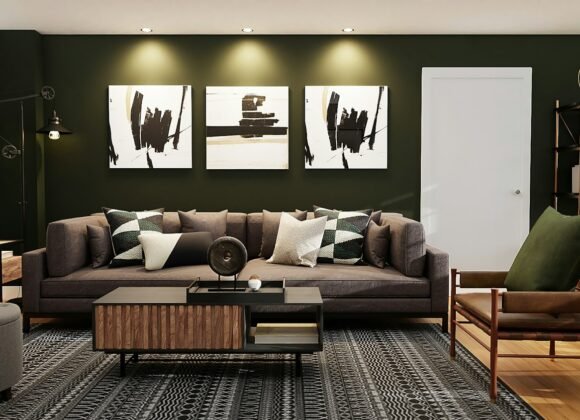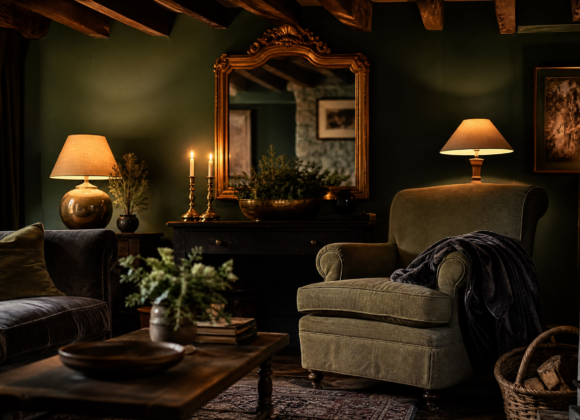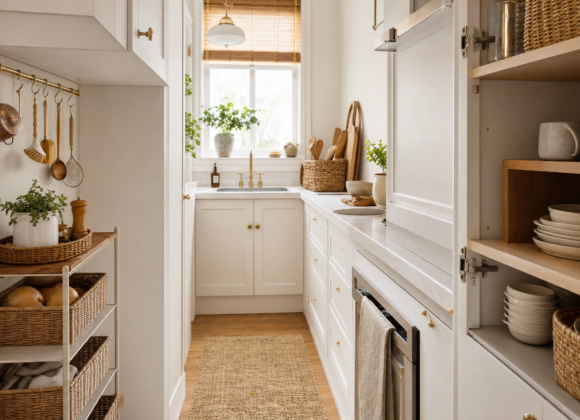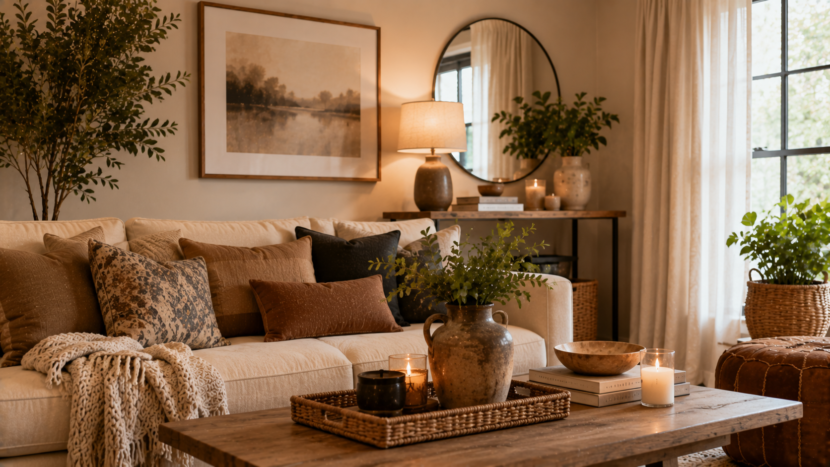
There is a widely held misconception that expensive-looking homes cost a lot of money. This is not accurate. The homes that look genuinely high-end tend to share a set of specific principles: cohesion, restraint, quality materials in the right places, and an understanding of what actually signals luxury versus what signals expenditure. These principles are available to anyone at any budget.
We have spent years working out which budget home decor changes have genuinely outsized impact on how expensive a space looks. This is the edited list of ideas that consistently deliver the most visual return for the least financial investment.
What Actually Makes a Home Look Expensive
Before the specific ideas, the principle: expensive-looking homes are almost always cohesive, edited, and well-lit. The cohesion comes from a consistent colour palette. The editing comes from removing things that do not serve the space. The lighting comes from warm, layered sources rather than a single overhead light. These three things are free or near-free, and they are more impactful than any single decorative purchase.
Budget Home Decor Ideas That Look High-End
Floor-Length Curtains Hung at Ceiling Height
This is consistently one of the most transformative budget changes available. Curtains hung from the ceiling (or as close to it as possible) rather than from just above the window, and falling all the way to the floor, create a sense of height and luxury that is completely disproportionate to the cost. The same IKEA linen curtains that look fine hung in the standard position look genuinely expensive when hung at ceiling height and pooling slightly on the floor.
For renters, a longer curtain rod mounted on the wall just below the ceiling achieves this. For those who cannot drill, tension rods work for lighter fabric panels. Ceiling height is the transformation. The curtains themselves can be very inexpensive.
A Large, Quality Rug
Undersized rugs are one of the most common reasons budget rooms fail to look expensive. A rug that is too small floats in the room and makes the furniture look unanchored. A rug that is correctly sized (front legs of all seating on the rug) grounds the room and signals that someone who knows what they are doing made the decisions here.
A jute rug in the right size reads as significantly more expensive than a small synthetic rug regardless of their respective price points. Get the size right first, then the material, then the price. See our small living room ideas guide for sizing guidance.
Edit to a Three-Colour Palette
Visual chaos signals budget regardless of the quality of individual items. A room with twelve different colours and patterns reads as assembled rather than designed. The same room edited to three tones within the same colour family reads as considered and expensive. Choose your dominant neutral, your secondary tone, and one accent colour. Every item in the room should be one of these three. The discipline of editing is entirely free.
Replace Cheap Throws and Cushions With Natural Fabrics
Synthetic fabrics (polyester throws, acrylic velvet cushions) look cheap in person even when they photograph well. Natural fabrics (linen, cotton, wool) have a drape, texture, and ageing quality that reads as expensive at any price point. A linen cushion cover from IKEA (£6-8) looks more expensive than a synthetic velvet equivalent at twice the price.
Swap synthetic textiles for natural alternatives wherever they are visible: throws, cushions, curtains, table runners. This is one of the highest-impact changes with the lowest cost. For inspiration, see our warm neutral living room guide.
Warm Lighting, Always
Cool white or daylight bulbs make almost every room look worse. Warm white (2700K) makes almost every room look better. The colour temperature of the light is one of the primary signals of whether a space feels expensive or institutional. Replacing every bulb in the home with 2700K warm white equivalents costs £10-20 and the improvement is immediate and significant.
Add at least one floor lamp to any room that currently relies entirely on overhead lighting. The layering of light sources is a fundamental of interior design at any price point. See our cozy lighting guide for specific recommendations.
Decant Everything Into Matching Containers
In the kitchen and bathroom, matching containers for toiletries and dry goods signal that someone made deliberate decisions about how this space looks. Three matching soap dispensers in the bathroom. Matching glass jars for dry goods in the kitchen. A set of matching containers on the bathroom counter. This is not about the containers being expensive: it is about the visual cohesion they create.
A full set of glass jars for a kitchen (IKEA KORKEN, £1-3 each) and matching soap dispensers for a bathroom (£8-15 for a set on Amazon) cost very little and transform the visual quality of both rooms.
One Quality Plant in the Right Pot
A large, healthy plant in a good pot is one of the most reliable visual signals of a well-considered home. The plant itself communicates that someone lives here with intention, and a plant in a quality ceramic or terracotta pot communicates that they have taste. A large monstera or fiddle-leaf fig in a 25-30cm terracotta pot costs £15-30 total and looks more expensive than many decorative items at five times the price.
Make Your Surfaces Earn Their Place
Every surface in an expensive-looking home has been considered: what is on it, how it is arranged, and whether it needs to be there at all. The coffee table has a tray with two objects and a plant. The windowsill has one plant. The shelf has books plus three objects, no more. This discipline of curation is the actual practice of making a home look high-end. It costs nothing and it requires more decision-making than spending.
For the full approach to curating beautiful surfaces, see our earthy home decor ideas guide and our minimalist decor ideas for editing principles.
Frame Something
Framed art elevates a wall in a way that unframed prints or bare walls cannot. The frame does not need to be expensive. A simple black, white, or natural wood frame from IKEA (£3-15) elevates even a simple printed image significantly. A botanical print downloaded for free and printed at the local pharmacy, in a good frame, hung at the correct height, looks considered and deliberate. Bare walls always look temporary, regardless of what else is in the room.
The Budget High-End Shopping List: Under £100
For the highest impact per pound: warm white LED bulbs to replace all existing (£10-20), a linen cushion cover pair in coordinating neutrals (£12-20), a large terracotta plant pot for a floor plant (£8-15), a simple wooden frame for a botanical print (£8-15), a matching soap dispenser set for the bathroom (£10-15), glass storage jars for the kitchen (£8-15 for a starter set), and a linen throw in oatmeal or warm white (£15-25). Total: approximately £71-125. These changes are mostly invisible as individual purchases but collectively transform how expensive the home looks.
Final Thoughts
Budget home decor that looks high-end is not about buying expensive-looking cheap things. It is about understanding what actually signals luxury (cohesion, editing, quality materials in visible places, warm light) and applying those principles at whatever budget is available. The free changes (editing, rearranging, improving the light) are often more impactful than the purchased ones.
Start with the lightbulbs. Warm them up across the whole home this week. The improvement costs almost nothing and it changes everything.
Not sure what your style is?
Take our free 5-question quiz and discover your decorating personality — with room ideas matched to your result.
Build your personal moodboard
Like or skip 12 room photos — we’ll reveal your style, your colour palette, and curated reads just for you.