The best kitchen backsplash idea for you comes down to three things: whether you own or rent, how much wall you want to cover, and how much mess the area behind your stove has to take. Owners get the widest choice, from classic subway tile to a single stone slab. Renters have more options than they think, because peel-and-stick tile, removable panels and a well-placed sheet of clear acrylic all come off without damage. Below are fourteen directions to go, grouped by how permanent they are, with the practical notes that decide whether each one works in a real kitchen.
First decide how far up the wall it goes
This choice changes the cost and the look more than the material does. There are three common heights.
- A short run, roughly four inches above the counter, which is really just splash protection and reads as trim
- Counter to the underside of the upper cabinets, the standard, usually around 18 inches
- Full height to the ceiling, or full height only behind the range, which is the most current look and the most expensive per square foot
Full height behind the range with standard height everywhere else is a good compromise. It puts the visual weight where you want it and keeps the material cost down. If you have open shelving instead of upper cabinets, full height is close to mandatory, because a stopped line under a floating shelf looks unfinished.
Tile that holds up over time
1. White subway tile, laid in something other than a running bond
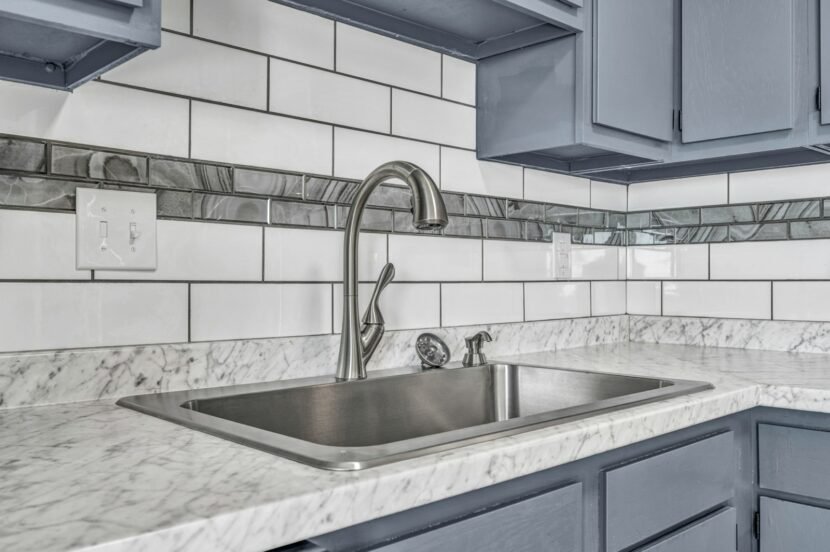
Subway tile is still the default for a reason: it is inexpensive, every tile shop stocks it, and it resells well if you ever list the place. The way to keep it from looking generic is the layout. A vertical stack, a herringbone, or a double running bond all cost the same in materials and change the character completely. Vertical stacking also makes a low ceiling feel taller.
2. Zellige or handmade-look tile
These are the glossy, slightly uneven tiles that catch light differently across the wall. They are the reason so many kitchens have looked warmer over the last few years. Two things to know before ordering: the color varies from tile to tile by design, so buy from one production lot and order extra, and the uneven edges mean installation takes longer, which shows up in labor cost. The irregular surface also holds a little more grease near a stove, so plan on wiping it more often than flat ceramic.
3. Square grid tile
Small square tiles set in a straight grid with a contrasting grout line read as a deliberate pattern rather than a background. Four-inch squares in cream, sage or pale blue work well in kitchens with plain slab cabinet doors, where the grid gives the eye something to do.
4. Terracotta or unglazed clay
Warm, matte and forgiving of a busy kitchen. Unglazed clay is porous, so it needs sealing and resealing on whatever schedule the manufacturer specifies. Skip it directly behind a stove unless the product sheet says it is rated for that.
5. Picket, fish scale or penny round shapes
Shaped tile does the decorating on its own, which suits a kitchen where everything else is plain. Keep the color quiet if the shape is loud. A cream picket tile with matching grout is a detail you will still like in five years; a high-contrast fish scale in a strong color is a stronger commitment.
Slab and sheet options
6. A stone slab that matches the counter
Running the counter material up the wall, with the veining continued across the joint, is the most expensive option here and the one that reads most finished. It also has a real practical advantage: almost no grout lines to clean behind the stove. Ask the fabricator about a remnant piece if you only want it behind the range, since that is often a fraction of the cost of a full run.
7. Quartz or sintered stone in a single sheet
Engineered surfaces cost less than natural stone in most markets and come in consistent patterns, so you know what you are getting. They are also non-porous, which matters on a wall that gets tomato sauce on it. Confirm heat tolerance with the maker if it is going directly behind a gas burner.
8. Stainless steel behind the range only
A single stainless panel behind the burners, with tile or paint everywhere else, is how a lot of restaurant kitchens are built. It wipes clean in one pass and handles heat. It shows fingerprints and water spots, so it suits the stove zone more than the sink zone.
9. Clear or tinted glass over paint or wallpaper
A cut-to-size glass or acrylic panel lets you put any color or pattern behind it and still have a wipeable surface. This is the best way to get a bold pattern into a kitchen without committing to patterned tile. Have the panel cut by a glass shop with the outlet openings measured in advance, because cutting it on site is not practical.
Renter-friendly ideas that come back off
Everything in this section is reversible, which makes it the right list if your lease says no permanent alterations. Check your lease and ask your landlord in writing before you start, since what counts as permanent varies by agreement.
10. Peel-and-stick tile
Quality has improved a lot, and the better vinyl and gel versions read convincingly as tile from a few feet away. Two rules make the difference between a good result and a peeling mess. Clean and degrease the wall thoroughly first, because adhesive fails on a greasy kitchen wall more than anywhere else in a home. And check the heat rating before putting any of it directly behind a stove; many products specify a minimum clearance from burners. If yours does not say, leave that section as paint or a stainless panel. The same reversible thinking runs through our wider guide to rental kitchen makeover ideas.
11. Removable wallpaper behind a panel
Peel-and-stick wallpaper on its own does not belong near a sink or a stove, but behind an acrylic sheet it works well and costs very little. It is also the easiest way to change your mind in a year. Our roundup of removable wallpaper ideas for rentals covers which patterns hold up in small rooms.
12. Beadboard or slat panel, screwed not glued
Thin beadboard or a narrow slat panel, painted in a semi-gloss and attached with a few screws you can patch later, gives texture for the price of a sheet of board and a can of paint. Semi-gloss matters here, because flat paint in a kitchen does not survive being scrubbed.
13. Just paint, in the right finish
A washable semi-gloss or enamel in a color that picks up your cabinets is the cheapest backsplash there is, and in a rental with plain white cabinets it can do more than tile would. If you are painting the cabinets too, the notes in our guide to painting kitchen cabinets in a rental apply to the wall as well.
14. A tension rod shelf instead of a backsplash
If you cannot change the wall at all, put something in front of it. A narrow shelf or a rail with hanging utensils covers the plain stretch and adds storage, which is usually the scarcer resource in a rental kitchen. There is more of this approach in our small kitchen storage ideas.
Grout is the decision people forget
With tile, the grout color changes the result as much as the tile does. Matching grout makes the wall read as one surface and hides the layout. Contrasting grout turns the layout into the pattern, which is what you want with a plain square or subway tile. Mid-gray is the practical middle ground near a stove, because bright white grout stains and very dark grout shows hard-water residue.
Thin grout lines look more expensive than wide ones. If you are hiring the work out, ask what spacer size is planned rather than leaving it to chance.
Which idea fits your kitchen
| Your situation | Where to start |
|---|---|
| Renting, no alterations allowed | Semi-gloss paint, or acrylic panel over wallpaper |
| Renting, small changes tolerated | Peel-and-stick tile away from the burners |
| Own it, tight budget | Subway tile in a vertical stack or herringbone |
| Own it, want it to look custom | Zellige, or a stone remnant behind the range |
| Open shelving, no uppers | Full height tile or a single slab |
| Heavy cooking, hate scrubbing | Slab or stainless behind the stove |
| Dark or windowless kitchen | Glossy tile in a light color to bounce light |
Check these before you buy anything
- Measure the area in square feet and add ten to fifteen percent for cuts and breakage, more for herringbone
- Note where the outlets fall, because tile has to be cut around them and panels have to be ordered with the openings
- Confirm the heat rating for anything going directly behind a range, and follow the manufacturer’s stated clearance
- Check whether your local building rules have requirements for the surface behind a cooking appliance, and confirm with your municipality or a licensed installer rather than guessing
- Order one sample and tape it to the wall for a few days before committing, since kitchen lighting changes color more than you expect
Material prices move around by region and by year, so get a current quote for the square footage you measured instead of budgeting from a number you read somewhere. Tile costs vary widely even within one category, and labor is often the larger share of an installed price.
Kitchen backsplash ideas: common questions
What is the most timeless kitchen backsplash?
A plain ceramic tile in white or cream with a quiet grout color. Subway and small square shapes have both been in continuous use for over a century, which is about as good a signal of staying power as you get. Keeping the color neutral is what makes it timeless; the layout is where you can be less cautious.
Can you put peel-and-stick tile behind a stove?
Only if the product specifies that it is rated for it, and only at whatever clearance the maker requires. Many are not. Check the manufacturer’s instructions for that exact product, and if the guidance is unclear, use a stainless panel or paint for the section directly behind the burners.
Should the backsplash match the countertop?
It does not have to. Running the same material up the wall makes the two surfaces read as one, but a plain backsplash with a patterned counter, or the reverse, tends to look better than two competing patterns. Pick one surface to be interesting and let the other stay quiet.
How high should a backsplash go?
Counter to the bottom of the upper cabinets is the standard and suits most kitchens. Go full height behind the range if you cook a lot, and full height everywhere if you have open shelves instead of cabinets. A four-inch strip is the cheapest option and looks dated in most kitchens now.
What backsplash makes a small kitchen look bigger?
Light glossy tile with matching grout, run to full height, because it reflects light and gives the eye no horizontal break to stop at. Vertical stacking adds a little apparent height. Large-format tile or a slab works well too, since fewer lines make a small wall feel less busy.