Clear counters are not a tidiness problem. They are a storage design problem wearing a tidiness costume. If your kitchen counters fill up within two days of clearing them, no amount of discipline will fix it, because the items landing there have nowhere better to go. These kitchen organization ideas focus on giving every countertop item a permanent home, so the surfaces stay clear without you thinking about it.
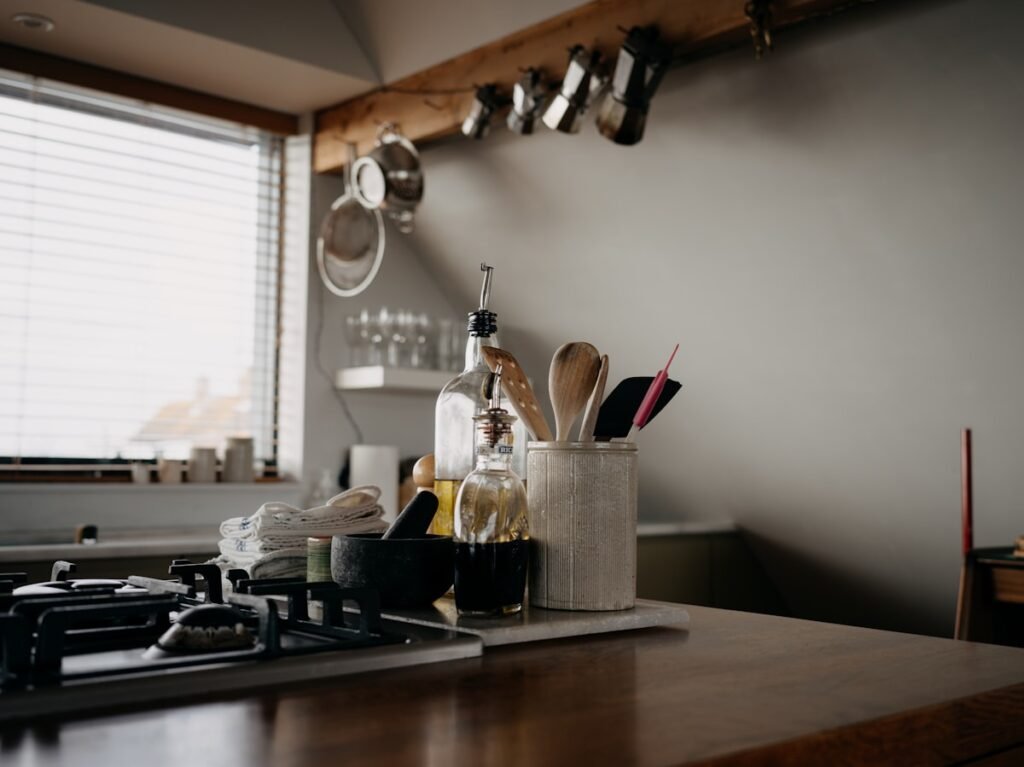
Start by auditing what is actually on the counter
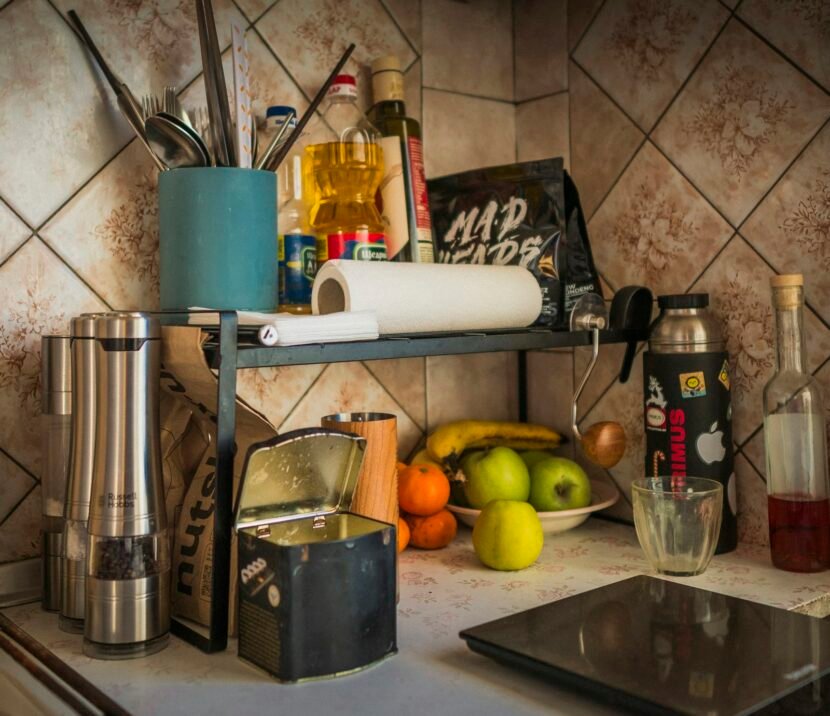
Take a photo of your kitchen counters right now. Then sort everything visible into three groups.
- Used daily. Kettle, coffee setup, the knife you always reach for, salt and pepper, cooking oil.
- Used weekly or less. Stand mixer, blender, air fryer, spice jars you use occasionally.
- Homeless. Post, keys, chargers, vitamins, the bag of takeaway sauce sachets.
Group three is the real culprit in most kitchens, and it is almost never addressed by kitchen organization advice. The counter is not being used as a counter. It is being used as the default surface for items that belong to the whole household. Solve that and half the problem disappears.
The rule that keeps counters clear
Only items used daily earn permanent counter space. Everything used weekly or less goes in a cupboard, even if that is slightly less convenient.
This is the part people resist. Yes, putting the air fryer in a cupboard means lifting it out twice a week. That inconvenience is small. The cost of a permanently cluttered kitchen, which is that you stop wanting to cook in it, is much larger.
The honest exception: if an appliance is genuinely used most days, leave it out and make it look good. A well-chosen kettle on a tray is not clutter.
Create a landing zone outside the kitchen
Post, keys, and chargers land on the kitchen counter because it is the first flat surface people reach after the front door. The fix is not discipline. It is an earlier flat surface.
A small shelf or bowl by the door intercepts the flow. In apartments where the door opens into the kitchen, designate one specific drawer as the household drawer and accept that it will look chaotic inside. Contained chaos beats distributed chaos.
Find the storage you already have
Most kitchens are storing at maybe 60 percent of their actual capacity because of vertical dead space.
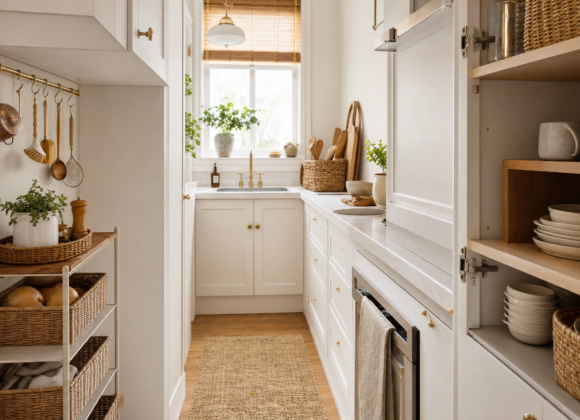
- Shelf risers inside cupboards. A standard cupboard shelf has 10cm of unused air above the plates. A riser doubles that shelf.
- The inside of cupboard doors. Adhesive or over-door racks hold cling film, foil, and spice jars. This is the single most wasted surface in every kitchen.
- The wall between the counter and the upper cupboards. A rail with hooks for utensils frees an entire crock off the counter.
- Under-shelf baskets. They clip onto an existing shelf and create a second tier for lightweight items.
- The gap above the upper cupboards. Baskets up there for genuine long-term storage like spare appliances and seasonal dishes.
Zone the kitchen by task, not by item type
Most people store by category, so all the mugs live together and all the tins live together. Storing by task is significantly better in a small kitchen.
- Coffee zone. Mugs, coffee, sugar, spoons, all within arm reach of the kettle.
- Prep zone. Chopping boards, knives, mixing bowls, near the largest clear counter run.
- Cooking zone. Oils, salt, spatulas, pans, beside the hob.
- Clean-up zone. Cloths, detergent, bin bags, under or beside the sink.
When a zone is set up properly, items return to their home without effort because the home is where you are already standing when you finish using them. That is the actual mechanism behind counters staying clear.
Deal with the pantry properly
Overflow food is a common reason things pile on counters. A few specifics that work:
- Decant dry goods into square containers. Square stacks, round wastes about 20 percent of shelf area.
- Use one open basket as a snack bin rather than shelving snacks individually. Snacks are the highest-churn category and they never stay organised.
- Keep a single shelf deliberately half empty for shopping overflow. Full pantries push items onto counters the day you shop.
- Put a turntable in the corner of the deepest shelf. Corners are where food goes to expire.
The five minute reset
Systems still need maintenance. The difference is that with proper zones, maintenance takes five minutes rather than an hour.
Once a day, clear the counters back to only the daily items, wipe the surfaces, and empty the household drawer once a week. If your reset takes longer than five minutes consistently, that is a signal that something still lacks a home rather than a signal that you need to try harder.
Frequently asked questions
How do I keep kitchen counters clear in a small kitchen?
Limit counter items to those used daily, create a landing zone for non-kitchen items outside the kitchen, and recover vertical storage inside cupboards with risers and door racks.
Should small appliances be stored in cupboards?
Anything used less than most days, yes. The lifting inconvenience is genuinely smaller than the cost of a permanently crowded work surface.
What is the best way to organise a rental kitchen?
Everything here is renter-safe. Risers, baskets, turntables and over-door racks all leave with you and require no fixings.
Homes, not habits
If the counters keep filling up, the answer is almost never more willpower. Work out which specific items keep reappearing, then give each one a home that is closer than the counter is. The tidiness follows on its own.
For tighter kitchens specifically, see the kitchen organization ideas for small kitchens, and if the room itself needs work, the rental kitchen makeover ideas without renovation covers the cosmetic side.