A small room does not have to feel small. The difference between a cramped apartment and one that feels open and airy is rarely about square footage. It’s about how you use light, color, furniture placement, and visual tricks that genuinely fool the eye. These small space decorating ideas will help any room feel bigger, brighter, and more intentional, no renovation required.

Start With Light, Warm Neutrals on Every Wall
Color is the single most powerful lever you have in a small space. Light, warm neutrals like soft white, cream, warm ivory, and pale greige reflect natural light rather than absorbing it, which creates the perception of more space. The key word here is warm. Cool gray tones that were everywhere a decade ago can make a small space feel flat and even smaller in low light.
Paint your trim and ceiling the same color as your walls but one sheen lighter. This eliminates harsh contrast that breaks up the visual flow of a room. When everything reads as one continuous surface, the eye travels further without stopping, which makes the space feel larger than its actual dimensions.
Soft warm neutrals like Sherwin-Williams Pure White, Benjamin Moore White Dove, or Benjamin Moore Chantilly Lace are consistently recommended by interior designers for exactly this reason. They work in almost every lighting condition and every style from modern minimalist to cozy cottage.
Use Mirrors to Double Your Perceived Space
Mirrors are the oldest trick in the small-space decorating playbook and they work every single time. A large mirror placed opposite a window bounces natural light across the room and creates the illusion that the space continues beyond the wall. The effect is immediate and dramatic.
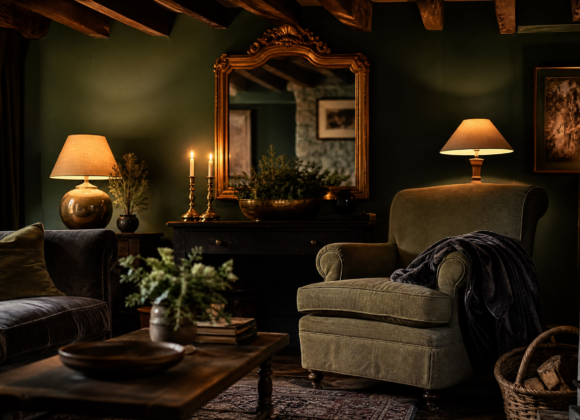
An oversized floor mirror leaned against a wall in a small bedroom or living room is one of the most effective investments you can make. Arch mirrors are particularly popular right now because their soft shape adds elegance rather than just function. Place one in the darkest corner of a room to reflect and redistribute light throughout the space.
For even more impact, create a mirrored gallery wall using a cluster of different-sized mirrors grouped together. This reads as art while doing the practical work of making the room feel larger. It also costs far less than a single large statement mirror from a design store.
Choose Furniture With Visible Legs
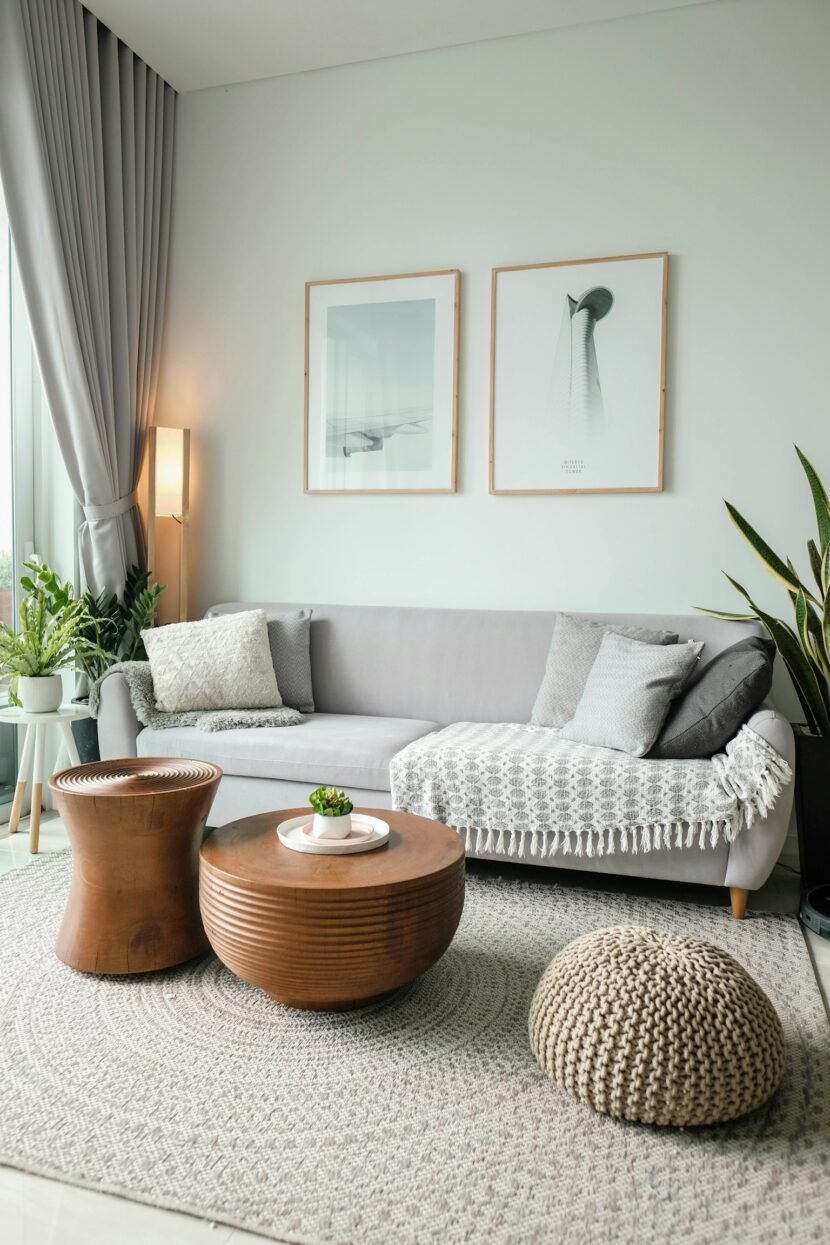
One of the most underrated small space decorating ideas is choosing furniture that shows its legs. A sofa, chair, or bed that sits flush to the floor creates a visual barrier. Light cannot travel underneath, the floor reads as broken up, and the room feels more cluttered even with nothing in it. Furniture with visible, tapered legs does the opposite. Light flows beneath the pieces, the floor reads as continuous, and the room breathes.
This rule applies to every piece in a small room. Opt for a sofa with slender legs over a platform base. Choose a bed frame with a visible leg rather than a box spring-style surround. Pick a coffee table with an open base rather than a solid cube. The cumulative effect of several furniture choices with legs is significant.
Avoid oversized, overstuffed furniture in small rooms. A smaller apartment-sized sofa with slim arms provides comfortable seating and keeps proportions balanced. The biggest scale mistake in small spaces is buying furniture sized for a larger room and wondering why everything feels cramped.
Hang Curtains High and Wide
Curtain placement is one of the most transformative small space decorating ideas and one of the most often ignored. Most people hang curtains at the top of the window frame. Interior designers hang them just below the ceiling. This simple change makes ceilings appear taller and windows appear dramatically larger.
Extend the curtain rod several inches beyond the window on each side as well. When curtains are drawn, they should cover only wall, not window glass. This creates the impression of a much larger window and floods the room with light even when the curtains are slightly overlapping the glass at the edges.
Choose curtain panels in a color close to the wall color. Matching or tone-on-tone curtains blend into the background and make the window treatment feel like an extension of the wall rather than a separate element. This continuity is one of the quieter small-space decorating tricks that designers use constantly.
Use a Large Rug to Anchor the Space
A rug that is too small is one of the most common mistakes in small space decorating. Counterintuitively, a larger rug makes a room feel bigger, not smaller. When the rug extends well under the furniture, it defines a unified zone and the eye reads the entire seating area as one cohesive space. A tiny rug floating in the middle of the room fragments the floor and makes the room look smaller than it is.
In a living room, aim for a rug where at least the front legs of every sofa and chair rest on it. In a bedroom, the rug should extend at least 18 to 24 inches beyond the sides and foot of the bed. If a larger rug is not in the budget, try layering a smaller patterned rug over a larger neutral jute base rug for depth and dimension without the cost of a single oversized piece.
Go Vertical With Storage and Decor
When floor space is limited, the wall is your most underused resource. Tall bookshelves that reach toward the ceiling draw the eye upward and make ceilings feel higher. Wall-mounted shelving keeps surfaces clear and functions as both storage and display space. Vertical storage in the form of tall, narrow cabinets takes up minimal floor area while providing significant capacity.
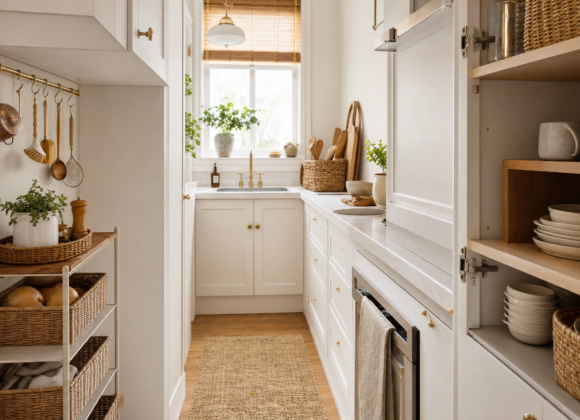
In the kitchen, take cabinets all the way to the ceiling if possible. The gap between the top of standard cabinets and the ceiling is one of the most common ways kitchens lose valuable storage and visual height. Fill it with baskets, cookbooks, or decorative objects if built-in storage is not possible.
Hang art higher than you think you should. Most people hang art at eye level, which grounds the decor low in the room and makes ceilings feel lower. Raising art a few inches higher than feels natural draws the eye up and creates a sense of more vertical space in the room.
Embrace Multifunctional Furniture
Every piece of furniture in a small space should ideally serve more than one purpose. A storage ottoman replaces a coffee table and provides hidden storage. A bed with built-in drawers eliminates the need for a dresser. A dining table with a drop-leaf extension serves two people daily and eight people at a dinner party. A daybed functions as a sofa for daily use and a guest bed when needed.
Nesting tables are another excellent small-space solution. They stack together when not in use and separate into multiple surfaces when entertaining or working. They take up the footprint of a single side table but provide the functionality of three. Look for versions in natural materials like rattan or acacia wood for warmth and texture without bulk.
Use the 3D Interior Design Rule for Visual Depth
One of the most effective small space decorating principles is creating visual depth using what designers sometimes call the 3D rule: vary your decor across height, depth, and texture rather than keeping everything at the same level and finish. A flat, uniform arrangement makes a space feel smaller because there is nothing for the eye to move through.
On a shelf, this means combining a tall vase, a medium-height stack of books, and a small sculpture or plant at varying depths from front to back. In a living room, it means layering a textured throw, cushions in different sizes, a low coffee table, a mid-height plant, and a tall floor lamp. The eye travels through the layers and perceives the space as larger than it is.
Keep Clutter Off Every Horizontal Surface
This is the hardest small space decorating idea to maintain and also the most important one. Clutter on horizontal surfaces is the fastest way to make a small room feel claustrophobic. Every item sitting on a countertop, coffee table, or dresser top is competing for visual space and compressing the feeling of the room.
The solution is intentional curation, not minimalism for its own sake. Choose three to five objects on any given surface and make each one count. A beautiful candle, a small plant, a single decorative object, and a stack of books with interesting spines is a styled surface. Twenty objects accumulated over time is visual noise.
Baskets are the renter’s best friend for taming surface clutter while adding texture. A lidded basket next to the sofa hides blankets, remotes, and chargers. A basket on a bathroom shelf corrals toiletries. A tall woven basket in the corner holds plants, yoga mats, or umbrellas. The room looks styled while the clutter is simply out of sight.
Layer Your Lighting for Warmth and Depth
A single overhead light fixture makes a small room feel like an office. Layered lighting, combining overhead light with floor lamps, table lamps, and accent lighting, adds warmth and dimension that makes even a compact space feel cozy and considered.
In a small living room, use a floor lamp in a corner to wash the wall with light and push the perceived boundaries of the space outward. Add a table lamp on a side table for warm ambient light at a lower level. String lights along a bookshelf or mantel add texture and warmth without taking up any floor space.
Small spaces can feel enormous with the right lighting. They can also feel suffocating with the wrong lighting. This is one of the most affordable interventions available and one of the highest-impact. A good floor lamp costs less than most throw pillows and does more for the feeling of a room than almost any other single purchase.
nn