A tiny bedroom doesn’t have to feel chaotic. With the right storage approach — using vertical space, hidden cavities, and multi-use furniture — you can keep every belonging organised without the room feeling cramped. These 15 solutions work in even the smallest apartments, and most are renter-friendly.
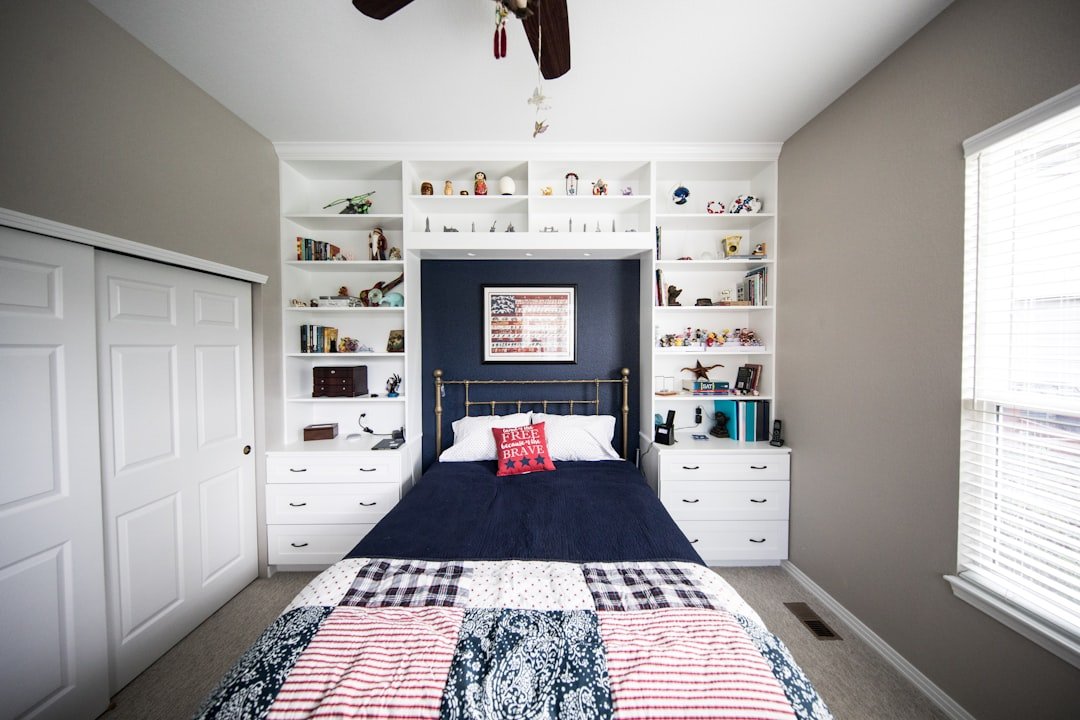
1. Under-Bed Storage Bins or Drawers
The space under your bed is one of the largest untapped storage areas in a small bedroom. Use flat storage bins on wheels for seasonal clothing, spare bedding, or shoes. If your bed sits low, use bed risers ($10–$20) to create extra clearance. Many bed frames now come with built-in drawers — if you’re buying new, this feature alone is worth prioritising.
2. A Bed Frame With Built-In Storage
Ottoman beds lift the entire mattress to reveal a cavernous storage compartment — ideal for bulky items like duvets, suitcases, or off-season clothes. Divan bases with drawers offer the same but in a lower-profile form. Either option eliminates the need for a separate wardrobe in very small rooms.
3. Tall Wardrobe Over Wide Wardrobe
A wardrobe that reaches the ceiling uses vertical space that most people ignore. IKEA PAX wardrobes can be configured to ceiling height with add-on units, maximising storage without increasing floor footprint. Add an internal organisation system (shelves, drawers, pull-out shoe racks) to maximise every inch inside.
4. Floating Shelves Above the Bed
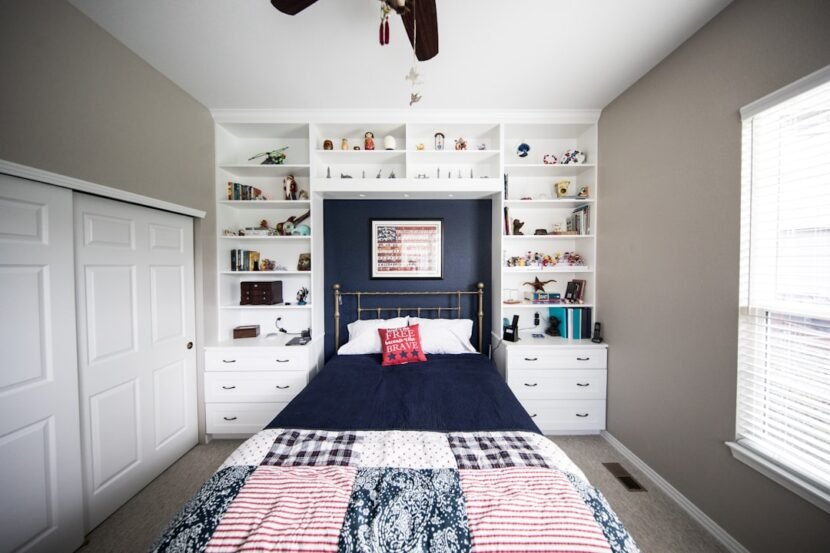
The wall above your headboard is prime real estate. Two or three floating shelves here hold books, plants, small decor, and bedside essentials — freeing the bedside table entirely (or removing it altogether). Use command strips for a renter-safe install, or standard wall anchors if drilling is permitted.
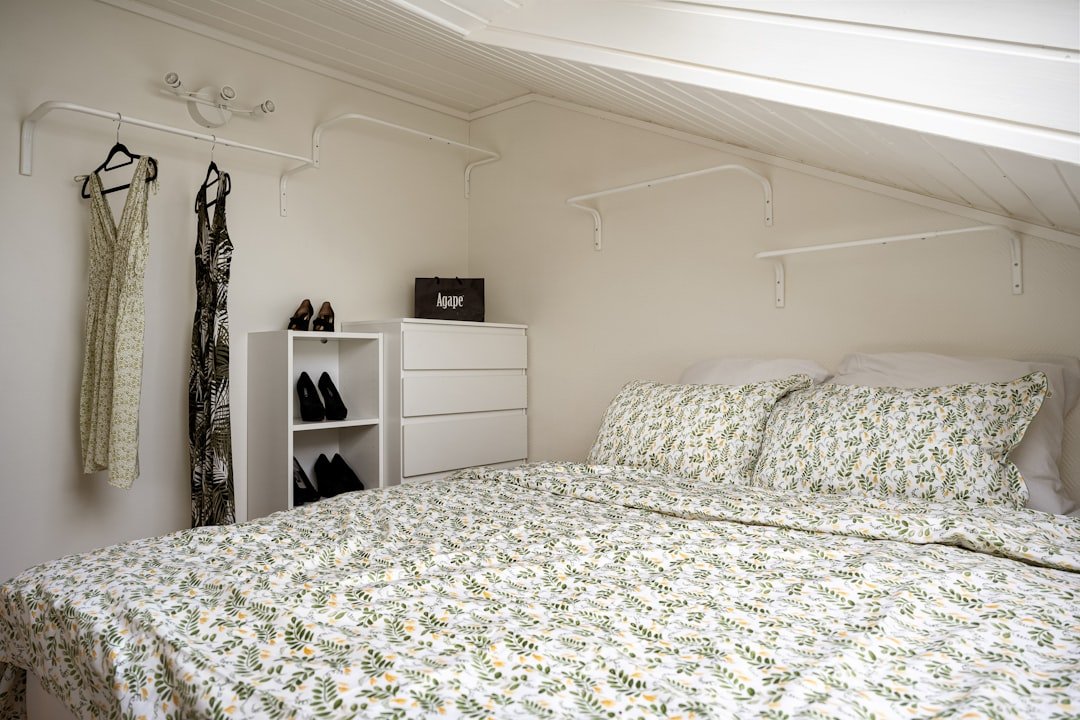
5. A Slim Bedside Table With Drawers
Replace a bulky nightstand with a slim bedside table that has one or two drawers. This cuts the footprint significantly while adding hidden storage for small items. Alternatively, a wall-mounted fold-down bedside shelf takes up zero floor space at all.
6. Over-Door Organisers
The back of your bedroom door is an often-ignored storage zone. An over-door shoe organiser holds far more than shoes: accessories, belts, chargers, small bags, and toiletries all fit. Over-door hooks hold coats, bags, and tomorrow’s outfit. Both are completely damage-free.
7. Hooks and Pegboards on Empty Walls
A pegboard above a desk or dresser holds bags, jewellery, small shelves, and hooks in a fully customisable layout. Command hooks on other walls hold coats, bags, and accessories without drilling. Both solutions keep frequently used items accessible without cluttering surfaces.
8. Vertical Shoe Storage
A floor-to-ceiling shoe tower or slim shoe cabinet holds far more pairs than a traditional shoe rack while occupying a fraction of the floor space. Look for angled-shelf designs that hold shoes at a tilt — they’re more compact than flat-shelf alternatives.
9. Use the Space Above Doorframes
The space above interior door frames — typically 12–18 inches of unused wall — can hold a narrow shelf for books, boxes, or decorative items. It’s out of the way, keeps floor space clear, and uses space that would otherwise go entirely to waste.
10. Drawer Dividers and Organisers Inside Existing Furniture
Before adding new storage, maximise what you already have. Drawer dividers turn a chaotic drawer into an organised one, effectively doubling usable capacity. Shelf dividers in wardrobes prevent folded clothes from toppling. These micro-organising solutions cost $5–$15 and make an immediate difference.
11. A Bench at the Foot of the Bed With Storage Inside
A storage bench at the foot of the bed serves three purposes: seating, storage, and a visual anchor for the room. Use it to store extra bedding, seasonal items, or shoes. In a very small room, choose a slim bench (under 40 cm / 16 inches deep) to avoid blocking the walking path.
12. Vacuum Storage Bags for Bulky Items
Duvets, winter coats, and extra pillows take up enormous wardrobe space in their natural form. Vacuum storage bags compress them to a fraction of their size — a king duvet can shrink to the size of a large book. Store compressed bags under the bed, on high shelves, or inside an ottoman base.
13. A Mirror With Hidden Storage
A full-length mirror that opens to reveal jewellery hooks and small shelves behind it does double duty: it makes the room feel larger (as all mirrors do) while concealing a functional storage compartment. Wall-mounted versions are available; leaning versions require no installation at all.
14. Floating Corner Shelves
Corners are dead space in most bedrooms. A set of corner floating shelves uses this zone for books, plants, and display items without encroaching on the usable floor area. Install stacked corner shelves at different heights to create a visual feature as well as useful storage.
15. Edit Ruthlessly — Storage Can Only Do So Much
No amount of storage solutions fixes a room that simply has too many things. Schedule a seasonal edit: anything you haven’t worn or used in 12 months leaves the room. This one habit — more than any product — is what keeps small bedroom storage manageable long-term.
Frequently Asked Questions
What’s the best storage solution for a very small bedroom?
A bed with built-in storage (ottoman or divan drawers) is the single highest-impact solution — it converts wasted space directly under where you sleep into a significant storage compartment. Pair it with floating shelves above the bed and an over-door organiser to cover the remaining needs.
How do I add storage to a small bedroom without drilling?
Over-door organisers, command hooks, leaning shelves, under-bed bins, and freestanding wardrobes all require zero drilling. Command strips can support lighter floating shelves in many cases — check the weight rating before use and always follow removal instructions to protect walls.
How do I make a small bedroom feel less cluttered?
Apply the 80% rule: never fill shelves or surfaces more than 80% full. Move storage off the floor and onto walls or into furniture. Do a seasonal edit to remove items you no longer use. The goal isn’t more storage — it’s fewer things needing storing.
📌 [INTERNAL-LINK: → “How to Decorate a Very Small Bedroom” | “Renter-Friendly Bedroom Ideas”]
Will it actually fit?
Use our free furniture planner — enter your room size and see exactly which pieces fit, with layout tips for your space.