Working from a corner of your bedroom or a sliver of your kitchen counter has a way of quietly draining your focus before you even open your laptop. If your brain associates that spot with sleeping, eating, or scrolling your phone, getting into a productive headspace becomes an uphill battle every single day. The good news is you do not need a spare room to fix this. These home office ideas for small spaces are built specifically for tight corners, awkward nooks, and shared rooms, and every single one is designed to help your brain switch into work mode faster and stay there longer.
Claim a Dedicated Spot, Even a Tiny One
The single biggest factor in staying focused while working from a small space is having one consistent spot that is only for work. This does not need to be a whole room. A single corner, a closet with the doors removed, or even a rolling cart that lives in one place during work hours can train your brain to associate that specific spot with focus. Avoid working from your bed or your couch whenever possible, since those spots are already wired in your brain for rest, and mixing the two makes it harder to relax later and harder to focus now.
Use a Narrow Desk That Fits the Space
Standard desks are often far too deep for small spaces, eating up walking room and making a small area feel cramped. Look instead for a narrow console-style desk, which typically runs sixteen to twenty inches deep instead of the standard thirty. These fit neatly against a wall, in a hallway nook, or beside a bookshelf without dominating the room.
Floating Desks Save Even More Room
A wall-mounted floating desk skips legs entirely, which means you can tuck a stool or chair fully underneath when you are done for the day. This is especially useful in shared spaces like a living room or guest bedroom, where you want the desk to visually disappear at the end of the day.
Control What Is Behind You on Video Calls
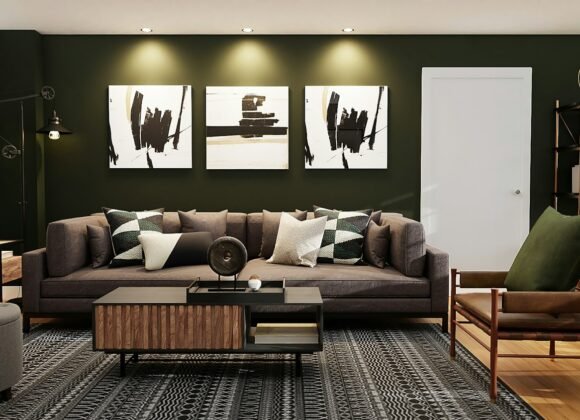
Small space home offices are often in shared rooms, which means your video call background matters more than it would in a private office. Position your desk so a plain wall, a small piece of art, or a simple bookshelf sits behind you rather than a bed or a cluttered kitchen counter. A portable folding screen or even a tension curtain rod with a simple fabric panel can create an instant, tidy backdrop in a shared room without any renovation. This small detail does double duty, giving you privacy from roommates or family while also making your workspace look more professional on camera.
Build Vertical Storage Instead of Spreading Out
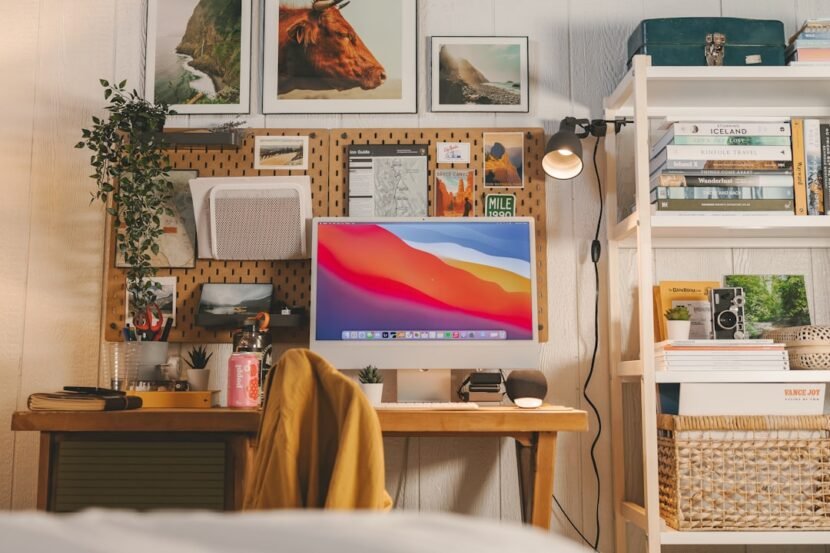
When floor space is tight, the only direction left to grow is up. Floating shelves above a desk keep reference books, files, and supplies within reach without eating into your workspace. A pegboard mounted on the wall behind your desk can hold everything from headphones to notebooks to cables using movable hooks, and it looks intentional rather than cluttered. Here are a few vertical storage wins worth trying:
- A shallow floating shelf directly above the desk for frequently used items
- A pegboard or grid panel for hanging small tools, cables, and notebooks
- A wall-mounted file organizer to keep paperwork off the desk surface entirely
- Hooks for headphones or bags on the side of the desk or nearby wall
Choose a Chair That Actually Supports Focus
It is tempting to grab whatever chair is lying around, but an uncomfortable chair is one of the fastest ways to lose focus in a small home office. You do not need a huge executive chair to get good support. Look for a compact task chair with proper lumbar support and adjustable height, since these details matter far more for sustained focus than size or style. If a full office chair simply will not fit your space, a supportive stool paired with good posture habits can work for shorter work sessions, especially at a standing-height desk.
Manage Cords Before They Manage You
A tangle of cords under a small desk is both a visual distraction and a genuine focus killer, since clutter in your peripheral vision quietly pulls at your attention all day. Use a cable tray mounted under the desk to bundle cords out of sight, and add a small power strip with a surge protector directly to that tray so you are not reaching around blindly to plug things in. Velcro cable ties keep charging cords for your phone and laptop separate and tangle-free. This is one of those five-minute fixes that makes a small office feel dramatically calmer the moment it is done.
Add One Deliberate Focus Cue
Since a small home office often shares space with the rest of your life, give yourself one physical signal that flips the switch into work mode. This could be a small desk lamp you only turn on during work hours, a specific candle scent you only light while working, or even a pair of noise-canceling headphones you put on right before starting a task. Over time, your brain will start to associate that single cue with focus, which becomes incredibly useful in a small space where you cannot rely on a closed door to separate work from everything else.
Keep the Surface Nearly Empty
The smaller your desk, the more important it is to keep the surface itself close to empty. Only your laptop, a notebook, and maybe one small plant should live there day to day. Everything else, chargers, extra pens, random mail, needs a home somewhere else, whether that is a drawer, a shelf, or a small caddy that gets tucked away at the end of the day. A clear surface gives your eyes and your brain one less thing to process every time you sit down, which makes it dramatically easier to drop into focused work right away.
You do not need square footage to build a workspace that actually helps you concentrate. A little intention about where you sit, what is behind you, and how your cords and clutter are managed goes a long way toward making a small corner feel like a real office. Start with just one or two changes from this list, and you will likely notice the difference in how quickly you settle into work by the end of the week.