Seasonal decorating has a reputation for being expensive and storage-hungry. The assumption is that you need a different set of things for every season: autumn wreaths, spring florals, Christmas everything, summer coastal accessories. Stored in boxes. Rotated in and out. Taking up space you do not have.
We do not decorate that way, and we think most people in small apartments should not either. The approach that actually works is building a warm, neutral base that stays all year, and then making small, intentional shifts that signal the season without requiring a full room transformation or a storage unit.
The Base Layer: What Stays All Year
Before thinking about seasonal changes, build a base that works in every season. Warm neutral walls or textiles, natural materials like wood and jute and linen, good lighting infrastructure (the lamps stay, the bulb temperature stays), and a few quality plants. This base is the canvas. Seasonal changes are small additions and subtractions on top of it.
A base layer approach means you are never starting from scratch with the seasons. You are editing, not replacing. See our guide to earthy home decor ideas for building a base that works year-round.
Spring: Add Life and Lightness
What Changes
Spring decorating is about bringing in freshness and light after winter. Swap heavy wool throws for linen. Open the curtains wider or swap dark curtains for lighter sheers if you have them. Add fresh flowers or flowering plants: tulips, daffodils, or hyacinths from a supermarket cost almost nothing and change the entire feeling of a room.
Colour Shifts
Introduce one or two cushion covers in soft sage, dusty blush, or pale yellow. Cushion covers are the easiest and most affordable seasonal swap available. A set of two linen cushion covers in a spring tone costs £10-20 and takes three minutes to change. Store the winter covers in the same vacuum bag the spring ones came from.
Scent for Spring
Swap the heavy amber or cedar candles of winter for lighter floral or green scents: linen, lily of the valley, cucumber, or green tea. The scent of a room signals the season as powerfully as anything visual.
Summer: Maximise Light and Greenery
What Changes
Summer decorating leans into the natural abundance outside. Bring in more plants, fresh botanicals, or a large branch of leaves in a tall vase. Open windows where possible. The summer shift is less about adding things and more about removing the winter weight: put away the heaviest throws, store the darkest cushions, and let the room breathe.
Texture Shifts
Cotton replaces wool. Lighter, airier textiles feel right in summer even indoors. A cotton throw in white or cream over the sofa replaces the chunky knit. A woven cotton cushion replaces the heavy velvet. The materials shift before the colours do.
Botanicals as Summer Decor
Summer is when fresh and near-fresh botanicals are most available and most affordable. A branch of eucalyptus, a bunch of sunflowers, a large tropical leaf in a vase, herbs growing on the windowsill. These cost almost nothing and connect the interior to the season outside in the most direct way possible.
Autumn: Layer in Warmth and Texture
What Changes
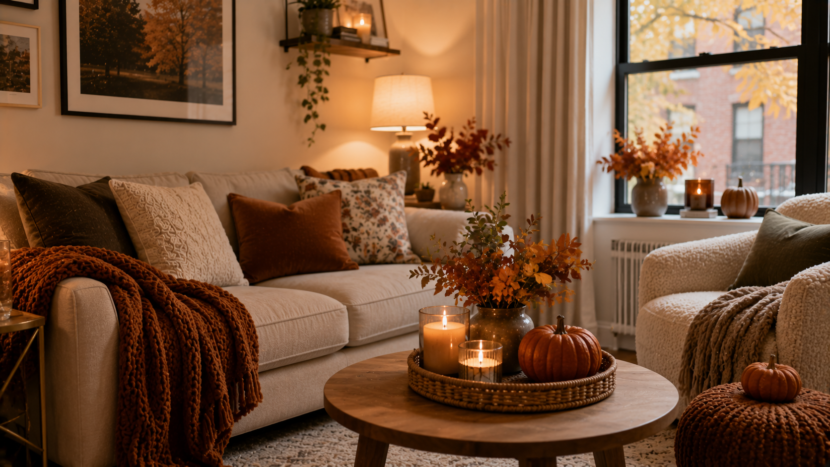
Autumn is the most natural season for home decorating because the instinct to nest and warm up is genuinely felt. Add the chunky knit throw back to the sofa. Introduce a second layer of cushions in rust, burnt orange, or deep terracotta. Light the candles more. Add a basket of pine cones, a few dried botanicals, or a bowl of seasonal fruit (apples, pears, pomegranates) that is also genuinely decorative.
Lighting Shifts
As the days shorten, lighting becomes the main decorating tool. More candles, earlier. A new lamp for the corner that felt fine in summer but now needs warmth. This is the season to invest in lighting infrastructure that will serve you through winter too. See our cozy living room lighting guide for specific recommendations.
Scent for Autumn
Cinnamon, clove, amber, patchouli, cedar, and smoke. Autumn scents are spicy and warm and they work powerfully in creating seasonal atmosphere. A simmer pot with orange peel, cinnamon sticks, and star anise on the hob fills a small apartment with warmth for almost nothing.
Winter: Lean Into Cosiness Completely
What Changes
Winter is hygge season. Everything that makes a room feel warm, soft, and enclosed earns its place. More blankets, more candles, warmer light, heavier textiles. If you celebrate Christmas or another winter occasion, seasonal decorations in a palette that coordinates with your existing room rather than clashing with it make the transition seamless.
Christmas and Winter Decorating Without Storage Overload
The sustainable approach to Christmas decorating is choosing a palette that works with your existing room: if your living room is warm neutral, choose Christmas decorations in cream, gold, terracotta, and natural materials rather than bright red and green that require the whole room to shift. A simple wreath, a small tree in a terracotta pot, fairy lights, and a few additional candles. Stored, this fits in one small box rather than a loft full of plastic bins.
For more seasonal ideas see our Christmas apartment decor ideas guide.
The Seasonal Edit Kit: What We Actually Keep
Our entire seasonal decoration collection fits in one medium-sized box and one vacuum storage bag. The box contains: four cushion covers in seasonal tones (two spring/summer, two autumn/winter), a small wreath for the door, a handful of candles in seasonal scents, a few dried botanicals, and a couple of seasonal trinkets we actually love. The vacuum bag holds one extra throw for winter.
That is it. Everything else is part of the base layer that stays all year. The seasonal transitions take about twenty minutes and cost almost nothing because the base never changes.
Plants as Year-Round Seasonal Markers
Plants are the most natural seasonal marker available. An amaryllis bulb in winter, spring bulbs forced in pots, summer herbs on the windowsill, autumn succulents and cacti. Each season has plants associated with it that cost almost nothing from a supermarket or garden centre and signal the time of year more naturally than any purchased decoration.
For a home full of plants year-round, see our cottagecore kitchen and living room ideas for botanical styling inspiration.
Final Thoughts
Seasonal decorating without buying new things is mostly about swapping, editing, and noticing what the season already offers: light quality, plant availability, natural materials, and the instinct to either open up or nest in. Build the right base, keep a small seasonal kit, and let the seasons shift your home through small gestures rather than full transformations.
The room you live in all year does not need to become a different room four times a year. It needs to breathe with the seasons. That is a much gentler and more sustainable approach.