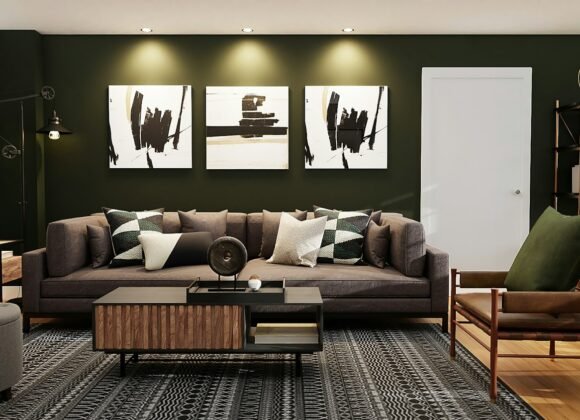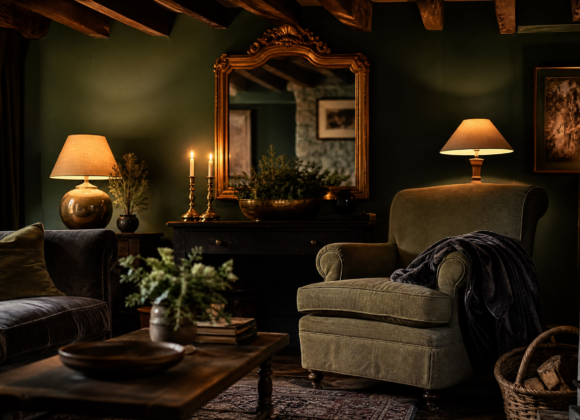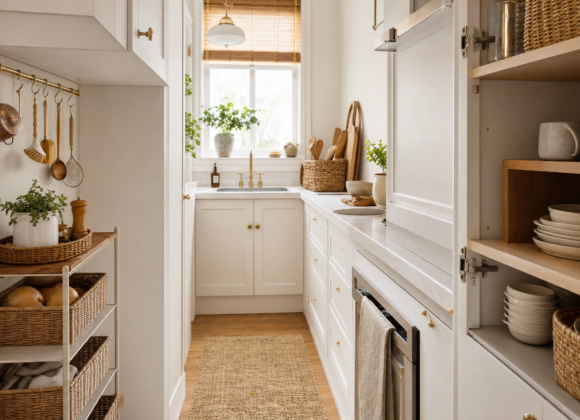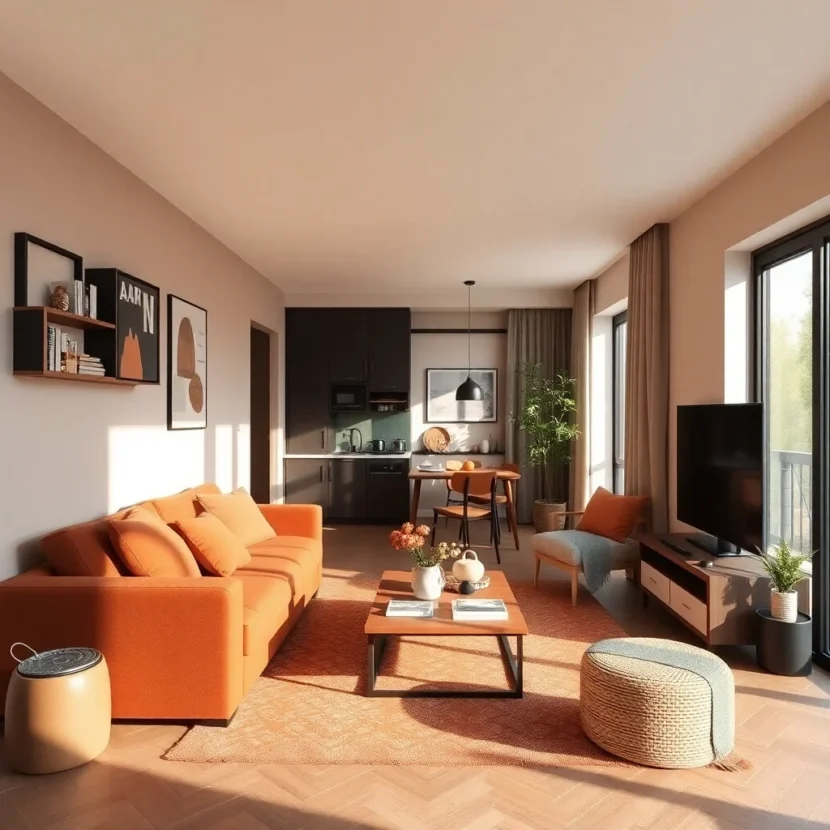
Living in a small apartment often means dealing with a small living room, and making the most of that space requires strategy. A cramped living area can feel claustrophobic or cluttered, but the right layout, furniture choices, and decor can completely change how your space feels and functions. This guide walks you through 12 practical, budget-friendly ways to make your small apartment living room look bigger, work better, and feel like a place you actually want to spend time in.
TL;DR
- Hang curtains at ceiling height and choose light colors to create vertical space and make walls feel taller
- Use a large mirror opposite a window or light source to reflect light and visually double the room’s size
- Choose right-sized furniture (narrower sofas, leggy tables) so the room doesn’t feel packed
- Layer different light sources instead of relying on overhead lights, which flatten small spaces
- Define zones with a rug sized correctly for your layout to anchor the room and create structure
- Add vertical storage with tall shelves or wall-mounted units to draw eyes upward and free floor space
Why small living room layout ideas matter
The layout of your living room is the foundation everything else builds on. A small living room layout idea that works for your space is one that doesn’t fight against your apartment’s footprint. Before you place a single piece of furniture or hang one curtain, think about what your room needs to do: watch TV, host people, work from home, sleep (if it’s a studio). Once you know the room’s job, arrange furniture to support that without blocking traffic flow or making the space feel more cramped than it already is.
The most successful small apartment living room layouts leave at least 18 inches of walking space on all sides and don’t push every piece of furniture against the walls. Counterintuitive as it sounds, floating a sofa a few inches away from the wall actually makes the room feel larger because it defines the living area and makes the space feel intentional rather than just stuffed.
How to make a small living room look bigger with color and light
Color and light are the two fastest, cheapest ways to change how a room feels. A dark, heavily colored living room in a small apartment will always feel small. A bright, light-filled one will feel open even if the square footage hasn’t changed at all.
Paint is often off the table for renters, but your other color tools are abundant. Choose a light rug (cream, soft gray, pale terracotta), light throw pillows, and light curtains. The goal isn’t a blank, boring room. It’s a room where light colors dominate the background so darker accent pieces (a dark wood table, a charcoal throw, a jewel-toned pillow) can shine without overwhelming the space.
Lighting is non-negotiable in a small living room. Overhead lights flatten the space and often create harsh shadows. Instead, layer three to four light sources: a corner floor lamp to draw the eye up, a table lamp on a side table for softer ambient light, and perhaps a string of warm Edison bulbs or a smaller desk lamp for mood. This approach costs $50 to $100 total from Amazon or IKEA and changes how the room feels more than almost any other single change you can make.
Choosing right-sized small apartment living room furniture
This is where most people with small apartments go wrong. They buy a standard sofa (84 inches wide, 40 inches deep) because that’s what exists on the showroom floor, then wonder why their living room feels packed. The sofa consumes more than half the usable space, and there’s no room for anything else.
Small apartment living room furniture needs to be smaller, not just less of it. A sofa that is 72 inches wide instead of 84 inches makes a real difference. A coffee table 24 inches deep instead of 30 feels far less intrusive. Look for pieces with legs rather than a solid base, so you can see under them and the room feels airier. An armchair 28 inches wide is still a functioning chair, but it won’t block your sightlines the way a standard 32-inch one will.
Multi-functional pieces do double duty: an ottoman with hidden storage, a console table behind the sofa that also houses media components, a nesting table that becomes two when you need more surface. These solve the problem of needing furniture but not having room for it.
When you are shopping for small apartment living room furniture on a budget, IKEA’s smaller sofas and sectionals are genuinely useful. So are Wayfair’s apartment-scale options. Facebook Marketplace often has smaller vintage sofas and chairs from people who moved to larger homes. Always measure your doorway and the space before you buy.
How to arrange a small living room to maximize function
The layout of a small living room depends on where the TV, windows, and entry door are. But a few principles work everywhere.
First, identify your focal point. In most living rooms, this is the TV or a window. Arrange seating to face this focal point. Don’t push the sofa to the corner to save space; instead, float it across the room, angled slightly if needed, so sitting people actually look toward something.
Second, leave at least one clear traffic path through the room. If your bedroom door opens into the living room, keep the path to that door uncluttered. This makes the space feel less cramped and is actually safer.
Third, create zones if your apartment’s layout forces your living room to do double duty (living plus dining, living plus sleeping in a studio). A rug under the seating area, a different one under the dining chairs, or even just a shelving unit between zones, makes each feel like its own space rather than one overcrowded area.
What size rug works for a small living room
A rug is the single most important decor piece in a small apartment because it anchors the space, defines a zone, and makes the room feel intentional. The wrong rug size, though, makes a small room feel even smaller.
For a small living room with a sofa, chairs, and coffee table, a rug should be large enough that at least the front legs of all seating pieces sit on it. A 5×7 or 5×8 rug works for most small living rooms. If your room is truly tiny (under 150 square feet), a 4×6 can work if you arrange furniture tightly. If the entire rug is bigger than the living area, it will overwhelm the space, so measure first.
Light colors (cream, gray, pale blue, soft rust) make a room feel bigger. A rug with a subtle pattern adds visual interest without being busy. Consider a wool or wool-blend rug if your budget allows, because they resist staining and footprints better than synthetic, and they wear better over years.
Hanging curtains at ceiling height for tall, bright windows
This is the most underused trick in small apartment living rooms, and it costs less than $50 to implement. Hanging curtains at ceiling height instead of window height makes any ceiling feel higher and makes the room feel more open.
Measure from the ceiling (or a few inches below if there’s molding) to the floor. The curtains should touch the floor or sit just an inch above it. This creates an unbroken vertical line that draws the eye upward, making the room feel taller than it is.
Choose sheer or semi-sheer curtains in white, cream, or pale gray if you want to let light in while still filtering harsh sun. If you need room-darkening capability, choose a blackout curtain in a light color (light gray, pale blue) rather than dark gray or black, which will make your small room feel darker and smaller.
Command hooks rated for curtain rods work on most apartment walls and are completely reversible, so your landlord won’t mind. IKEA’s budget curtain rods and Amazon basics hold curtains securely. Budget $30 to $60 for rods, hooks, and curtains.
Using mirrors to create the illusion of more space
A large mirror opposite a window or light source reflects light around the room and makes the space feel twice as big. This is physics, not magic, and it works. A 24×36-inch mirror is ideal. A single large mirror beats three small decorative ones every time.
Position it on the wall opposite your main window or across the room from a lamp. Lean it against the wall or hang it. Lean-to mirrors work in rentals because they require no wall damage. Hung mirrors need only a single Command hook if you choose a lighter mirror (under 10 pounds).
The frame matters less than the size and placement. A simple black or natural wood frame blends into most apartments. Mirrors from IKEA, Target, Wayfair, and Amazon under $80 do the job. Thrift stores often have larger mirrors for $10 to $30.
Creating vertical storage in a small living room
A small living room can’t absorb lots of furniture, but walls have unused space. Vertical storage keeps things off the floor and out of the way, and it draws the eye upward, making the room feel taller.
Floating shelves from IKEA (Lack shelves cost $20 and are lightweight) or wall-mounted cubbies create storage and display space. Use them for books, plants, small decorative pieces, or baskets containing remotes, blankets, and other living room clutter.
Over-the-sofa shelving, tall narrow bookcases that fit into corners, or a ladder shelf all accomplish the same goal: store things vertically instead of horizontally. Keep the shelves from looking cluttered by mixing objects with empty space. Five books, a plant, two empty spaces, one framed photo, one empty space. This looks intentional and restful, not crammed.
Command hooks and strips hold small shelves and artwork without drilling. For larger floating shelves, check your apartment’s wall material first. Brick and concrete sometimes require anchors that your landlord may not permit, but drywall works with proper wall anchors from any hardware store.
How to style a small living room without clutter
Styling a small living room is an exercise in restraint. Every object takes up space, so every object should either function or make you happy (or both). A throw pillow should either be comfortable to lean on or interesting enough that you like looking at it. Wall art should genuinely appeal to you, not just fill blank space.
Stick to a color palette: three main colors plus neutrals. For example, warm white, terracotta, cream, and soft sage. Every pillow, piece of wall art, plant pot, and throw should fit this palette. This creates visual harmony and makes the space feel intentional rather than chaotic.
Keep surfaces mostly clear. A coffee table should hold a coffee table book and maybe a plant, not a remote holder, coasters, a candle, and three magazines. A side table should hold a lamp and one other small object. This makes the space feel calm and open.
Use baskets (from Amazon, Target, or IKEA for $15 to $40) to corral blankets, remotes, books, and other living room clutter. A 12×12 inch woven basket under a side table keeps things hidden but accessible. One basket per living room is usually enough.
Small apartment living room on a budget: a complete approach
You don’t need to spend a lot to make a small living room work. Here’s how to do it for under $200 total:
- Curtains and rods: $40. Hang at ceiling height in a light color.
- Large mirror: $40 leaned against a wall opposite a window, or $50 to $70 hung.
- Floor lamp: $30 to $50, placed in a corner to draw the eye upward.
- Rug: $60 to $80, light colored, 5×7 or 5×8 depending on room size.
- Storage basket: $20, placed under a table or in a corner.
- Throw pillows and blanket: $30 to $40 total, in colors that match your rug and curtains.
Small living room lighting ideas that actually work
The lighting in a small living room determines whether the space feels cosy or cramped. Overhead lights almost always make small rooms feel flat and hard.
A floor lamp in one corner, a table lamp on a side table, and optionally a small wall-mounted reading light create layered, warm light that makes a small space feel intentional and relaxing. Choose lamps with warm bulbs (2700K color temperature), which are cozier than cool white (4000K or higher).
String lights or Edison bulbs add personality without taking up much space. A strand of warm white Edison bulbs hung loosely above a sofa or along a shelf costs $20 to $40 and adds visual interest.
Adding plants to a small living room
Plants make small spaces feel alive and connected to something green, even if the window situation is not ideal. The key is choosing low-maintenance species that will survive your actual light conditions.
Pothos, ZZ plant, snake plant, and peace lily all tolerate low light and irregular watering. They cost $10 to $25 each at garden centers or on Amazon. A single tall plant in a corner takes up minimal floor space but fills vertical space effectively.
Smaller plants on shelves, a side table, or windowsills add life without clutter. Cluster three small plants together (odd numbers look better) rather than spreading them around the room.
Choose simple pots in your room’s color palette: white, cream, terracotta, or soft gray. Matching pots make even mismatched plants look intentional. A plant stand ($30 to $60 from IKEA or Amazon) holds multiple small plants in minimal floor space.
Resist overbuying plants. A small living room with too many plants feels like a jungle. Three to five plants, ranging from small to medium sized, is usually the right amount for a small space.
Wall art for small living rooms without drilling
A gallery wall adds personality and fills blank wall space without taking up floor or furniture space, which is critical in a small living room. The trick is keeping it organized so it looks intentional, not random.
Command strips are the renter’s best friend for wall art. Choose strips rated for the weight of your frames (usually a pack of three strips holds 5 to 15 pounds). Arrange your frames on the floor first, take a photo, then measure and install.
A simple grid layout (four frames in a 2×2 grid, or six frames in a 2×3 grid) looks intentional. A salon-wall style layout with frames of different sizes feels more artistic but requires more precision.
Keep the color palette consistent: all black frames, all natural wood frames, or a mix of both with white matting. Mix between photographs, abstract prints, and maybe one piece of fabric art or textile. Art from Etsy, Amazon, Target, and even grocery stores can work if the frames are consistent.
Frequently Asked Questions
What size sofa fits in a small living room?
A sofa between 70 and 76 inches wide is ideal for most small living rooms. Anything wider than 80 inches will likely feel cramped. Depth matters too: 32 inches deep is more comfortable than 28 inches, but a 40-inch-deep sectional will dominate a small space. Always measure your doorway and the exact space before ordering.
Can I fit a small dining area and living area in one room?
Yes, if you define the zones clearly. Use a rug under the seating area and a different rug or no rug under the dining table. A narrow console table or shelving unit between the zones helps both feel like separate spaces. A small dining table (36 to 40 inches wide) and a smaller sofa (under 75 inches) make this work in a studio or one-bedroom layout.
How do I make a dark living room feel brighter without new windows?
Light-colored walls (cream, pale gray, soft white) reflect whatever light enters the room. A large mirror opposite your window or lamp bounces light around. Sheer curtains let natural light in without sacrificing privacy. For artificial light, add a floor lamp in a dark corner and choose warm-colored bulbs (2700K). These three changes together make a huge difference.
What’s the best way to arrange furniture in an L-shaped living room?
Use the corner as an advantage. Angle one piece of seating toward the corner, or place a side table there to define the space. Arrange the rest of the seating to face a focal point (TV, window, or wall art). Keep traffic paths clear between the two sections of the room. A rug under each seating area can help define separate zones.