TL;DR
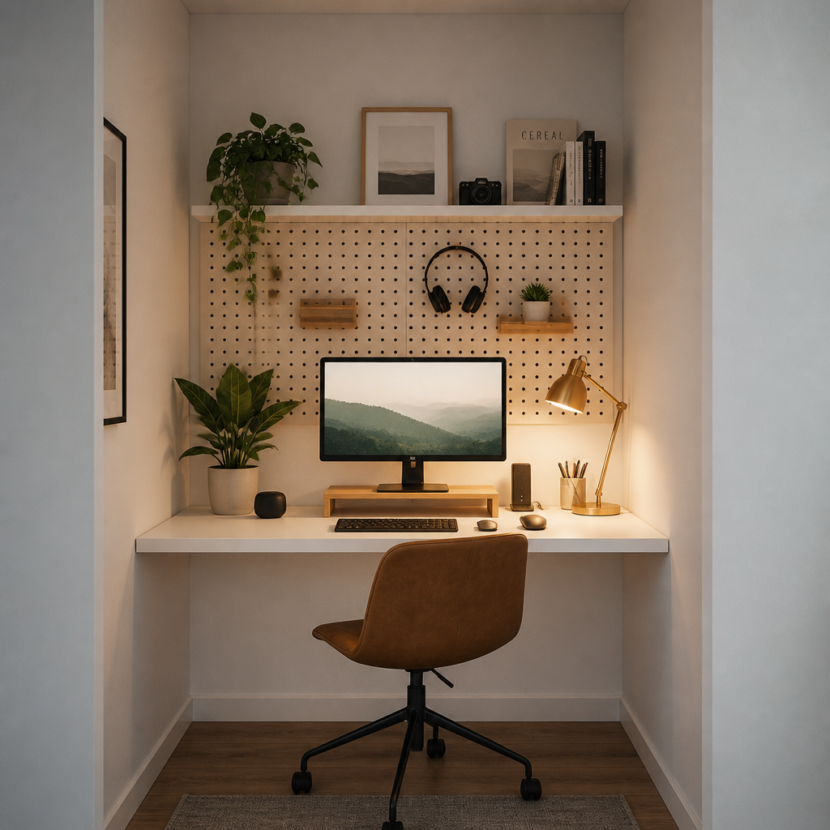
- A floating desk 30-40cm deep in a corner is the highest-impact, lowest-footprint home office addition in a small space.
- Natural light matters more than desk size. Position the desk to face or sit beside the window, not with your back to it.
- A pegboard above the desk eliminates the need for desktop storage and keeps the work surface clear.
- The chair is the most important ergonomic decision — a bad chair at a good desk is worse than a good chair at no desk.
- Psychological separation from the living space matters as much as physical space. A desk lamp on, floor lamp off signals work mode.
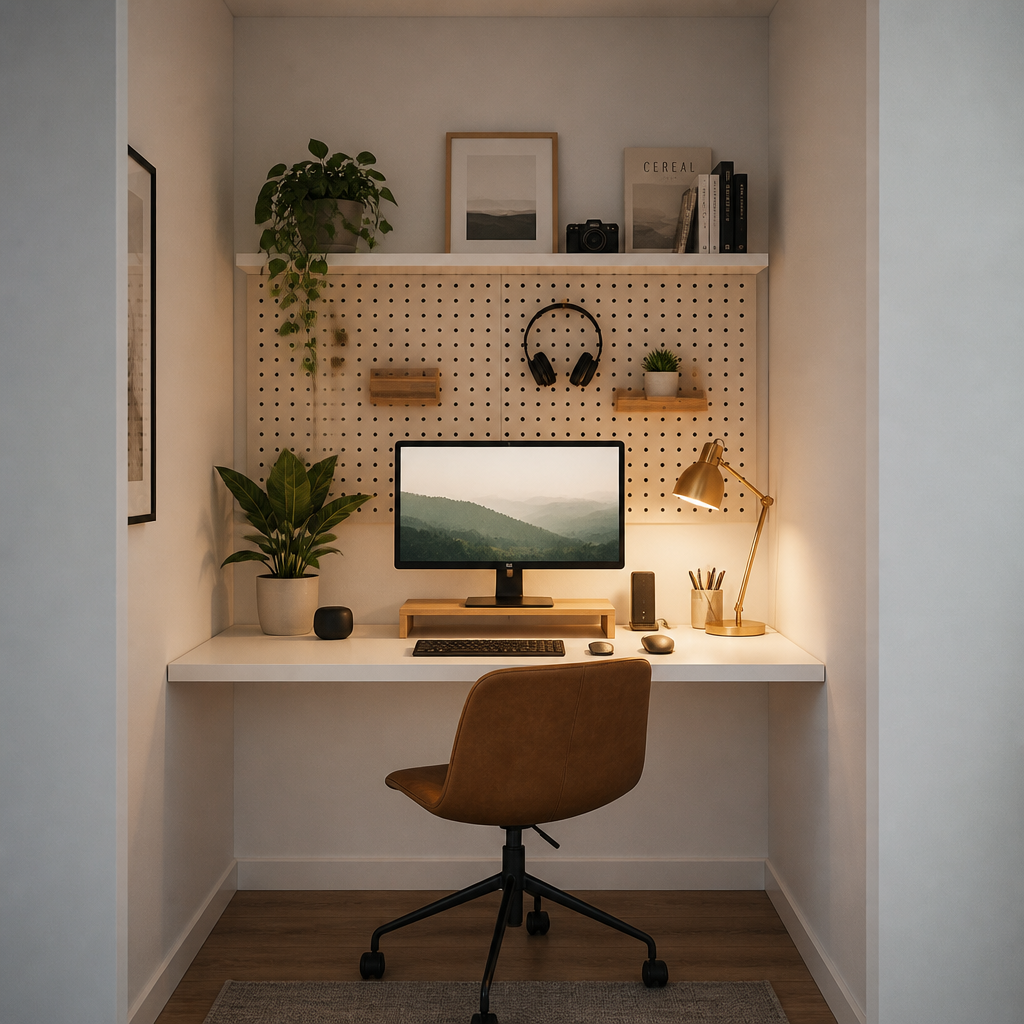
A home office in a small space does not need a dedicated room, a large desk, or even a full corner. It needs a surface at the right height, a chair that does not hurt your back, a light source that illuminates the work without straining your eyes, and enough psychological separation from the rest of the apartment that you can actually focus.
These small home office ideas are specifically for apartments, studios, and rooms where the office shares space with everything else.
1. The floating corner desk: the best small office setup
What is the most space-efficient home office setup for a small apartment? A wall-mounted floating desk in a corner, 30-40cm deep, with two floating shelves above it and a pegboard beside or above those shelves.
This setup takes zero floor footprint — the chair slides under when not in use. The desk surface holds the laptop or monitor, keyboard, and one small plant. The shelves above hold books, documents, and any items that would otherwise accumulate on the desk surface. The pegboard handles everything else: chargers, stationery, headphones, notes.
IKEA LACK shelves used as a desk surface cost $12 each. Two wall brackets from IKEA cost $8 to $15 for a pair. A 60x22cm LACK shelf as a desk holds a laptop comfortably; a 110x26cm version handles a laptop plus an external monitor. Total materials cost: $25 to $45 for a complete floating desk.
2. Position for natural light first
Where should a home office desk go in relation to windows? Facing the window or beside it — never with your back directly to it. A window behind you creates glare on your screen. A window in front of you provides natural light on your face and work surface, which reduces eye strain significantly over a full working day.
If the available corner is away from natural light, a daylight desk lamp (5000K colour temperature) supplements natural light effectively. Daylight bulbs at the desk paired with warm 2700K bulbs elsewhere in the room creates a visual distinction between the work zone and the living zone — another signal that reinforces psychological separation.
3. Use a pegboard for zero-desk storage
How do you keep a small desk surface clear? A pegboard above the desk moves everything that would sit on the surface to the wall instead. Hooks hold headphones, a bag, and cables. Small metal containers hold pens and scissors. A small shelf holds the router or a small plant. The desk surface stays clear for actual work.
IKEA’s SKADIS pegboard starts at $15 for a 56x36cm panel and comes with a starter set of hooks and containers. It mounts on two screws and holds a significant amount — far more than its price suggests. For renters: Command strips rated for the panel weight (typically 3-4kg for a SKADIS) hold it without drilling, though it may not stay level under heavy load.
4. Invest in the chair, not the desk
What is the most important purchase for a small home office? The chair. A bad chair causes back, neck, and shoulder pain within weeks of daily use — problems that a good desk, good monitor, and good lighting cannot compensate for.
An ergonomic chair with lumbar support, adjustable height, and adjustable armrests is the baseline. This does not require spending $500 — IKEA’s JÄRVFJÄLLET chair ($280) and the Hbada ergonomic chair ($120 on Amazon) are both genuinely ergonomic at accessible price points. A second-hand Herman Miller, Steelcase, or Humanscale chair bought on Facebook Marketplace typically costs $100 to $200 and outperforms any new budget chair.
If the chair needs to serve double duty as a dining or bedroom chair, a posture-supporting chair with removable cushioning (a structured dining chair with a seat cushion added for desk use) is a reasonable compromise. A ball chair or standing desk conversion are alternatives worth considering if back pain is already an issue.
5. Small home office ideas for tiny spaces: the closet conversion
Can a closet become a home office? Yes — a wardrobe alcove or built-in closet with the doors removed makes one of the best possible small home office configurations. The alcove provides natural walls on three sides (reducing distraction), the depth is typically sufficient for a monitor and keyboard, and closing curtains or bi-fold doors at the end of the day hides the work zone completely.
A closet-to-office conversion: remove the hanging rail and shelves. Install a floating desk at 75cm height using the side walls for support. Add a pegboard on the back wall. Install a small LED strip light along the top of the alcove for task lighting. Put a comfortable chair in front. The whole conversion costs $50 to $100 and creates a more focused work environment than most purpose-built home offices because the enclosed three-wall space reduces visual distraction from the rest of the room.
6. Create psychological separation without physical walls
How do you mentally separate work from home when they share a space? With light, routine, and a clear end-of-day signal. Turn the desk lamp on when starting work and turn it off (completely, not just dim it) when finishing. Tidy the desk surface at the end of the day so the work zone reads as closed.
A small plant on the desk, a favourite mug for morning coffee at the desk, and a consistent start and end time give the space enough ritual to function as a work environment. Without these signals, the work zone bleeds into the rest of the day in both directions — you work when you should be resting and feel guilty about resting when near the desk.
7. Work from home desk setup ideas: cable management
What is the easiest way to manage cables in a small home office? A cable box under the desk hides the power strip and all adapter bricks. Cable clips along the underside of the desk route cables to where they need to go. Velcro cable ties bundle cables together so they do not hang loose.
Three products handle 90% of cable management: a cable management box ($15 to $20 on Amazon), a set of adhesive cable clips ($8), and a pack of velcro cable ties ($6). Total under $35 and the desk goes from looking like a tangle of cords to a clean, professional setup. For a floating desk specifically, run cables up the back of the wall inside a flat cable cover (paintable, adhesive, $10) so they disappear completely from the front view.
Frequently asked questions
How do you set up a home office in a small space?
A floating desk in a corner (30-40cm deep, wall-mounted), a pegboard above it for storage, a daylight desk lamp, and an ergonomic chair. This setup takes zero permanent floor space, costs $50 to $100 in materials, and is completely removable for renters.
What size desk do you need to work from home?
60cm wide minimum for a laptop-only setup. 100cm minimum for a laptop plus external monitor. 120cm is comfortable for dual monitors. Width matters more than depth — 35cm of depth is sufficient for most setups once the monitor is on a stand or arm rather than sitting flat on the desk surface.
How do you create a home office in a studio apartment?
A floating desk in the corner furthest from the bed, with a pegboard above for storage and a desk lamp on a daylight bulb. Position it so the desk chair does not face the bed directly. Use the desk lamp on/off as the work-start and work-end signal. See our studio apartment decorating ideas guide for the full zone separation approach.
Pulling it together
A home office in a small space works when the chair is right, the light is right, and the end-of-day ritual is consistent. The desk size and location matter less than most people think — a $25 floating shelf at the right height with a good chair outperforms a $500 standing desk in the wrong position with an uncomfortable seat.
For the bedroom layout that accommodates a desk corner, see our small bedroom layout ideas guide.