Small apartments put the most pressure on two rooms: the kitchen and the bathroom. Both have to hold a lot of items in very little space, and most of the storage is built in and fixed. These kitchen and bathroom organization ideas are designed for exactly that, with no drilling and no permanent changes, so they work in rentals as well as owned homes.
The fixes below are not secrets. What makes them work is consistent use: every item gets a home, and the home is easy to reach. Measure first, buy second, and most of these upgrades cost between $10 and $40 each.
Kitchen Organization for Small Apartments
Start with what you use daily, then work outward to occasional items. Daily tools stay within arm’s reach of the stove and prep area; everything else moves higher, lower or deeper.
Use Vertical Space Inside Cabinets
Most cabinets waste height because shelves are spaced for the tallest item. Adjustable shelf risers and small tension shelves effectively double usable space without changing the cabinet. Put tall items on the top shelf, add a riser for plates or mugs below, and you gain a full extra level. Look for sturdy metal or bamboo risers, usually about $12 to $30 for a set.
Add Drawer Organizers
Drawers without dividers get chaotic because nothing has a fixed place. Bamboo or clear acrylic organizers in mixed sizes turn a junk drawer into a system. Measure the inside width, depth and height first, then buy a set that fits snugly so nothing slides around. Group by task: cooking tools, baking tools, everyday cutlery, and a small catch-all section.
Put Spices on the Wall
A magnetic strip or wall-mounted spice rack beside the stove moves spices out of a deep cabinet and into view. This frees a full shelf and speeds up cooking. Choose uniform jars with clear labels. Renters can use heavy-duty adhesive strips or a magnetic rack that sticks to the side of the fridge instead.
Make the Most of Under-Sink Space
The space under the sink is awkward because of the plumbing, so it is often wasted. A two-tier shelf that straddles the pipes, a pull-out caddy and a row of hooks on the inside of the door turn it into real storage for cleaning products, dish soap refills and bin bags. Keep a small tray at the front for the items you grab most.
Clear the Counters
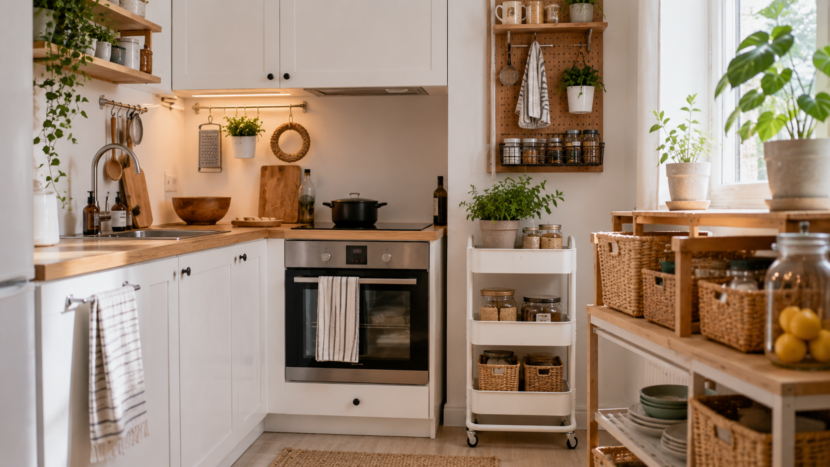
Counters are your only prep space in a small kitchen, so keep them as clear as possible. Keep out only what you use daily, such as the kettle, a knife block and one small tray for oil and salt. A hanging rail with S-hooks can hold utensils, and an over-the-oven-door rack handles towels. For a deeper approach, see our guide to keeping kitchen counters clear for good.
If cabinets are the problem, small kitchen storage ideas that actually work and kitchen organization ideas for small kitchens cover pantry, fridge and shelf setups in more detail.
Bathroom Organization for Small Apartments
Bathrooms in small apartments often have a single vanity and almost no wall space. The goal is to use the back of the door, the inside of cabinets and the vertical area above the toilet before buying anything bulky.
Use the Back of the Door
The back of the bathroom door is the most overlooked storage surface in a small apartment. An over-the-door organizer with clear pockets holds toiletries, hair tools and cleaning supplies without using any floor or shelf space. A row of over-the-door hooks handles towels, robes and hair dryer cords.
Organize Drawers by Category
Loose items in bathroom drawers are impossible to find. A set of small acrylic trays sorted by category fixes that: makeup in one, skincare in another, hair accessories in a third. Everything is found in seconds instead of minutes, and the drawer stays tidy for longer.
Add Tiered Shelves Under the Sink
The same shelf-riser trick works under the bathroom sink. A two-tier shelf around the pipes doubles space for spare toiletries, cleaning products and extra toilet paper. Use small bins to group items and label the fronts so they are easy to pull out.
Choose a Shower Caddy That Works
A shower caddy that hangs over the shower head or arm, or sticks to the tile, keeps shampoo, conditioner and body wash at hand without cluttering the floor. Choose rust-resistant stainless steel or silicone over cheap plastic for longevity. Decant products into matching pump bottles if the original packaging is messy. Expect roughly $15 to $35 for a good one.
Go Vertical Above the Toilet
A freestanding over-the-toilet shelf unit adds three or four levels of storage without drilling. Use the top for a plant or tray, the middle for rolled towels in a basket, and the lower shelf for backup paper. More ideas for tight bathrooms are in our apartment bathroom storage guide and small bathroom organization ideas that save space.
A Simple Weekend Plan
If the whole job feels overwhelming, split it into two short sessions. On Saturday, empty one kitchen cabinet and one bathroom drawer, throw away expired items, wipe the shelves and measure the space. Sort what remains into keep, store elsewhere and donate. This first pass usually takes about an hour per room and shows you exactly which organizers you need.
On Sunday, buy only what the measurements call for, then put everything back by category, with the most-used items at the front and at eye level. Take a quick photo of each finished zone. When things drift later, the photo is a fast reminder of the original layout, and a five-minute reset is all it takes to get back on track.
Habits That Keep Both Rooms Organized
Systems only work if they are easy to maintain. A few habits make the difference between a one-weekend fix and a lasting one.
- One in, one out. When a new product arrives, finish or toss the old one.
- Weekly two-minute reset. Put loose items back and wipe the surfaces.
- Label everything. Even in a small space, labels stop things drifting back into chaos.
- Decant selectively. Matching containers look neat, but only decant what you use fast.
- Check expiry dates quarterly. Old spices, skincare and cleaners take up space for no reason.
Budget and Renter-Friendly Shopping Tips
You do not need to buy a whole system at once. Start with the room that annoys you most and fix one zone at a time.
- Measure every cabinet, drawer and shelf before shopping, and keep the numbers in your phone.
- Prioritize tension rods, risers and over-the-door organizers; they are cheap, removable and effective.
- Use adhesive hooks rated for the weight you need, and test before loading them.
- Look for matching sets in one material so the finished room looks calm rather than mismatched.
- Browse our Amazon organization and storage finds for small spaces for ideas under budget, and check small space organization ideas that are beautiful for the style side.
For renters, the general rule is that anything that tension-fits, hooks over a door or sits on a surface can be removed without a trace. The National Association of Professional Organizers also suggests sorting by use and frequency before buying containers; see NAPO for professional organizing guidance.
Common Organization Mistakes
- Buying bins before decluttering. You will just organize things you do not need.
- Skipping measurements. Wrong-sized organizers waste money and slide around.
- Using deep stacked bins. Hidden items get forgotten. Choose shallow or clear containers.
- Putting daily items in hard-to-reach spots. Systems fail when they are inconvenient.
Frequently Asked Questions
How do I organize a small kitchen without drilling?
Use shelf risers inside cabinets, drawer dividers, over-the-door racks and magnetic strips or fridge-side racks for spices. A tension rod under the sink holds spray bottles, and adhesive hooks handle light utensils. All of these install in minutes and come off cleanly when you move out of a rental.
What is the best storage for a tiny bathroom?
Start with the back of the door and the space above the toilet, since both are usually unused. Add a two-tier shelf under the sink, a shower caddy and drawer trays. These layers add storage on every level without taking floor space or requiring permanent fixtures in the room.
How much should I budget for organizing a small apartment?
Most people can organize a small kitchen and bathroom for about $60 to $200, depending on how many zones they tackle. Cheap, high-impact items include risers, drawer trays and door hooks. Spread purchases over a few weeks, and buy only after measuring and decluttering the space.
How often should I reorganize my kitchen and bathroom?
A quick two-minute reset each week keeps things tidy, and a deeper review every three months catches expired products and clutter creep. If a system feels like a chore to maintain, simplify it. The best setup is the one you actually keep using day after day.