TL;DR
- Measure the room before moving anything. The single most common bedroom layout mistake is buying furniture that does not actually fit.
- The bed goes against the longest wall in most rooms — this maximises the remaining floor space more than any other placement.
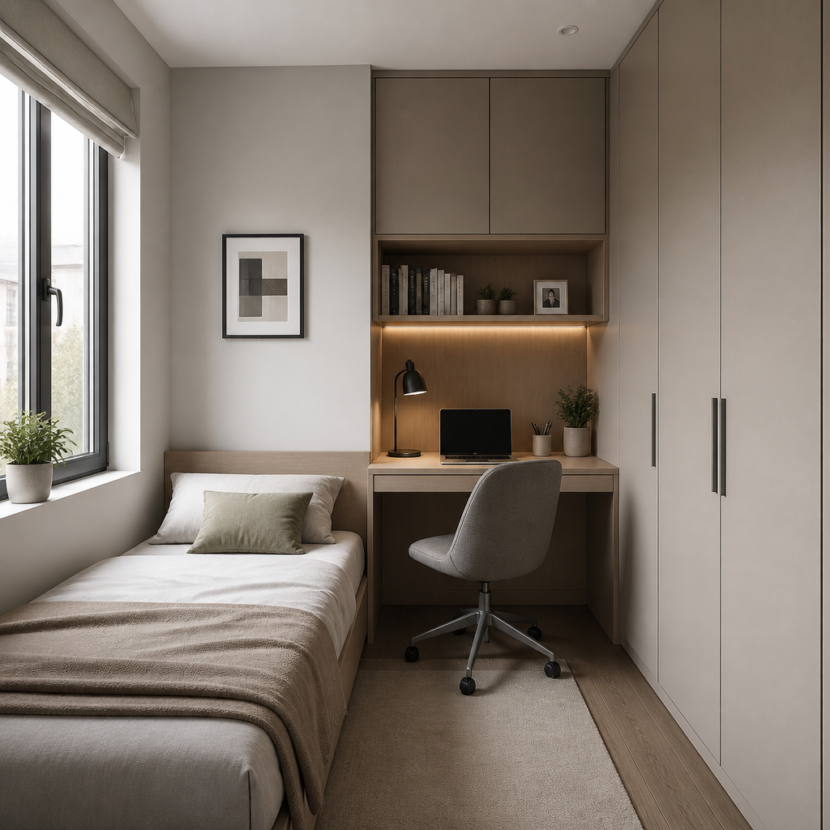
- A tall wardrobe that reaches the ceiling beats a wide wardrobe every time in a small bedroom. Height is free; floor space is not.
- A dedicated desk corner, even a tiny floating shelf, gives the bedroom a working zone that prevents work from spreading across every surface.
- Minimum clearances: 75cm beside the bed for getting in and out, 90cm in front of the wardrobe to open doors fully.
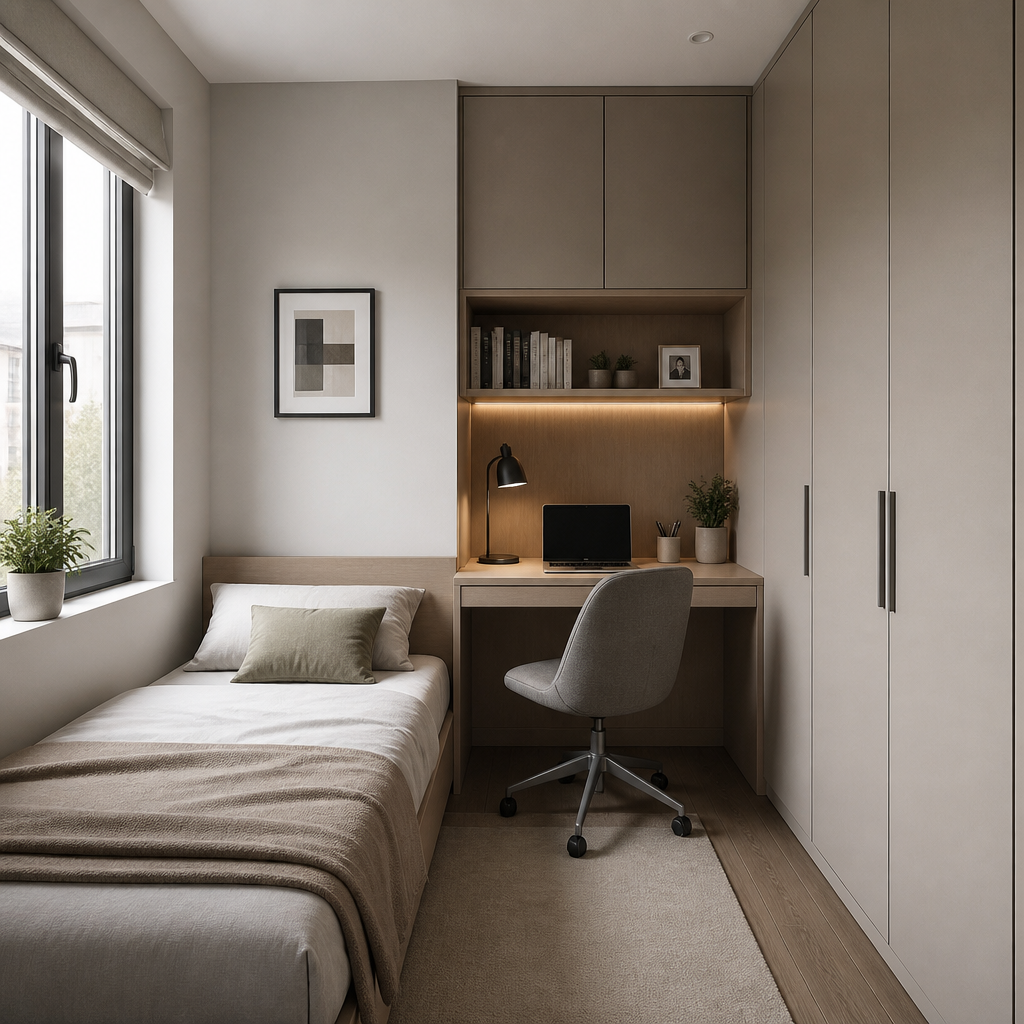
Most small bedroom layout problems come from one decision made too early: buying a bed before measuring the room. The bed determines everything else — wardrobe position, desk placement, walkway width — and getting the bed wrong means everything stacked on top of that decision is also wrong.
These small bedroom layout ideas work through the decisions in the right order: measurement first, bed placement second, storage third, desk fourth, decoration last.
1. Measure before you do anything else
What measurements matter most in a small bedroom layout? Room width, room length, and the position and swing direction of every door and window. These three determine what is possible before any furniture decision is made.
Draw the room to scale on paper or use a free tool like IKEA’s planning app or Floorplanner. Mark door swings — a door that opens inward eliminates the wall behind it for furniture placement. Mark window positions — furniture in front of a window blocks light and usually looks wrong. Mark where the radiator or heating unit is — furniture within 30cm of a radiator blocks heat and can damage upholstery.
The minimum clearances that must survive any layout: 75cm beside at least one side of the bed (to get in and out), 90cm in front of any wardrobe with hinged doors (to open them fully), and 60cm minimum walkway anywhere in the room. If a layout cannot meet these three requirements, the furniture choice needs to change, not the clearances.
2. Put the bed against the longest wall
Where should the bed go in a small bedroom? Against the longest solid wall, centred if possible, with clearance on at least one side. This placement frees the maximum amount of usable floor space in the remainder of the room.
A bed floating in the middle of a room, or on a short wall where it takes up most of the wall width, leaves awkward L-shaped spaces that cannot be used efficiently. A bed on the longest wall creates one large open area in front of it — which is the floor space you actually live in, walk through, and can furnish with the remaining pieces.
The exception: if the longest wall has a window in the middle of it, the bed cannot go centred there without blocking the window. In this case, either offset the bed to one side of the window (with the headboard abutting the window frame) or use the second-longest wall instead.
3. Go tall with the wardrobe
What wardrobe works best in a small bedroom? A tall, narrow wardrobe that reaches ceiling height — not a wide, low wardrobe that stops at 200cm and wastes the 40cm between the top of the wardrobe and the ceiling.
A wardrobe that fills floor-to-ceiling on one wall reads as built-in and uses every available vertical centimetre. IKEA PAX wardrobes with top-mounted add-on units reach most standard ceiling heights and create a clean, built-in effect from $150 upward. The additional storage in the top section — accessed less frequently — is where seasonal items, suitcases, and rarely used items go, freeing the accessible shelves and rails for daily use.
Sliding doors rather than hinged doors save the 90cm swing clearance in front of the wardrobe — useful in rooms where that clearance would eat into the bed walkway. The tradeoff is that sliding doors cannot be opened fully at once, which can make seeing all wardrobe contents at once harder.
4. Create a desk corner without a freestanding desk
How do you fit a desk in a small bedroom without losing floor space? A wall-mounted floating desk (30-40cm deep) in a corner uses the one space in a bedroom that is typically wasted — the corner beside or opposite the wardrobe — without any floor footprint.
A floating desk at 75cm height with one or two floating shelves above it creates a complete working zone in a 60cm-wide corner. The chair tucks under the desk when not in use. A pegboard on the wall beside the desk holds stationery, chargers, and small items without shelving. The whole setup takes under $60 in materials (IKEA LACK shelf as desk surface, $12; brackets, $8; pegboard, $20) and leaves the floor entirely clear.
5. Small bedroom layout ideas that actually work: the placement sequence
What order should bedroom furniture be placed in? Bed first, wardrobe second, desk third, everything else last. Each decision constrains the next, so getting the sequence right prevents the most common layout mistakes.
Bed on the longest wall. Wardrobe on the wall perpendicular to the bed (the end wall) or on the opposite long wall — whichever leaves the walkway clearances intact. Desk in the remaining corner. Bedside surfaces last — wall-mounted shelves rather than freestanding nightstands to preserve floor clearance beside the bed. In this sequence, a room that seems too small for both a wardrobe and a desk usually turns out to have space for both when the furniture is scaled correctly.
6. Use the door wall productively
What goes on the wall with the bedroom door? Hooks, a mirror, and the back of the door itself. The door wall is the most underused storage surface in a small bedroom — the back of the door alone holds a full-length mirror, a set of over-door hooks for bags and tomorrow’s outfit, and an over-door shoe organiser if needed.
A full-length mirror on the door wall (mounted on the door itself or leaned against the adjacent wall) serves the same light-reflecting and space-expanding function as in any other room, while being positioned where it does not take up any of the primary wall space needed for the bed or wardrobe.
7. Bedroom furniture ideas: scale over style
What furniture scale works in a small bedroom? Everything slightly smaller than you would choose for a larger room. A double bed rather than a king in a room under 10 square metres. A slim two-drawer nightstand rather than a full three-drawer chest. A floating shelf above the bed rather than a headboard with storage.
Every 10cm of furniture width saved in a small bedroom is 10cm of walkway gained. The visual difference between a 180cm wardrobe and a 200cm wardrobe is small. The difference in clearance beside the bed can be the difference between a room that works and one that feels tight every morning.
Frequently asked questions
What is the best layout for a small bedroom?
Bed against the longest wall, wardrobe on the perpendicular or opposite wall, desk in the remaining corner as a floating shelf, bedside surfaces as wall-mounted shelves. This sequence maximises the usable floor space in front of the bed and keeps walkways clear on at least one side.
How much space do you need beside a bed?
75cm minimum on at least one side for comfortable entry and exit. 60cm is the functional minimum on the other side if space is very tight. Less than 60cm on both sides makes a bedroom feel uncomfortable to use daily regardless of how good it looks.
Can a desk fit in a small bedroom?
Yes, with the right approach. A wall-mounted floating desk 30-40cm deep in a corner takes no floor space and creates a functional working zone. The desk does not need to be large — a 60-80cm width floating shelf at desk height is sufficient for a laptop and one monitor.
Pulling it together
Small bedroom layouts work when the sequence is right: measure, place the bed, add the wardrobe, carve out the desk corner, and let decoration follow. The measurement step is not optional — it is the one that determines whether everything else is possible. A layout that works on paper almost always works in the room. A layout chosen by feel almost never does.
For the storage side, see our small bedroom storage ideas guide. For decor that makes the room look bigger, see our small bedroom decor ideas guide.