TL;DR
- In a small apartment living room, the sofa defines the zone — put it first, then arrange everything else around it.
- A floating sofa (pulled from the wall) with a console table behind it divides living from dining without a partition.
- The rug defines where the living zone ends. Size it correctly — all front sofa legs on the rug minimum.
- Multi-zone apartments need a clear circulation path that does not cut through the living area furniture.
- Measure before you buy. The right sofa for the layout is rarely the sofa you originally wanted.
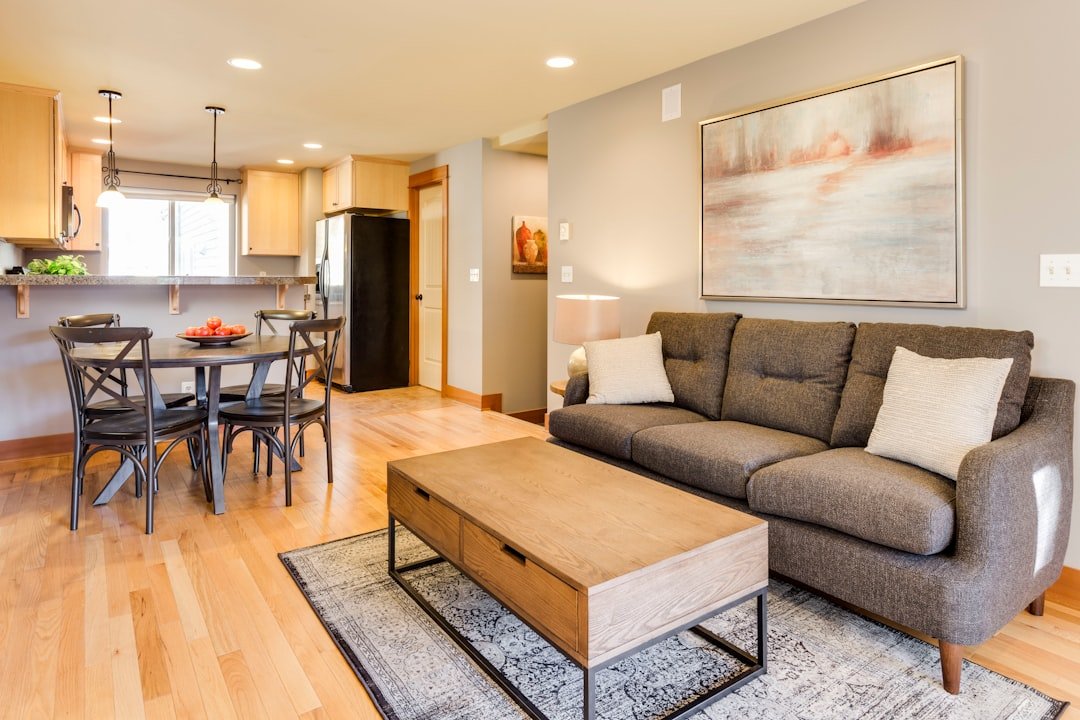
Small apartment living room layout is different from small house living room layout because the constraints are different. Apartment living rooms often share space with dining areas, home office zones, or studio sleeping areas. The layout problem is not just fitting furniture — it is defining zones within a single open space without walls to do the separating.
These layout ideas address the specific challenges of apartment-scale spaces: how to zone without partitions, how to manage circulation in a narrow space, and how to make a small apartment living room feel like its own room even when it opens directly onto the kitchen or entrance hall.
1. Define the living zone with the rug before anything else
How do you define a living zone in an open-plan small apartment? With the rug. The rug defines exactly where the living area starts and ends without any physical barrier. It is the most important spatial decision in an open-plan apartment layout.
The rug should be large enough that all front sofa legs sit on it, and ideally all four legs of every piece of seating in the zone. The rug’s edge becomes the invisible boundary of the living area — anything inside it belongs to living, anything outside belongs to another zone. Choose a rug before choosing any other furniture, and let it define what fits within the zone rather than the other way around.
In a small apartment, a 160x230cm rug is typically the minimum that creates a credible living zone. A 200x290cm rug creates a more generous zone that feels properly separated from adjacent areas. Both sizes are available on Amazon and IKEA from $40 to $150.
2. Use the floating sofa layout to divide zones
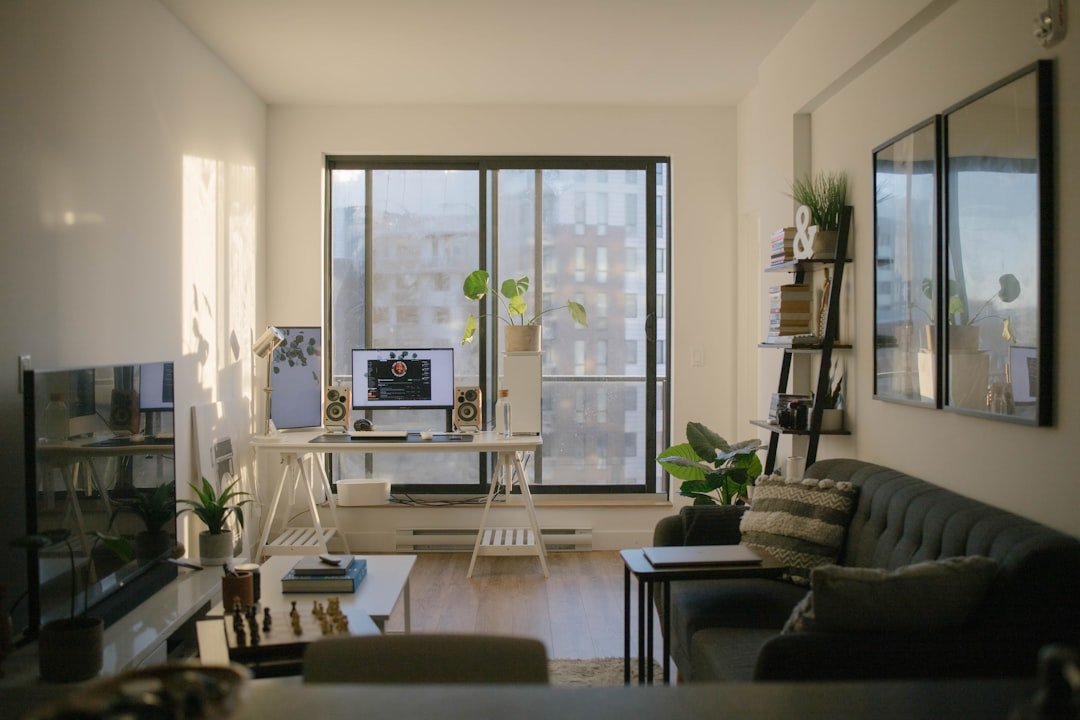
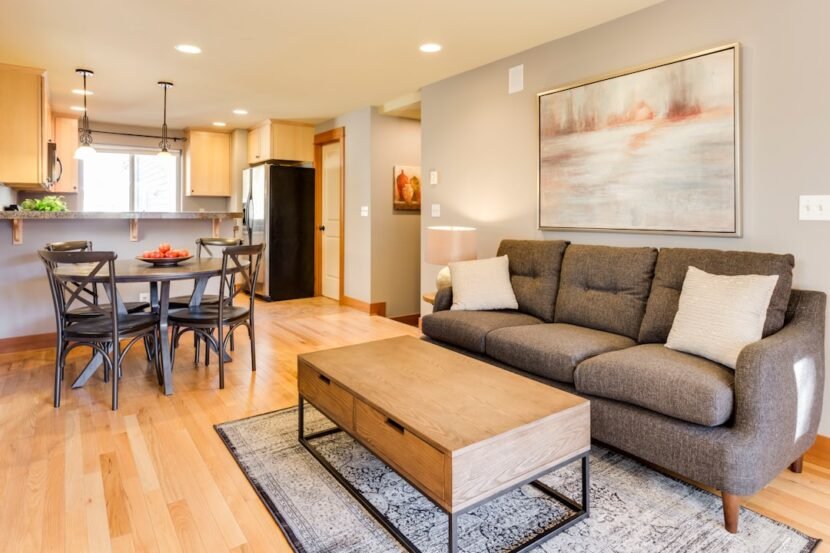
What is the floating sofa layout? The sofa is pulled away from the wall and positioned so its back faces the dining or kitchen area. A slim console table placed directly behind the sofa back (at the same height) provides a surface on the dining side and creates a clear visual boundary between the zones.
This layout works particularly well in apartment living rooms that open directly onto a dining area. The sofa back defines where living ends without any partition or shelf unit. The console table behind it (typically 80-90cm high, matching the sofa back) adds a lamp and display surface on the dining side, making both zones feel more finished.
The floating arrangement also creates circulation space behind the sofa — the walkway from the entrance to the kitchen does not need to cut through the living area. This single change often solves the circulation problem that makes small apartment living rooms feel cramped and impossible to move through comfortably.
3. Small apartment layout ideas: the zone hierarchy
What order should zones be arranged in a small apartment? Living zone nearest the main window (natural light is the most valuable asset in any room), dining zone between living and kitchen, work zone in the least used corner or against a wall that does not interfere with main circulation.
The zone nearest the main window should be the one used most often. In most apartments, that is the living zone. A sofa positioned to face or sit adjacent to the main window uses the best light in the apartment for the most-used seating. The dining area further from the window still gets secondary light, and a work zone in a corner can be supplemented by a desk lamp.
4. Small apartment decorating ideas on a budget: zone definition without furniture
How do you separate zones in a small apartment without buying furniture? Rugs (different rugs for different zones), lighting (a pendant over the dining table separates it from the living area immediately), and ceiling-to-floor curtains on a track that can be pulled to partition when needed.
Two rugs in a small apartment (one for the living zone, one under the dining table) create two distinct zones from a single open floor plan without any physical partition. They can be different colors or textures — the difference itself is what creates the zone distinction. This costs significantly less than any furniture partition solution and is completely reversible.
5. Keep one continuous circulation path

What is the most common small apartment layout mistake? Blocking the circulation path — the route from entrance to kitchen to bedroom — with furniture that makes it necessary to navigate around pieces to move through the apartment.
The circulation path should be at least 90cm wide throughout. In a narrow apartment this often means the sofa cannot go on one wall (it would block the path) and must go on another (where it leaves the path clear). Identify the required circulation path first, then determine which sofa positions are compatible with it. The layout possibilities narrow quickly once the path is protected, which makes the remaining decisions clearer.
6. Modern apartment living room ideas: TV position in the layout
Where should the TV go in a small apartment living room layout? On the wall that the sofa faces, mounted at eye height from seated position. The TV position is determined by the sofa position, not the other way around — the sofa goes where the layout works, then the TV goes on whatever wall faces it.
In a studio apartment where the living area, sleeping area, and dining area share one room, the TV position needs additional consideration: it should be visible from the sofa and the bed (if the layout permits) without being in the direct sightline of the dining table (dining with a TV directly in front of you encourages passive eating and discourages conversation). A corner mount often solves this — the TV is visible from sofa and bed at an angle, but not dominant from the dining position.
7. Small apartment living room ideas on a budget: the layout-first approach
What is the most cost-effective approach to furnishing a small apartment living room? Decide the layout completely before buying a single piece of furniture, then buy only what the layout requires — nothing more.
Draw the room to scale on paper (or use a free tool like Floorplanner or IKEA’s planning app). Place the sofa, rug, coffee table, and TV position. Check that circulation paths are clear and that each piece fits without forcing awkward compromises. Then buy only what appeared in the plan. Every piece bought before the layout is decided has a high chance of not fitting properly or making the layout worse.
For the furniture decisions within the layout, see our small apartment living room ideas guide. For the full decor and styling approach, see our small living room layout ideas guide.
Frequently asked questions
How do you arrange furniture in a small apartment living room?
Define the circulation path first — the route between all rooms must stay at least 90cm wide. Place the sofa in the position that works with the path. Float the sofa 30-45cm from the wall with a console table behind it if you need to divide living from dining. Put the rug down with the sofa front legs on it. Mount the TV on the wall the sofa faces. Add one floor lamp. Stop.
What are small apartment layout ideas for a studio?
Define three zones with rugs and lighting: sleeping, living, and dining. The sofa back faces the sleeping zone, creating a soft division. A pendant light above the dining table defines the dining zone. The sleeping zone gets a bed rug separate from the living rug. Each zone has its own light source. No physical partitions needed — the rugs, furniture positioning, and lighting do the zone work.
How do you make a small apartment living room feel bigger?
Float the sofa away from the wall, use the correct rug size, keep the circulation path clear, mount the TV instead of using a floor unit, and add a large mirror on the wall with the most natural light. These five layout decisions collectively create significantly more perceived space than any decoration addition.
Pulling it together
Small apartment living room layout is fundamentally a problem of measurement and zone definition, not decoration. Get the sofa position right, protect the circulation path, define the zone with the rug, and the rest of the room arranges itself logically. The decoration is the last step, not the first.