Small Bedroom Layout Ideas That Actually Work (No Renovation Required)
By [REPLACE-AUTHOR-NAME] · Home Decor Stylist · Last updated: April 22, 2025 · 11 min read
📌 Save this for later! Pin this to your Bedroom Layout Ideas board so you can reference it when you rearrange.
A small bedroom can feel either like a cozy retreat or a storage unit with a mattress. The difference is almost entirely about layout. Small bedroom layout ideas that actually work are not about buying new furniture – they are about understanding how space, sightlines, and traffic flow interact in a tight room.
This guide covers the 15 most effective layout strategies for small bedrooms, drawn from real apartment spaces under 150 square feet. Each tip works for renters – no drilling required unless noted as optional.
By the end, you will know exactly where to put the bed, how to handle the nightstand dilemma, and what to do with the closet, desk, and dressing area in a room that has to do too many things at once.
A quick note from me: [REPLACE with personal experience. Example: “I have lived in four apartments where the bedroom was under 120 square feet. The layout that finally made sense came from a single insight: the bed does not have to be centered. Once I pushed my queen bed into the corner and used a wall-mounted shelf instead of a nightstand, the whole room opened up.”]
Quick Answer: How to Layout a Small Bedroom
- Place the bed with the headboard against the wall opposite or perpendicular to the door.
- Leave at least 24 inches of walkway on the primary exit side of the bed.
- Replace one or both nightstands with wall-mounted floating shelves.
- Use a low-profile bed frame with under-bed storage drawers.
- Push the dresser or wardrobe to a wall that does not interfere with the main walkway.
Why Most Small Bedroom Layouts Fail
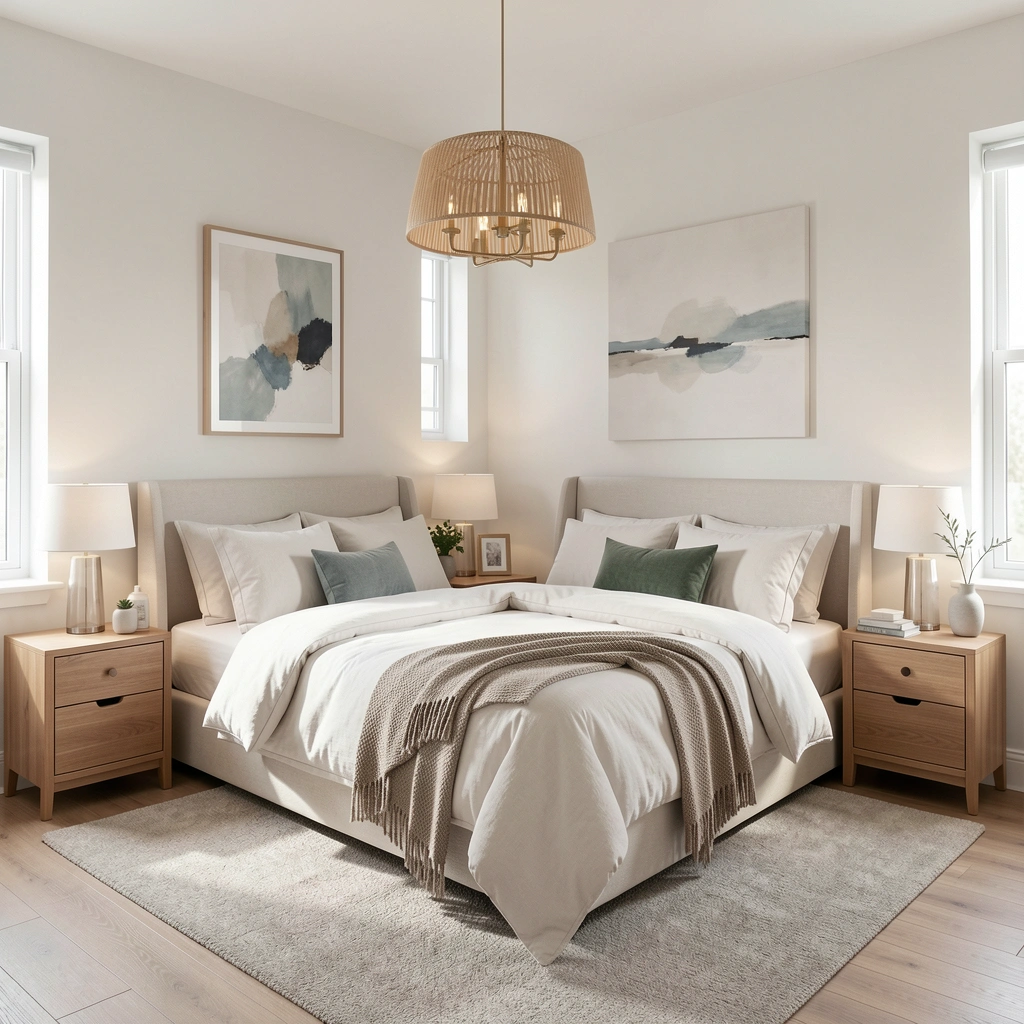
The first mistake is centering the bed on the longest wall and not rethinking from there. This is the default layout and it is often the worst one for small rooms, because it leaves shallow strips of dead space on both sides of the bed that are too narrow to use but too wide to ignore.
The second mistake is keeping a large dresser when the room does not have space for it. A 6-drawer dresser (typically 36 to 48 inches wide) in a 10-foot wide bedroom can consume up to 40% of the wall it occupies. Wardrobes, under-bed storage, and wall-mounted solutions almost always work better.
Third, people use free-standing nightstands when wall-mounted shelves would give 12 to 18 extra inches of floor clearance on each side of the bed. In a room where every inch matters, this is a significant gain.
15 Small Bedroom Layout Ideas That Work
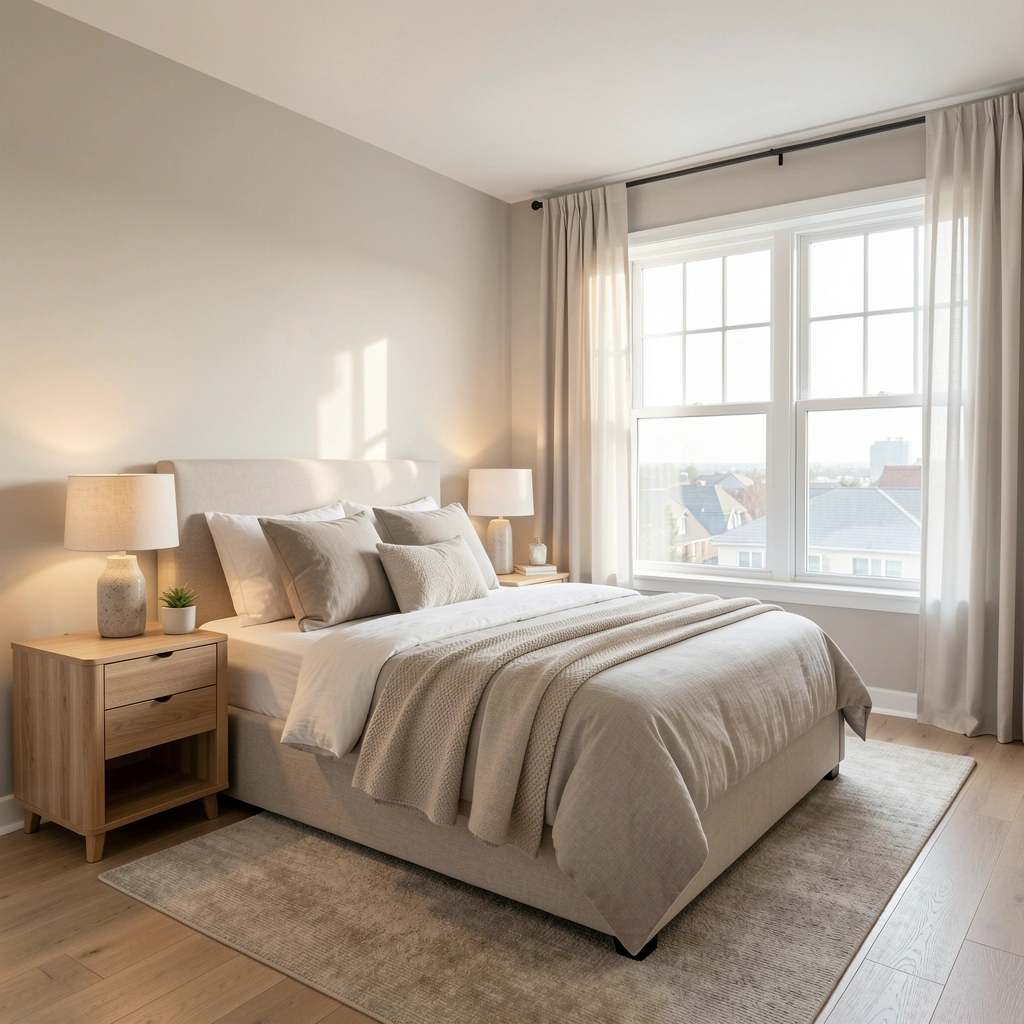
1. Push the Bed Into a Corner (Yes, Really)
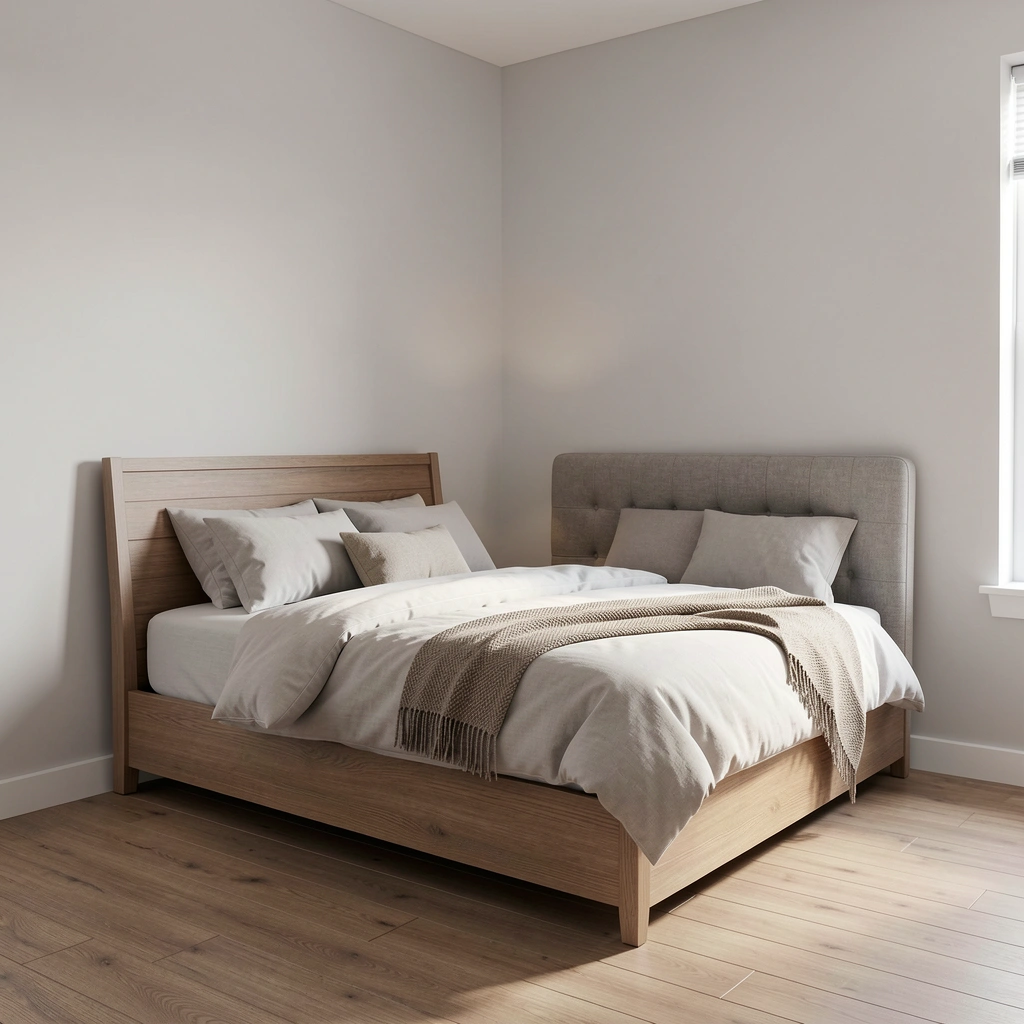
Corner bed placement is the most underused layout option in small bedrooms – and often the most space-efficient. When the bed sits in a corner with two walls on two sides, you free up a full open floor zone on the remaining two sides. The trade-off is that only one person can easily get in and out. For solo sleepers or anyone in a very tight room, this trade-off is worth it completely.
Add corner shelving above the bed in the corner for storage without using floor space. An L-shaped floating shelf unit in a corner runs about $40 to $65 on Amazon.
2. Use a Platform Bed with Built-In Storage Drawers
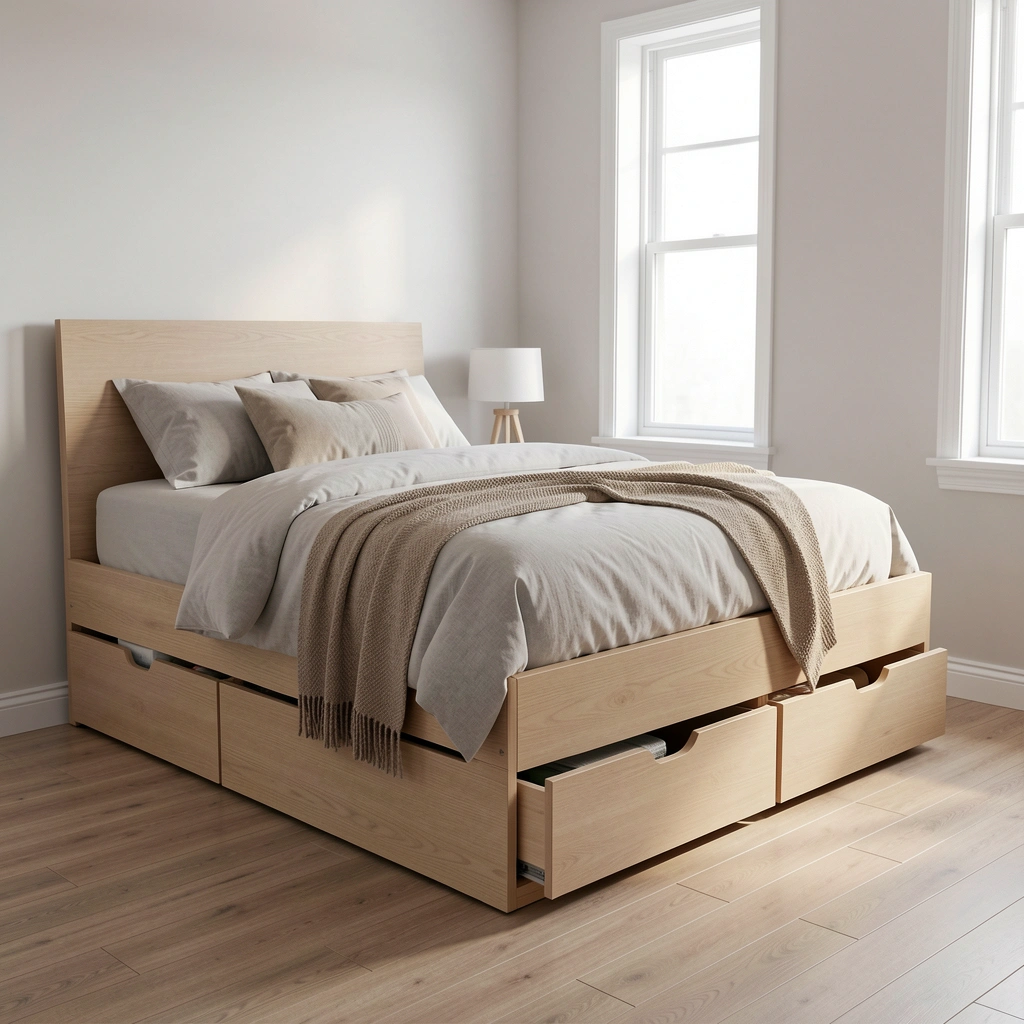
Under-bed drawer storage eliminates the need for a dresser in most small bedrooms. The IKEA Malm bed with 4 drawers (from $279 for a queen) provides roughly 20 cubic feet of storage – equivalent to a 4-drawer dresser. The bed frame height stays low, which keeps the room feeling open.
If you already own a bed frame without storage, pair it with flat under-bed bins (IKEA SAMLA at $5 each) or vacuum compression bags for seasonal clothing.
3. Replace Nightstands with Wall-Mounted Floating Shelves
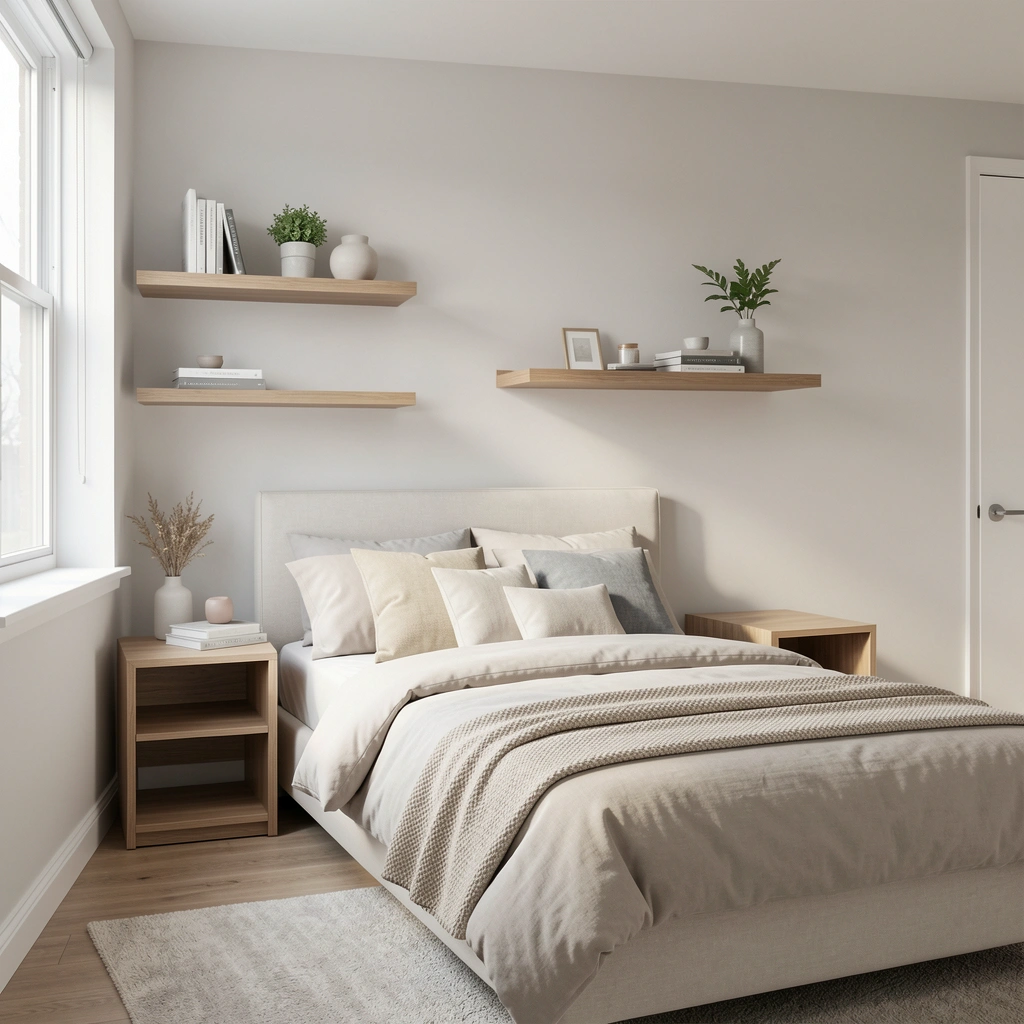
Swapping floor-standing nightstands for wall-mounted shelves is one of the highest-value changes you can make in a small bedroom. A 10-inch deep floating shelf at mattress height holds a lamp, phone, and a glass of water – everything a nightstand needs to do. And it frees up 12 to 18 inches of floor depth per side, which is enough to meaningfully change how the room flows.
Command Strips hold shelves up to 7.5 lbs with no drilling (important for renters). For heavier lamps, use a wall anchor system. IKEA LACK floating shelves are $8 each and available in white, black, and wood tones.
4. Orient the Bed Perpendicular to the Door on a Long Wall
In narrow rectangular bedrooms, the most functional layout is often the bed along the long wall with the headboard against it. This creates maximum open floor space between the foot of the bed and the opposite wall – space that can hold a small desk, a dresser, or nothing at all. The visual depth you see when you walk through the door also makes the room feel larger than it is.
5. Use a Tall Narrow Wardrobe Instead of a Wide Dresser
A wardrobe that is 24 inches wide but 84 inches tall holds more clothing than most 6-drawer dressers while using far less floor footprint. The IKEA PAX wardrobe (19.75 inches deep, configurable from 19.75 to 39.25 inches wide) is the gold standard for apartment bedrooms. Pair it with internal organizers (extra shelves, shoe racks, pull-out drawers) to customize the storage layout.
Position the wardrobe on the wall adjacent to the door, not opposite it, to keep the room’s main view open when you enter.
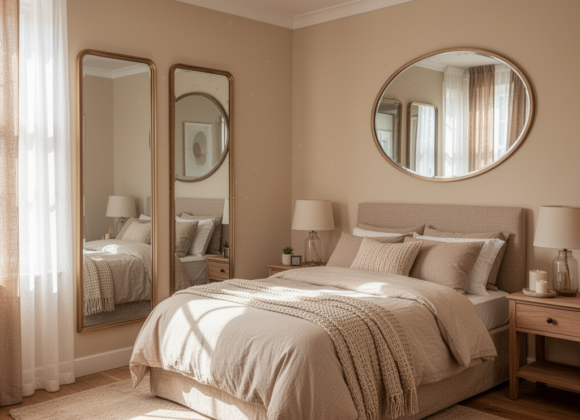
6. Hang a Full-Length Mirror on the Back of the Door
An over-door full-length mirror serves two purposes: it provides a dressing mirror without using wall space, and it adds depth to the room every time the door is open. OTC door-mount mirror kits cost $15 to $30 and require zero drilling. A frameless door mirror from Amazon runs about $25.
[REPLACE WITH A REAL PHOTO] Caption: My door mirror setup in my [city/apartment type] bedroom. It is the most space-efficient thing I have ever added to a small room.
7. Use a Headboard with Built-In Shelf Storage
A headboard with integrated shelves or a back-of-headboard shelf eliminates the need for any nightstand at all – on either side of the bed. The Prepac Queen Headboard with Storage ($129 to $159 on Amazon) includes compartments for books, charging cables, and small items. Combined with a bedside lamp attached via a swing-arm wall mount ($25 to $40), it creates a complete, compact sleeping zone.
8. Create a Dedicated Dressing Corner with a Small Stool
A clear dressing zone keeps clothing and accessories from spreading across every surface in the room. A corner with a single hook rail (command hooks, $8 for 6), a small folding stool ($25 to $35), and a small tray on the dresser or shelf defines the dressing area without requiring a separate vanity. Keep the zone to 24 to 30 inches wide.
9. Add a Floating Shelf Above the Bed as a Pseudo-Headboard
A floating shelf spanning the full width of the bed replaces both the headboard and the nightstands in one long, low-profile unit. Install at approximately 28 to 32 inches above the mattress. Add bedside lamps (plug-in sconces from Amazon, $20 to $35 each), books, plants, and a small tray for charging. The result looks custom and uses the wall space that usually goes unused anyway.
For renters: use a French cleat system or the heaviest command strips rated for shelves. IKEA MOSSLANDA picture ledges ($14 each, 45 inches long) can be doubled up for a wide headboard shelf look.
10. Use a Fold-Down Wall Desk If You Work From the Bedroom
A fold-down wall desk takes up zero floor space when not in use and provides a functional work surface when needed. The IKEA NORBERG wall-mounted drop-leaf table ($50) is 10.25 inches deep when folded up – essentially flush with the wall. When open, it creates a 16 x 26 inch work surface suitable for a laptop.
Position it on the wall opposite the bed with a small wall-mounted shelf above for books and supplies. Close it when done and the bedroom returns to its sleep function.
11. Position Lamps on the Wall, Not the Nightstand
Wall-mounted plug-in sconces free up every inch of the nightstand surface and keep cords contained. Plug-in swing-arm sconces (like the Globe Electric version at $22 to $35 each) attach to the wall with a single screw or strong adhesive mount and plug into any outlet. The shade swings in and out for directed reading light.
For true renters with no-drill policies, adhesive-mounted plug-in sconces are now available from Amazon at around $20 each and hold up to 2 lbs securely.
12. Use a Curtain Divider to Separate Closet from Sleep Space
In a studio or a bedroom with an open closet, a floor-to-ceiling curtain divides the spaces visually and psychologically. A tension rod ($8 to $15) across the closet opening with a linen curtain ($20 to $35) replaces closet doors, hides clothing clutter, and softens the room. Use the same curtain fabric as the window treatment for a cohesive look.
13. Add a Ladder Shelf for Overflow Storage
A ladder shelf in an empty wall corner adds 4 to 5 tiers of display and storage space without attaching to the wall at all. Freestanding ladder shelves like the Ameriwood Home Large ladder shelf ($45 to $65) lean against the wall and require no installation. Use it for folded sweaters, books, plants, and baskets of accessories.
14. Use a Bench at the Foot of the Bed for Storage and Styling
A storage bench at the foot of the bed replaces a hope chest, provides overflow seating, and gives the room a finished hotel-room look. The IKEA HEMNES shoe bench with storage ($130) is 20 inches deep and holds shoes, blankets, and seasonal items inside closed compartments. Keep it the same width as the bed or slightly narrower for proper proportions.
15. Keep the Floor Visible – Use Furniture with Legs
Seeing floor space – even a few inches under furniture – makes a small room feel larger because the sightline continues under the furniture rather than stopping at it. Choose bed frames, nightstands, and dressers with at least 4-inch legs. Avoid platform beds with solid-panel sides that sit flush to the floor. The visual “lift” costs nothing and makes a measurable perceptual difference.
Quick Layout Type Finder
Which Layout Strategy Fits Your Bedroom?
Budget Comparison: Space-Saving Furniture for Small Bedrooms
| Priority | Item | Cost Range | Space Gain |
|---|---|---|---|
| 1 – Highest | Platform bed with storage drawers | $150-$350 | Eliminates dresser |
| 2 | Floating wall-mounted nightstand shelves | $8-$25 each | 12-18″ per side |
| 3 | Over-door full-length mirror | $15-$30 | Frees floor/wall space |
| 4 | Tall narrow wardrobe (IKEA PAX) | $159-$350 | Replaces wide dresser |
| 5 | Fold-down wall desk | $50-$120 | Zero footprint when closed |
| 6 | Under-bed flat storage bins | $5-$20 each | Seasonal storage offload |
| 7 | Freestanding ladder shelf | $45-$80 | Vertical storage, no anchor needed |
Room Shape Tips by Bedroom Type
Different room shapes have different layout constraints. Here is a quick reference for the most common small bedroom configurations.
Square rooms (10×10 to 12×12 ft): These are deceptively tricky because no wall is naturally “better” than another. Use the wall opposite the door as the headboard wall, which ensures the bed is the first thing you see when entering – a hotel-style approach that signals purpose immediately. Keep the center of the room clear.
Narrow rectangles (8×14 or 9×12 ft): The bed almost always belongs along the long wall. This is the only layout that leaves a usable floor zone at the foot of the bed. The narrow walls are best used for a door, a window, or a flat-profile wardrobe.
L-shaped or alcove rooms: Put the sleeping zone in the alcove and the dressing/storage zone in the main area. The alcove naturally frames the bed and creates a defined sleep space without any additional dividers.
Very small square rooms (under 100 sq ft): Corner placement with a full/double bed (54×75 inches) rather than a queen (60×80 inches) gives you the most open floor zone. A full bed costs 6 inches of width and 5 inches of length but recovers a meaningful amount of floor space in a room this size.
5 Layout Mistakes That Shrink a Small Bedroom
- Leaving dead space between the bed and the wall on both sides. Either push one side flush to the wall (corner layout) or use the side space intentionally for a slim nightstand. Dead space that is too narrow to walk through but too wide to ignore is wasted room.
- Using a tall dresser opposite the bed. A dresser that fills your direct sightline from bed makes the room feel closed in. Move it to a side wall or replace it with under-bed storage.
- Not measuring before buying furniture. The most common mistake. A bed frame, nightstand, and dresser that look fine individually can make a small room unworkable together. Use masking tape on the floor to mock up furniture footprints before purchasing.
- Blocking the window with a wardrobe or tall shelving. Natural light is a small room’s best asset. Keep the wall with the window as clear as possible, especially in rooms under 100 sq ft.
- Buying a bed frame with a tall footboard. A footboard in a small room cuts the perceived length of the room in half visually. Choose frames without footboards or with very low ones (under 12 inches).
Frequently Asked Questions
Where should the bed go in a small bedroom?
In most small bedrooms, the best placement is with the headboard against the wall opposite or perpendicular to the door – so you can see the door from bed without being directly in line with it. This maximizes floor space on both sides and along the foot of the bed.
How do I make a small bedroom look bigger?
Use light colors on walls and bedding, hang curtains at ceiling height, keep one or both nightstands off the floor with wall-mounted shelves, and use under-bed storage to eliminate extra dressers. A large mirror on the wall opposite the window visually doubles the room’s depth and brightness.
What is the minimum space needed on each side of a bed?
The functional minimum is 18 inches on the side you get out of daily and at least 24 inches on the walking side for comfortable movement. In very tight rooms (under 10 feet wide), pushing one side of the bed against the wall and leaving 30 to 36 inches on the accessible side is a practical compromise.
Should I use a dresser or a wardrobe in a small bedroom?
It depends on your room shape. A tall narrow wardrobe uses vertical space efficiently in rooms where floor space is limited. A low dresser under 36 inches tall works better in very narrow rooms where height is needed for visual breathing room above the furniture line.
Can I fit a desk in a small bedroom?
Yes. A wall-mounted fold-down desk takes up zero floor space when closed. A narrow floating shelf at desk height (18 to 20 inches deep) also works for laptop use. Position any desk to face a wall rather than the bed, and add a partition or curtain between work and sleep zones when possible.
What bed frame works best in a small bedroom?
Platform frames with built-in drawers maximize storage without adding height. Low-profile frames (under 14 inches to the top of the frame) make ceilings feel higher. Frames with visible legs keep the floor sightline open. Avoid tall headboards and footboards in rooms under 12 feet long, as they visually shorten the room.
Final Thoughts
The best small bedroom layout is the one that gives every piece of furniture exactly what it needs to function – no more, no less. Start by measuring your room and sketching out the bed placement with masking tape before moving anything. The right placement makes everything else fall into place.
Then layer in the storage and lighting changes. A platform bed with drawers and floating wall shelves as nightstands will transform most small bedrooms faster than any decorative change you can make.
The room does not need to be big. It just needs to be yours.
📌 Found this helpful? Pin it to your Bedroom Layout board so you can reference it during your next rearrange!
Keep exploring: check out our guide on bedroom decor ideas for better sleep, our small space organization ideas that are beautiful too, and our best Amazon home decor finds under $50.
[REPLACE-AUTHOR-NAME]
Home Decor Stylist & Founder, Home Deco Harmony
[REPLACE with your bio.] Read more about me.
Disclosure: This post may contain affiliate links. If you purchase through them, I earn a small commission at no extra cost to you. I only recommend products I have personally used or carefully researched. Thank you for supporting Home Deco Harmony.