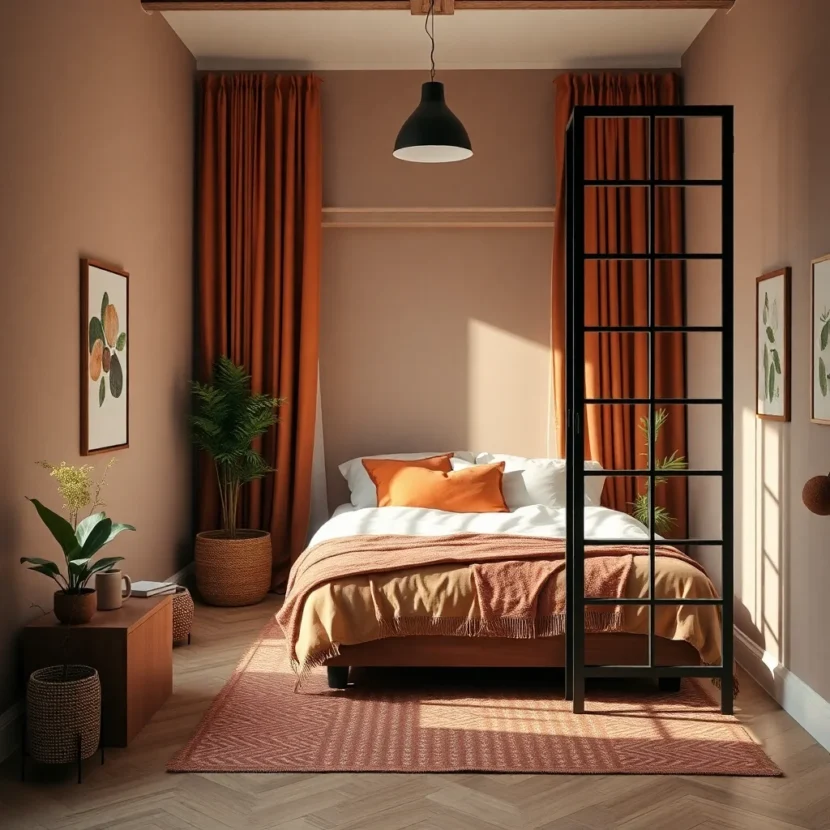
My first apartment was a 320 square foot studio where the bed and the couch lived in the same room, about eight feet apart. For the first few months it felt less like a home and more like a hotel room I never checked out of. The thing that finally fixed it was not a renovation or a clever piece of furniture. It was an open bookshelf I dragged into the middle of the floor to put a wall between “sleep” and “everything else.” That shelf was the first of many room divider ideas I have tested in small rentals since.
This post contains affiliate links. I may earn a small commission if you buy through my links, at no extra cost to you.
That one change is the whole reason this post exists. The best room divider ideas for a rental are the ones you can set up in an afternoon, take down before you move out, and afford on a small budget. Below are the dividers that actually worked in my own small spaces, plus honest notes on what to skip.
TL;DR
- Most of the renter-friendly dividers here cost $35 to $180, and none of them require drilling into your walls.
- The cheapest fix is a curtain on a tension rod: under $40 and reversible in about ten minutes.
- An open 2×4 bookshelf divides and stores at the same time, the best value if your studio is also short on closet space.
- Freestanding folding screens move with you and work in awkward layouts where nothing can be anchored.
- Skip ceiling-mounted tracks unless your lease specifically allows screws in the ceiling.
Room divider types compared at a glance
Here is how the main options stack up before we get into the detail.
| Divider type | Best for | Rough cost | Renter-friendly |
|---|---|---|---|
| Tension-rod curtain | Hiding the bed, soft zoning | $30 to $60 | Yes, no drilling |
| Open bookshelf | Zoning plus storage | $90 to $180 | Yes, freestanding |
| Folding screen | Quick, movable privacy | $60 to $150 | Yes, freestanding |
| Clothing rack or shelving | Tiny budgets | $30 to $80 | Yes |
| Ceiling curtain track | A clean, built-in look | $80 to $130 | Needs screws, ask first |
What is the cheapest way to divide a room?
The cheapest way to divide a room is a fabric curtain hung on a tension rod, usually under $40 all in. You wedge the rod between two walls or inside a doorway with no tools, no holes, and no permission needed. It is the approach I recommend to anyone decorating their first place on almost nothing.
Curtains soften a hard, boxy studio in a way that solid panels do not, and you can pull them open during the day so the space still breathes. Big retailers list hanging curtains as a top divider method for exactly this reason: it is cheap, fast, and forgiving.
The trade-off is that fabric blocks sightlines but not sound or light. If your goal is to hide an unmade bed from the couch, a curtain is perfect. If you need real acoustic privacy for video calls, look at a solid panel instead.
Renter-friendly room divider ideas that need no drilling
The best renter-friendly room divider ideas all share one trait: they stand on the floor or wedge into place, so your security deposit stays safe. None of the options in this section put a single hole in the wall.
Your no-drill toolkit comes down to four things: tension rods, freestanding furniture, folding screens, and anything that leans or stacks. A tension-mounted curtain rod holds a divider curtain. A freestanding bookshelf or folding screen needs nothing but floor space. Even a clothing rack draped with a sheet can zone off a corner in a pinch.
Sarah’s picks for no-drill dividers
- Under $30: A spring tension curtain rod, Amazon, sized to your wall width, around $15 to $25. Pair it with a cheap curtain panel.
- Under $100: A folding privacy screen like the Sorbus 6-panel, around $66, that you can fold flat and move at will.
- Splurge pick ($100+): A double-sided shelf-and-divider unit, around $150, that gives you display storage on both faces.
Bookshelf room dividers: zone and store at the same time
A bookshelf room divider is the single best option when your studio is short on both privacy and storage, because it solves two problems with one piece. An open-backed unit lets light pass through while still drawing a clear line between zones.
This is the divider I used in that first 320 square foot studio, and I learned one big lesson the hard way. I filled the open shelves with whatever I had, and within a week it looked like a cluttered nightmare instead of a feature. Open shelving only earns its place if you have photogenic things to put on it: books with the spines lined up, a few baskets, a plant, a stack of folded throws. Hide the cables and clutter in closed bins on the lower shelves.
A 2×4 cube unit like the IKEA KALLAX stands around 58 inches tall and 30 inches wide, which is enough to screen a bed without walling off the whole room.
Sarah’s picks for bookshelf dividers
- Under $100: IKEA KALLAX 2×4, around $90, the classic open cube unit for zoning. Add fabric drawer inserts for hidden storage.
- Splurge pick ($100+): A double-sided divider bookcase with a finished back, around $150 to $180, so the “back” still looks intentional from the other zone.
Curtain room divider for a studio: soft, cheap, and totally reversible
A curtain room divider is the most forgiving option for a studio because it disappears when you open it and costs almost nothing to try. During the day you slide it back and keep the open, airy feel a small space needs. At night you pull it across to tuck the bed away.
I hung curtains at window height in two different apartments before I worked out the trick that matters most: mount the rod as high as you can, close to the ceiling, not just above the bed. A floor-to-ceiling sweep of fabric reads as a deliberate wall, while a short curtain floating in the middle of the room just looks like laundry day.
For a cleaner, more built-in look, IKEA’s VIDGA ceiling track system runs a curtain straight along the ceiling, around $80 to $130 with the rail and panels. The catch for renters is that the rail screws into the ceiling, so this is a homeowner-only option unless your landlord signs off on it. Stick with a wall-to-wall tension rod if you want to stay fully damage-free.
Sarah’s picks for curtain dividers
- Under $30: A spring tension rod plus one blackout curtain panel, around $25 to $30 together. Blackout fabric blocks the most light between zones.
- Under $100: A wider adjustable tension rod kit with two panels, around $50 to $70, for studios where the divider spans a long wall.
Freestanding panels and folding screens for small spaces
Freestanding room dividers suit small spaces because they need no installation and you can angle them to fit an awkward corner. A folding screen sets up in seconds, folds flat to store, and travels to your next place without a second thought.
Folding screens come in everything from woven bamboo to slatted wood to fabric-and-frame panels. A 4-panel screen is enough to shield a desk or a bed corner. A 6-panel screen, around $66 to $140, can wrap two sides of a zone for more enclosed privacy.
One honest caveat from experience: very lightweight screens can be tippy, especially the tall, narrow ones. If you have pets or you knock into things the way I do, choose a wider base or a heavier wood frame over the cheapest option.
Sarah’s picks for folding screens
- Under $100: A 4-panel folding privacy screen, around $66 to $86, light enough to reposition daily.
- Splurge pick ($100+): A 6-panel wood-frame screen, around $135 to $140, sturdier and better for permanent zoning.
How to divide a studio apartment when you can’t change anything
You can divide a studio apartment without any fixed dividers at all by using furniture, rugs, and lighting to suggest separate rooms. This is the approach to lean on when even a freestanding screen feels like too much in a tiny footprint.
Start with the back of your sofa. Floating it a foot off the wall and facing it away from the bed creates an instant line between the living zone and the sleeping zone. Then anchor each zone with its own rug: one under the bed, one under the seating area. Separate rugs do more to define “rooms” than almost anything else, and they are completely renter-safe.
Lighting finishes the effect. Give each zone its own light source, a floor lamp by the couch and a small lamp by the bed, instead of relying on one overhead fixture for the whole space. Pools of light read as separate rooms after dark.
Curtain vs bookshelf room divider: which works better in a studio?
A curtain wins on cost and flexibility, while a bookshelf wins on storage and structure, so the right pick depends on what your studio lacks most. If you are tight on money and just want to hide the bed, hang a curtain. If you are drowning in stuff with nowhere to put it, the bookshelf earns its larger footprint.
There is also a light question. A curtain blocks the view but, when open, lets the whole room feel like one bright space again. A bookshelf is always there, taking up floor space, but an open back still lets light pass through.
You can also combine them: a low bookshelf for the seating side and a curtain to close off the bed at night. In a studio, layering two soft dividers often beats one big solid wall.
Budget room divider ideas under $50
You can divide a room for under $50 with a tension rod and a curtain, a single tall plant on a stand, or a clothing rack dressed up with a fabric panel. Cheap does not have to look cheap if the materials are simple and the lines are clean.
A few budget moves I have actually used:
- Tension rod plus a linen-look curtain panel, around $30 to $40 total.
- A tall, leafy plant (or a sturdy faux one) on a plant stand to break a sightline for around $40.
- A garment rack with a neutral curtain clipped across it, doubling as a wardrobe in a studio with no closet.
- A run of woven baskets stacked two high on an existing low shelf to suggest a boundary for next to nothing.
If you only do one thing from this list, hang a curtain on a tension rod. It is the cheapest, most reversible move here, and it makes the biggest difference per dollar spent in a studio.
Frequently asked questions
What can I use instead of a room divider?
You can use furniture you already own to do the same job: float a sofa or bookcase to break the space, lay down separate rugs for each zone, or hang a curtain. A tall plant on a stand or a freestanding clothing rack also works as a soft visual break without buying a dedicated divider.
Will a tension rod hold a curtain heavy enough to divide a room?
A good spring tension rod will hold a standard curtain panel across a normal wall width, as long as you match the rod’s weight rating to your fabric. Heavy blackout panels need a sturdier rod and a shorter span. For very wide openings, use a longer adjustable rod or split the run into two sections.
How do you divide a studio apartment without making it feel smaller?
Keep your divider open or see-through so light still travels across the room. Open-backed bookshelves, sheer curtains, and slatted screens all separate zones without boxing in the space. Solid, floor-to-ceiling walls of fabric or wood are the ones most likely to make a studio feel tighter.
Are room dividers worth it in a small apartment?
For most studio renters, yes, because a divider turns one all-purpose room into defined zones that feel calmer and more functional. The key is choosing a reversible, freestanding option so you get the benefit without risking your deposit or wasting money on something permanent.
Where can I buy cheap room dividers?
Affordable folding screens and tension-rod curtain kits are widely available from large home retailers and online marketplaces, often in the $30 to $80 range. Secondhand sources like Facebook Marketplace are also worth checking, since folding screens and shelving units turn up there constantly for far less than new.