I stood in my rental kitchen last year, staring at builder-beige cabinets, a single overhead light that made everything look dingy, and countertops that had seen better decades. The kitchen was about 100 square feet, which is tiny for the amount of time I spend cooking and eating there. I wanted it to feel like mine, not like a temporary holding space. But I also knew I couldn’t sand and stain those cabinets, paint the walls without permission, or rip out the backsplash. So I started experimenting with what I could actually change. Six months and about $400 later, that kitchen went from “rental beige” to “this is genuinely my space.” The changes felt fresh, looked intentional, and didn’t violate my lease or risk my deposit.
This post contains affiliate links. I may earn a small commission if you buy through my links, at no extra cost to you.
TL;DR
- Budget range: $100 to $500 total. Most individual ideas cost under $50 and none require drilling or permanent changes.
- The core principle: swap hardware, add lighting, layer textures, and use reversible backsplash and shelf solutions.
- Hardware is the single biggest visual impact for the dollar. Replacing cabinet knobs and pulls costs $30 to $80 total.
- Lighting matters more than paint. Adding a second light source fixes dark kitchens without touching walls or fixtures.
- Peel-and-stick backsplash is not perfect, but it works for 12 to 18 months in dry kitchens.
What exactly counts as a kitchen remodel for renters?
When I say “kitchen remodel ideas,” I mean cosmetic changes that transform how the space looks and feels, not a renovation. A renovation requires permits and permanent changes. A remodel, in renter terms, is swapping, layering, and adding things you can take with you or reverse without damaging the space. Think new hardware, lighting upgrades, textiles, open shelving with baskets, and clever paint tricks on easily removable surfaces.
Who this works for: Renters, tenants in any lease situation, anyone whose landlord doesn’t permit permanent changes.
Renter note: None of these ideas require drilling into cabinets or walls. All are reversible, though some (like peel-and-stick backsplash) do leave light residue when removed.
Hardware swaps: the fastest kitchen remodel impact
This is the change I recommend to every renter first. Replacing cabinet knobs and pulls is genuinely the highest return on effort and budget. A kitchen usually has 15 to 30 knobs or pulls. If you spend $2 to $4 per piece, you are looking at $30 to $120 total for hardware that completely changes how the cabinets read.
I swapped my basic builder-grade cup pulls for matte black modern handles about 18 months ago. The cabinets went from “builder default” to “intentional.” It took 45 minutes, required only a screwdriver, and cost $60. When I move, I unscrew the new ones and screw the originals back in. My landlord gets their kitchen back exactly as it was.
Renter-friendly: Hardware swaps require no drilling. You are simply removing and replacing existing knobs or pulls using the existing holes.
Renter note: You must keep the original hardware. Store it in a labeled bag so you can reinstall it when you move.
How to update a rental kitchen without renovation: the lighting upgrade
Overhead fluorescent or incandescent lighting is the enemy of a kitchen that feels warm and intentional. Most builder kitchens have one ceiling light that is too bright and casts harsh shadows over the counter where you actually work. Kitchen remodel ideas for renters almost always ignore lighting because people assume you cannot change it. You can, if you approach it strategically.
Add a second light source that is not permanently installed. A floor lamp in the corner, a plug-in under-cabinet light strip, or even a couple of warm-white clip lamps on open shelving will completely change how the kitchen feels at night. Warm lighting (2700K color temperature) makes kitchens feel cosy and intentional. Cool overhead light makes them feel institutional.
I added a tall black floor lamp next to my refrigerator for $45. I also installed peel-and-stick LED strip lights under three cabinets for $35. These strip lights plug into a regular outlet and have remote dimming. Neither requires any permanent changes. Together, they made my kitchen feel like an actual living space instead of a utility room.
Renter-friendly: Floor lamps and plug-in lighting need no installation. Peel-and-stick under-cabinet lights adhere to the underside of cabinets but leave no residue when removed (test on a non-visible area first).
Renter note: Do not use adhesive strip lights in humid areas where condensation will form.
Budget kitchen remodel ideas under $500: paint focus
You likely cannot paint your rental kitchen walls. But you can paint or cover things that are removable or were already designed to be changeable.
If your kitchen has a pantry door, an interior closet door, or even a laundry closet door visible from the kitchen, painting it a bold colour creates a focal point without violating your lease. I painted my interior pantry door a deep forest green. You only see it when the door is open, but it signals “someone intentional lives here” every time you open it. A quart of interior paint costs $20 to $30.
Another approach: paint wooden shelves, wooden cabinet interiors, or removable wooden storage boxes. If the shelf exists but is unfinished or a dingy builder colour, painting it feels like a refresh.
Renter-friendly: Painting removable or interior surfaces carries no risk to your rental.
Renter note: Always use removable paint or primer. Do not paint permanently attached surfaces without explicit landlord permission.
Cosmetic kitchen changes for apartments: backsplash alternatives
A proper tile backsplash requires grouting and adhesive. It stays with the house when you move. Peel-and-stick backsplash is a cosmetic alternative that works reasonably well in kitchens that are not directly over a stove or in zones that see heavy steam and splashing.
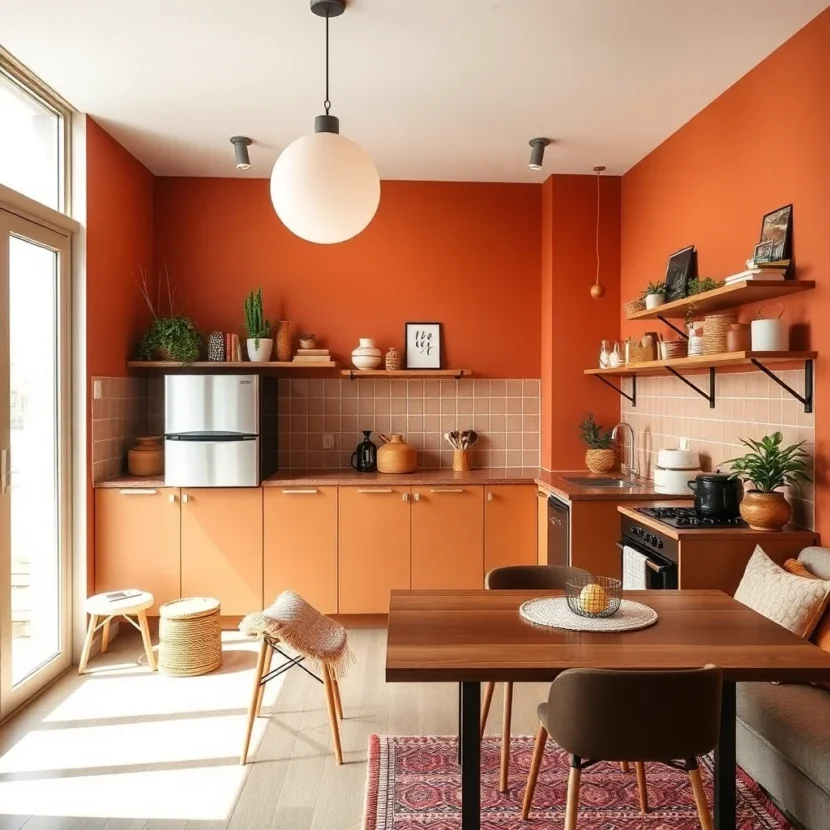
I installed peel-and-stick hexagon tile in my kitchen for about $80 (two boxes). It covered the wall above my counter and beside the sink but not behind the stove (too much heat and grease). The tiles adhered perfectly for 16 months, then started lifting at edges that got steamed regularly. I peeled them off and the wall was undamaged.
If you have a subway tile or geometric style you love, search for a peel-and-stick version that comes in large sheets rather than individual tiles. Sheet versions tend to hold better than tiny individual tiles.
Alternatively, use removable wallpaper in a small section (above a shelf, on a small wall, beside a window) to add pattern without committing to a full backsplash.
Renter-friendly: Peel-and-stick backsplash is removable and leaves minimal residue if you remove it carefully.
Renter note: Do not use peel-and-stick tile in bathrooms, behind stoves, or in areas with heavy steam.
Hardware, lighting, and textiles: a realistic comparison
| Change | Visual impact | Cost per change | Reversible |
|---|---|---|---|
| Hardware swap (knobs/pulls) | Very high | $2-4 per piece | Yes |
| Lighting (floor lamp or plug-in strips) | High | $35-80 per fixture | Yes |
| Paint (pantry door or shelf) | Medium | $20-40 | Yes |
| Peel-and-stick backsplash | Medium-high | $60-100 | Yes |
| Textiles (rugs, towels, curtains) | Medium | $15-50 per item | Yes |
Should you paint cabinets or swap hardware instead?
Swapping hardware is the clear winner if you rent. It costs $30 to $120, takes 45 minutes, requires no paint cleanup, requires zero landlord permission, and is completely reversible. You can take the new hardware with you when you move. This is the do-first option for every rental kitchen.
Cabinet painting is something you see on every home blog and Pinterest board. But it is permanent. Even if you repaint them back to the original colour before you move, you are taking a risk. The paint itself may not match perfectly when you leave. Cabinet painting is for homeowners, not renters. Skip it unless your lease explicitly permits it and your landlord agrees in writing.
If you want the visual impact of painted cabinets without the risk, paint removable items instead: shelves you can take with you, interior cabinet surfaces, pantry doors, or freestanding wooden storage boxes.
Product recommendations for kitchen remodel ideas
Under $30
- Matte black modern cabinet pulls (set of 10 for $20-25): Transform builder cabinets instantly.
- Peel-and-stick floor tiles (pack of 10 for $15-25): Add pattern or colour to kitchen floors without commitment.
- White linen tea towels (set of 3 for $20-30): Swap out builder-beige for crisp white or natural linen.
Under $100
- Warm-white clip lamps (pair for $40-60): Add directional task lighting to your counter or shelves.
- Peel-and-stick hexagon backsplash tiles (2-3 boxes for $60-90): Cover walls above counters in a geometric pattern.
- Tall floor lamp, matte black or brass ($45-80): Shift kitchen lighting from harsh to warm.
- Over-the-sink cutting board with colander ($25-40): Adds function and intentionality to a rental kitchen.
Splurge ($100+)
- Under-cabinet LED lighting kit with remote (3-light kit for $80-150): Plug-in system with dimming and colour temperature control.
- Large round mirror for kitchen wall ($80-200): Reflects light and makes the kitchen feel larger.
Open shelving and renter-friendly kitchen storage
Many rental kitchens lack sufficient cabinet space. Open shelving is tempting because it creates the illusion of more storage. It can work, but only if you have genuinely beautiful things to put on display. Mismatched dishes, jars, and random kitchen tools look chaotic on open shelves.
If you add open shelving (using floating shelves with Command strip adhesive or a leaning ladder shelf that requires no installation), commit to the aesthetic. Either embrace boho and rustic (collected, eclectic, textured), or minimalist and clean (matching bowls, matching jars, negative space). Do not mix both vibes.
Renter-friendly: Floating shelves can use heavy-duty Command strips if you do not want to drill. Leaning ladder shelves require zero installation.
Renter note: Command strips have weight limits. A 24-inch floating shelf holding dishes and glasses may exceed the rated load.
Textiles and layers: making a kitchen feel intentional
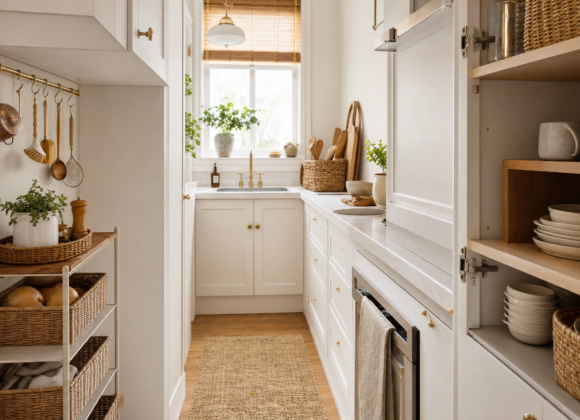
A kitchen that only has hard surfaces (tile, stainless steel, laminate) feels cold and temporary. Layer in textiles to warm it up: a kitchen rug, tea towels, a small curtain or cafe curtain at the window, a linen table runner if you have counter space.
These changes cost $15 to $60 total but signal “someone lives here intentionally.” A warm gray or natural linen tea towel draped over a hook is literally the smallest change that makes the biggest emotional difference.
I added a small natural fiber rug in front of the sink and a set of cream linen towels. Together they cost $55 and made the kitchen feel less like a rental and more like a home. Both are completely portable.
Renter-friendly: All textiles are portable and reversible.
Renter note: Choose kitchen rugs with non-slip backing to prevent tripping.
Storage and organization for small rental kitchens
Kitchen remodel ideas for apartments always include clever storage because small kitchens run out of space quickly. Renters cannot install built-in shelving or cabinet systems permanently. But you can add removable storage: rolling carts, stacking bins, drawer dividers, magnetic spice containers on the fridge, and shelf risers that double the cabinet depth.
A rolling cart (about $50 to $100) can hold pantry overflow, wine, or baking supplies. It tucks into a corner and is completely portable. Stacking drawer organizers ($10 to $25) maximize cabinet space without any installation. Magnetic containers ($20 to $40 for a set) keep spices visible and off the counter.
Renter-friendly: All removable storage systems are reversible and require zero installation.
If you only do one thing: swap your cabinet hardware. It costs $30 to $80, takes less than an hour, is completely reversible, requires zero landlord permission, and makes the kitchen look intentional and owned.
Frequently Asked Questions
What is the cheapest way to update a rental kitchen?
Swapping cabinet hardware is the cheapest single change (around $30-60 for the whole kitchen) and the highest visual impact. If you have a $100 budget, add a floor lamp or peel-and-stick floor tiles. Both are under $50 and completely reversible.
Can I use peel-and-stick backsplash behind my stove?
No. Avoid peel-and-stick backsplash in areas with heat and grease splatter. It will fail within weeks. Use it on walls away from the stove, above a sink that is not directly under a steamy window, or on a side wall that does not see much moisture.
Do I need my landlord’s permission to swap hardware or add lighting?
Swapping hardware and adding plug-in lighting require no landlord permission because they are not permanent changes. Peel-and-stick backsplash is in a gray area, but since it is completely removable, most landlords will not object. If you are unsure, ask.
How long does peel-and-stick backsplash last in a kitchen?
In a dry kitchen away from the stove and steam sources, peel-and-stick backsplash lasts 12 to 18 months before edges begin to lift. Humidity, heat, and moisture significantly shorten the lifespan.