When I first moved into my last rental, the kitchen cabinets were a dull, dated beige that made the whole space feel gloomy. The kitchen itself was barely 80 square feet, and I couldn’t afford to replace anything. That’s when I discovered that painting kitchen cabinets could be the fastest, cheapest way to completely transform a rental kitchen – without breaking my lease or my budget. If you’re renting and your cabinets are making you miserable, you have options that don’t involve permanence or permission slips.
This post contains affiliate links. I may earn a small commission if you buy through my links, at no extra cost to you.
TL;DR
- Most kitchen cabinet painting projects cost $30-80 in paint and supplies, depending on cabinet size and finish
- You can paint kitchen cabinets without sanding by using deglosser or a bonding primer
- Best paint for kitchen cabinets in apartments is semi-gloss or satin acrylic latex or cabinet-specific paint
- Light, neutral, or warm paint colors make small kitchens feel bigger and brighter
- For renters, removable options like peel-and-stick cabinet covers exist, but primer plus paint is nearly as temporary if you choose the right approach
How to paint kitchen cabinets without sanding
One of the biggest myths about painting cabinets is that you must sand. You don’t. Sanding is loud, dusty, and makes your landlord uneasy. I’ve painted multiple rental cabinets using a no-sand method, and the paint has held up just as well as the traditional approach.
The key is surface preparation. Even though you are skipping the sandpaper, you cannot skip cleaning. Grease builds up on kitchen cabinets over years, and paint will not stick to grease. I use a degreaser like TSP (trisodium phosphate) or a simpler alternative like warm water with dish soap and vinegar. Wipe every surface, dry thoroughly, and wait 24 hours.
After the surfaces are clean and dry, apply a bonding primer instead of sanding. A bonding primer (also called an adhesion primer) is specifically designed to stick to glossy, sealed surfaces without you having to roughen them up manually. This is a game-changer for renters. The primer does the grip work that sanding would have done. I recommend Kilz Adhesion Primer, which is available on Amazon for about $10-15 per quart. One quart covers roughly 300 square feet of surface area, so most small kitchen cabinet jobs need just one quart.
Renter-friendly: The no-sand, bonding primer approach takes 5-7 days total (including drying time between coats), requires no power tools, creates minimal dust, and leaves no permanent marks on the cabinets themselves when you eventually move.
Who this works for: renters with dated or glossy cabinets, anyone with a small kitchen (under 120 square feet), budget-conscious decorators
Renter note: No sanding means no dust damage to other rooms, and the primer plus paint combo is fully reversible if your landlord objects – you can strip it back off with paint remover, though it is not quick.
What paint to use for kitchen cabinets in apartments
The best paint for kitchen cabinets in apartments is semi-gloss or satin acrylic latex cabinet paint. Do not use flat or matte paint in a kitchen; it stains easily and washes out quickly. Do not use spray paint unless you have an outdoor space to work.
For rental apartments, I recommend cabinet-specific paints because they are formulated to handle moisture, heat, and daily wear without a protective topcoat. Sherwin-Williams ProClassic is the gold standard (around $35-45 per quart), but it smells intensely and requires mineral spirits for cleanup. For renters, a water-based cabinet paint is easier: Rust-Oleum Cabinet Transformations 2X or Benjamin Moore Advance are solid middle-ground options at $20-30 per quart.
If you go with a standard acrylic latex kitchen paint (cheaper, around $15-20), you must apply a polycrylic or polyurethane topcoat for durability. This adds cost and steps but keeps the paint from chipping or staining over time. I used Varathane Diamond Finish topcoat on my last rental kitchen, which was around $12 per quart, and the finish held up perfectly through two years of cooking and cleaning.
Who this works for: renters who plan to stay 1-2+ years and want the finish to actually last
Renter note: All of these paints are removable via chemical paint stripper if you need to restore cabinets before moving. Budget an extra 2-3 hours and $10-20 for stripper if you go this route.
Preparing your rental kitchen for cabinet painting
Before you open a paint can, you need to prep the space and the cabinets. This is 60% of the work and 40% of the visibility, which is why people skip it and end up with streaky, patchy paint.
Start by removing cabinet doors and hardware. You need access to the full cabinet surface, and doors are easier to paint flat on a table or saw horses than in place. Take photos of your hardware arrangement, and label the backs of each door with painter’s tape. Store hardware in a labeled container or ziplock bag.
Clean every surface with degreaser. I mix warm water with a few tablespoons of dish soap and white vinegar in a spray bottle, then wipe all doors, drawer fronts, and the cabinet frame itself. For stubborn grease, let the mixture sit for 5 minutes. Dry completely with a clean cloth. Do not rush this step. Paint will not stick to grease.
Next, fill any dents, scratches, or gaps with paintable wood filler. This is optional if your cabinets are in decent condition, but it makes the finished result feel more intentional. Let the filler dry per the package instructions, usually 1-2 hours, then sand smooth with 220-grit sandpaper. Wipe away dust.
Protect the counter, floor, and surrounding surfaces. Lay down a plastic sheet or old bedsheet to catch drips, and use painter’s tape along any edges where cabinets meet walls or the countertop. Painter’s tape is cheap ($4-6 per roll) and prevents cleanup nightmares.
Renter-friendly: Removing doors and painting them flat is the safest approach because it keeps you off ladders, allows even paint coverage, and means you are not painting walls in place.
Kitchen cabinet paint colors for small spaces
Color choice makes an enormous difference in how a small kitchen feels. I have watched the same kitchen look either cramped or airy depending entirely on cabinet color.
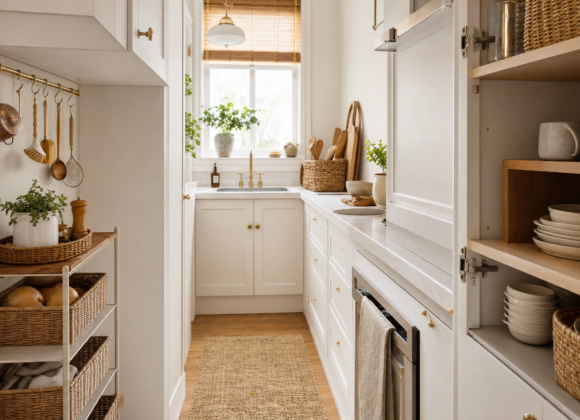
For small kitchens (under 100 square feet), light and neutral colors expand the perceived space. Soft white, cream, warm gray, or pale sage all work. These colors bounce light, especially if your kitchen has limited natural light. I painted my 80-square-foot kitchen a warm cream, and combined with ceiling-height curtains in the adjacent room, it made the kitchen feel 20% bigger immediately.
If you want more personality, warm neutrals like soft greige, pale taupe, or warm off-white give you style without the visual shrinking that dark colors create. Greige (grey-beige hybrid) is especially forgiving in small spaces because it looks expensive and intentional, not bland.
Avoid black, navy, or forest green in a small kitchen unless you have excellent lighting and a clear design intention. Dark cabinets can make a compact kitchen feel like a cave.
Renter-friendly: Most of these colors are neutral enough that a future renter or homeowner will accept them, so you are not painting yourself into a decorating corner if you stay longer or need to paint back.
Who this works for: renters with under 100 sq ft kitchens, anyone with poor natural lighting
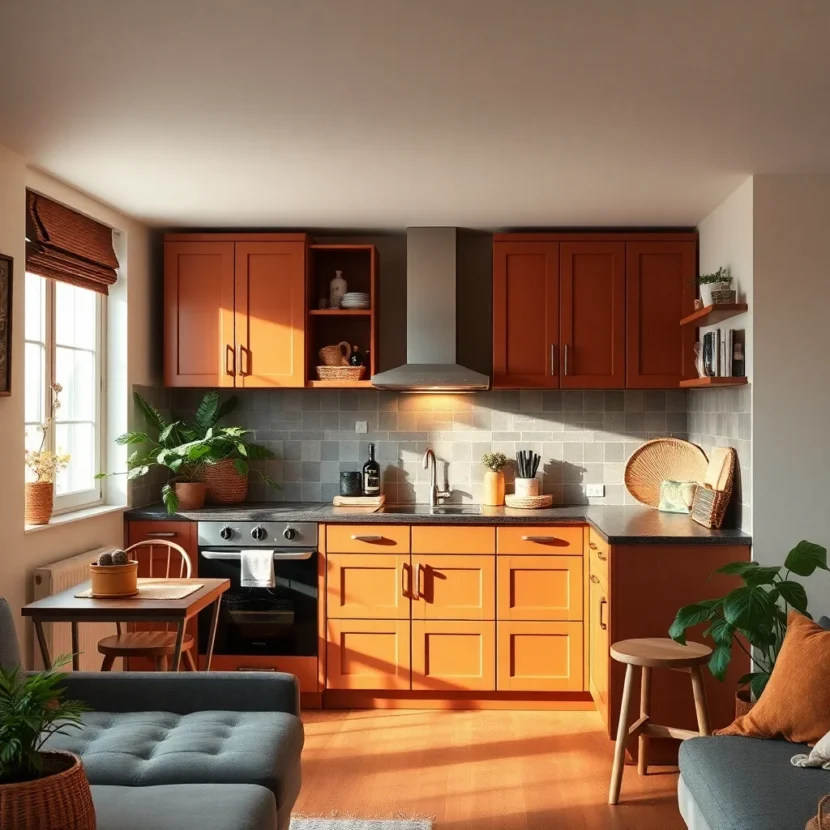
Renter note: Avoid trendy colors (forest green, terracotta, or jewel tones) unless you are confident in your commitment to the space. Neutral colors are always re-rentable.
Painting kitchen cabinets step-by-step
Once everything is prepped, the actual painting is straightforward. Here is the process I follow every time.
Step 1: Prime Stir your bonding primer thoroughly. Pour some into a paint tray. Use a quality brush – I use a 2-inch angled brush from Purdy or Wooster, which costs $8-12 but lasts years – to apply primer to all doors and cabinet faces. Work in thin, even coats. Do not overload the brush. One coat of primer is usually enough; wait 3-4 hours to dry, then assess coverage. Prime the cabinet frame (the parts you cannot remove) in place, using painter’s tape to protect counters and walls. Do not move on to paint until primer is fully cured, usually 24 hours.
Step 2: Sand lightly between coats (optional but recommended) This step is optional if you are using a bonding primer, but a very light sand with 220-grit sandpaper between primer and paint creates an even smoother finish. Wipe away all dust with a tack cloth or damp cloth.
Step 3: Paint Use the same brush technique: thin, even coats rather than one thick coat. Apply your first coat of cabinet paint to all primed surfaces. Wait 4-8 hours (check the can), then evaluate coverage. Most projects need two coats of paint for full, even color. Apply the second coat, and wait 24 hours to fully cure.
Step 4: Topcoat (if required by your paint choice) If you are using a standard acrylic latex paint rather than cabinet-specific paint, apply a coat of polycrylic or polyurethane topcoat now. This protects the paint from stains, moisture, and chipping. One coat is usually sufficient. Wait 24-48 hours before reassembling.
Step 5: Reassemble Once the topcoat (or final paint coat) is fully cured, reattach hardware using your photos and labels as a guide. Reattach doors. Step back and admire.
The entire process takes 7-10 days when you count drying time, but active work time is only 4-6 hours spread across multiple days.
Reversible cabinet painting for renters
Here is what you need to know about moving out: painted cabinets can be reversed. It is not quick, but it is possible.
If you painted with a bonding primer and quality paint, the finish is durable and long-lasting. When you move, you have two options.
Option 1: Leave the paint as is. Many landlords actually prefer painted cabinets to original dated ones, especially if the paint is neat and in good condition. I have left painted cabinets in two rentals, and neither landlord complained.
Option 2: Strip it back. If your lease requires original finishes or your landlord objects, use a chemical paint stripper like Goof Off Lacquer Thinner or a gentler option like Bio-Strip to dissolve the paint. This is time-intensive – expect 3-4 hours of scraping and stripping – but it works. Wear gloves, ventilate well, and follow the product instructions. This costs $10-20 in materials.
Renter-friendly: Painted cabinets are reversible, making them one of the safest visual upgrades you can make in a rental kitchen.
Renter note: Do not use peel-and-stick cabinet covers as a “non-painting” alternative. They look cheaper than actual paint, peel at the edges, and often do not stick well to the glossy surfaces of real cabinets. Paint is actually better value than peel-and-stick in a rental.
Painting cabinets without removing doors: when it makes sense
You can paint cabinets in place without removing doors. It is slower and harder to get even coverage, but if your doors are built-in or your rental agreement forbids removing them, this method works.
The key differences: you must paint vertical surfaces, which means gravity works against you. Use a thicker paint that does not drip, work in thinner coats, and expect the process to take longer. You also cannot paint the back or inside of doors, which is usually not an issue unless you open the cabinets from unusual angles.
I recommend painting in place only if you must. Removing doors takes 15 minutes and gives you dramatically better, faster, more even results.
Best paint for kitchen cabinets apartment: product recommendations
Here is what I recommend based on budget:
Under $30 per project
For a small kitchen (fewer than 10 cabinet doors and one base cabinet run), you need approximately one quart of primer and one quart of paint. Budget $25-30 total.
Primer: Kilz Adhesion Primer (quart, around $12 on Amazon) is reliable, water-based, low-odor, and does exactly what you need.
Paint: Rust-Oleum Cabinet Transformations 2X (around $18) is semi-gloss, kitchen-safe, and requires no topcoat.
Under $100 per project
For medium kitchens (15-20 cabinet doors, multiple base and wall cabinet runs), budget $60-90.
Primer: Same as above.
Paint: Benjamin Moore Advance (semi-gloss, around $35 per quart) is the sweet spot for renters. It is water-clean-up, low-odor, durable, and requires no topcoat. Two coats cover beautifully. Finish looks expensive and professional.
Topcoat (optional): Varathane Diamond Finish polyurethane (around $12 per quart) adds protection if you choose a standard acrylic paint instead of cabinet-specific.
Splurge ($100+)
For large kitchens or if you want the absolute best finish, use Sherwin-Williams ProClassic (around $40 per quart). This is the professional cabinet-painting standard. It is durable, hardens to a glass-like finish, and looks immaculate.
Fair warning: ProClassic smells strong, requires mineral spirits for cleanup (not water), and has a steep learning curve for application. For renters, Benjamin Moore Advance is 95% as good for half the hassle.
Painting vs. cabinet covers: which is right for your rental?
| Option | Best for | Timeline | Cost | Renter-friendly | Reversibility |
|---|---|---|---|---|---|
| Painting | Kitchens you will occupy for 1+ years | 7-10 days | $30-80 | Yes | Reversible via stripper |
| Peel-and-stick cabinet covers | Ultra-short rentals | 1-2 days | $50-120 | Yes | Instant removal |
| Cabinet refinishing service | Large kitchens, no DIY time | 2-4 weeks | $500-1,500+ | Overkill for rental | Professional removal |
Common mistakes when painting rental kitchen cabinets
Mistake 1: Skipping degreasing. Grease is invisible but it is the main reason paint fails. If you skip the degreaser step, your paint will look fine for two weeks, then start chipping. Do not skip this.
Mistake 2: Using cheap brushes. A $2 brush sheds bristles into your paint and creates an uneven finish. Spend $8-12 on a decent angled brush.
Mistake 3: Painting in cold weather. Paint cures properly only between 50-85 degrees Fahrenheit. If your kitchen is cold, the paint will cure slowly and unevenly.
Mistake 4: Not labeling cabinet doors. When you have 15 doors off at once, they all look the same. Label each one with painter’s tape on the back so you know which goes where.
Mistake 5: Choosing a trendy color. Forest green, terracotta, or navy look beautiful in photos, but they date fast and they shrink a small kitchen visually. Stick to warm neutrals and light colors unless you are certain.
How much does it cost to paint kitchen cabinets in a rental?
For a small rental kitchen (75-100 sq ft with approximately 10-12 cabinet doors and one base run), expect to spend:
- Primer: $12-15
- Paint: $15-35 depending on brand
- Topcoat (if needed): $10-15
- Supplies (brush, roller, tape, drop cloth): $15-20
- Total: $52-85
- Primer: $15-20 (possibly two quarts)
- Paint: $30-70
- Topcoat: $15-20
- Supplies: $20-25
- Total: $80-135
When not to paint rental kitchen cabinets
Painting is not the right solution if your cabinets are structurally damaged (falling apart, soft wood, deep rot). Paint will not fix structural problems.
Do not paint if you have fewer than six months left in the rental, unless the cabinets are so depressing that the mental boost is worth the work.
Do not paint if your kitchen is extremely humid or lacks ventilation. Steam from cooking will stress the paint finish faster.
Do not paint if your landlord has explicitly forbidden it. Check your lease. Most leases do not mention painting, but some older leases prohibit it without written permission. It is worth asking.
Frequently Asked Questions
Can you paint kitchen cabinets without removing doors?
Yes, but it is much harder and slower. You will paint vertical surfaces with gravity working against you, which creates drips and uneven coverage. Removing doors takes 15 minutes and produces dramatically better results. Remove them if you can.
How long does it take to paint kitchen cabinets?
Active work time is 4-6 hours spread across 7-10 days. Drying and curing between coats takes most of the time. Plan for one full day of prep, then 2-3 hours of priming, wait 24 hours, then 2-3 hours of painting, wait 24 hours, then optional topcoat, wait another 24-48 hours before reassembling.
Will painted kitchen cabinets hold up to daily use and moisture?
Yes, if you use kitchen-appropriate paint (semi-gloss or satin acrylic latex) and apply a topcoat if recommended. Paint in a kitchen handles cooking moisture, heat, and daily cleaning better than you might expect. The finish will last 2-3 years before showing wear, longer in kitchens with good ventilation.
What color should I paint rental kitchen cabinets?
Light, warm neutrals like cream, pale gray, or warm white make small kitchens feel bigger and brighter. Greige (gray-beige) looks intentional and expensive. Avoid dark colors, bold jewel tones, or trendy shades unless you are certain.