A small living room doesn’t have to feel like a compromise. With the right furniture, layout, and renter-friendly tricks, even the tiniest apartment living room can feel open, stylish, and completely yours.
Key Takeaways
- Choose furniture scaled to your room — one right-sized sofa beats an oversized sectional every time
- Use rugs to anchor zones and make the floor feel larger, not smaller
- Mirrors, light colours, and vertical storage are your most powerful free-to-cheap tools
- Most of these ideas work in rented apartments with zero permanent changes
- Multi-functional furniture — ottomans, nesting tables, sofa beds — is the renter’s secret weapon
1. Get the Furniture Scale Right First
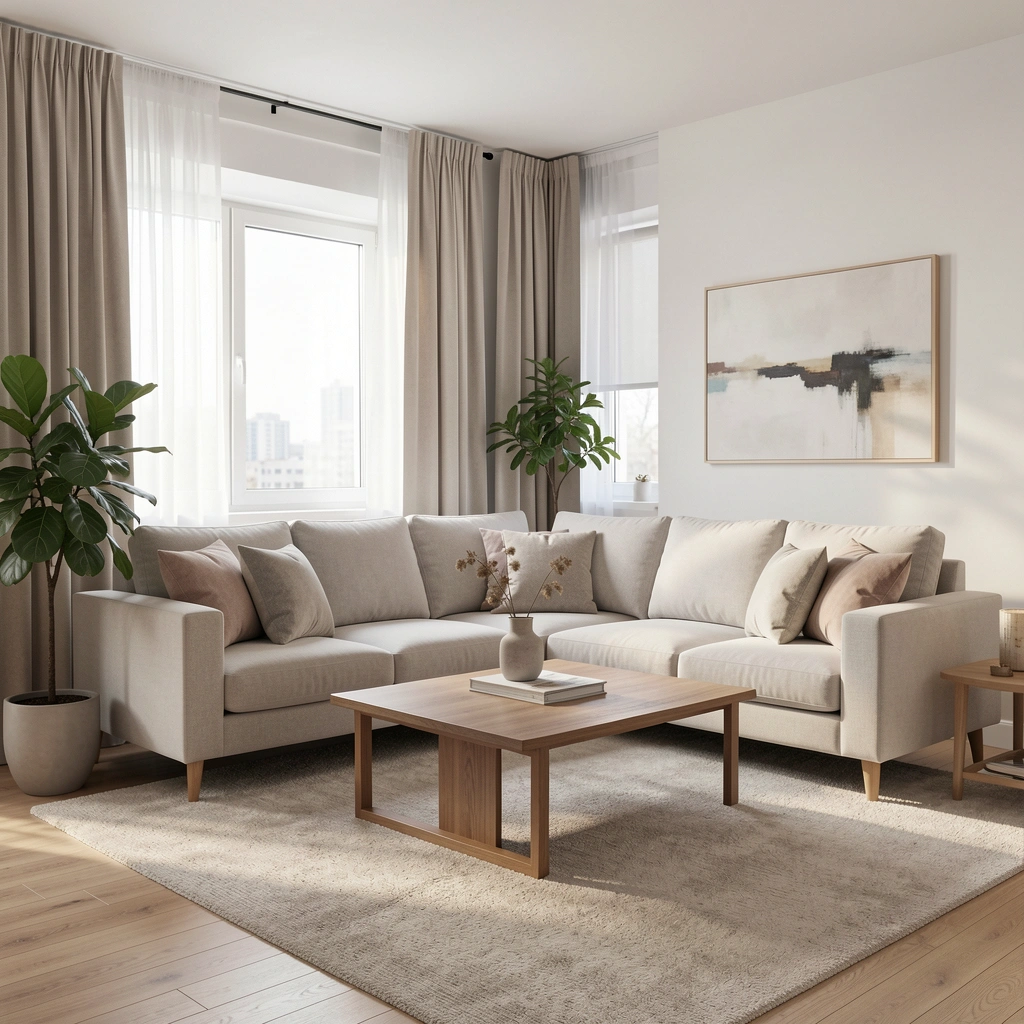
1 Choose a two-seater or loveseat over a full sofa
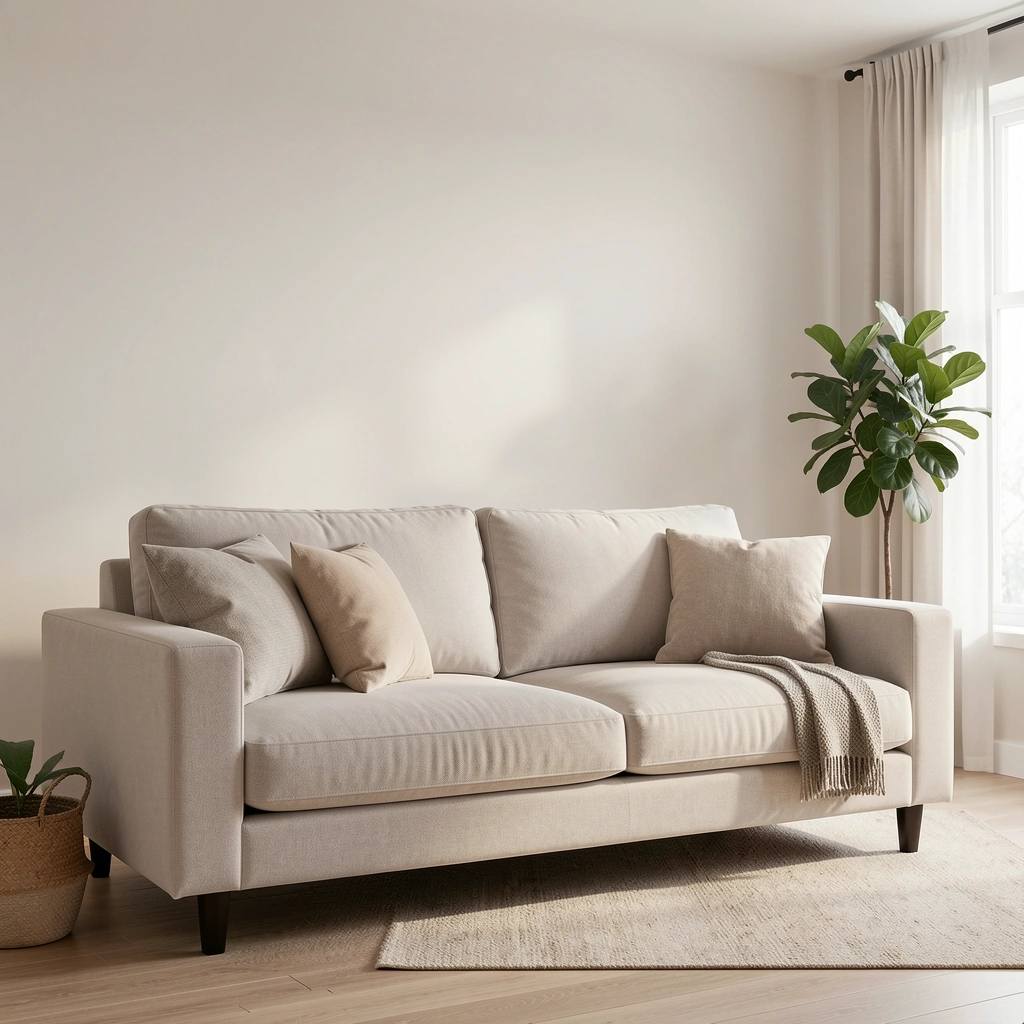
2 Go low-profile for your main seating
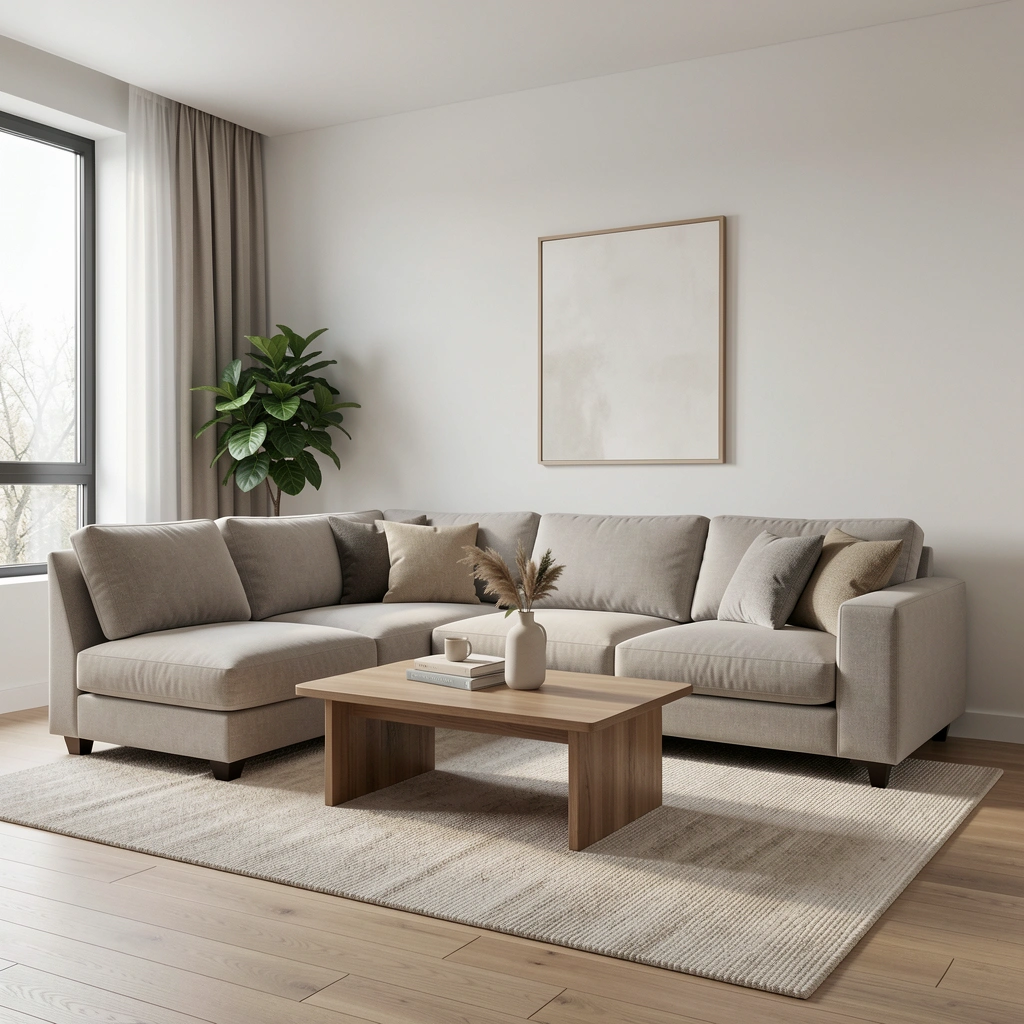
3 Choose furniture with visible legs
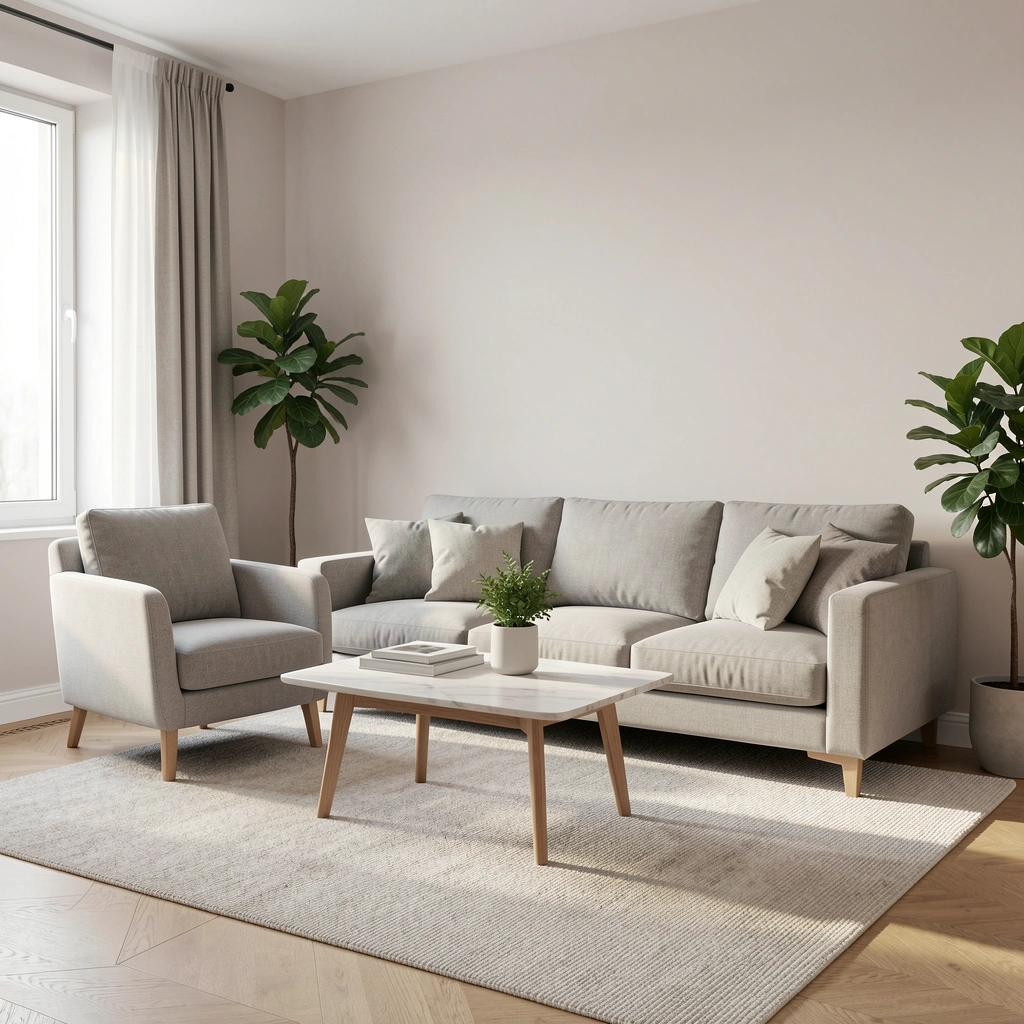
Renter tip: Before you buy any new furniture, tape out its footprint on the floor with painter’s tape. Live with it for a day before committing. A piece that looks fine in the shop can feel enormous once it’s actually in the room.
2. Use a Rug to Anchor and Expand the Space
4 Size up, not down
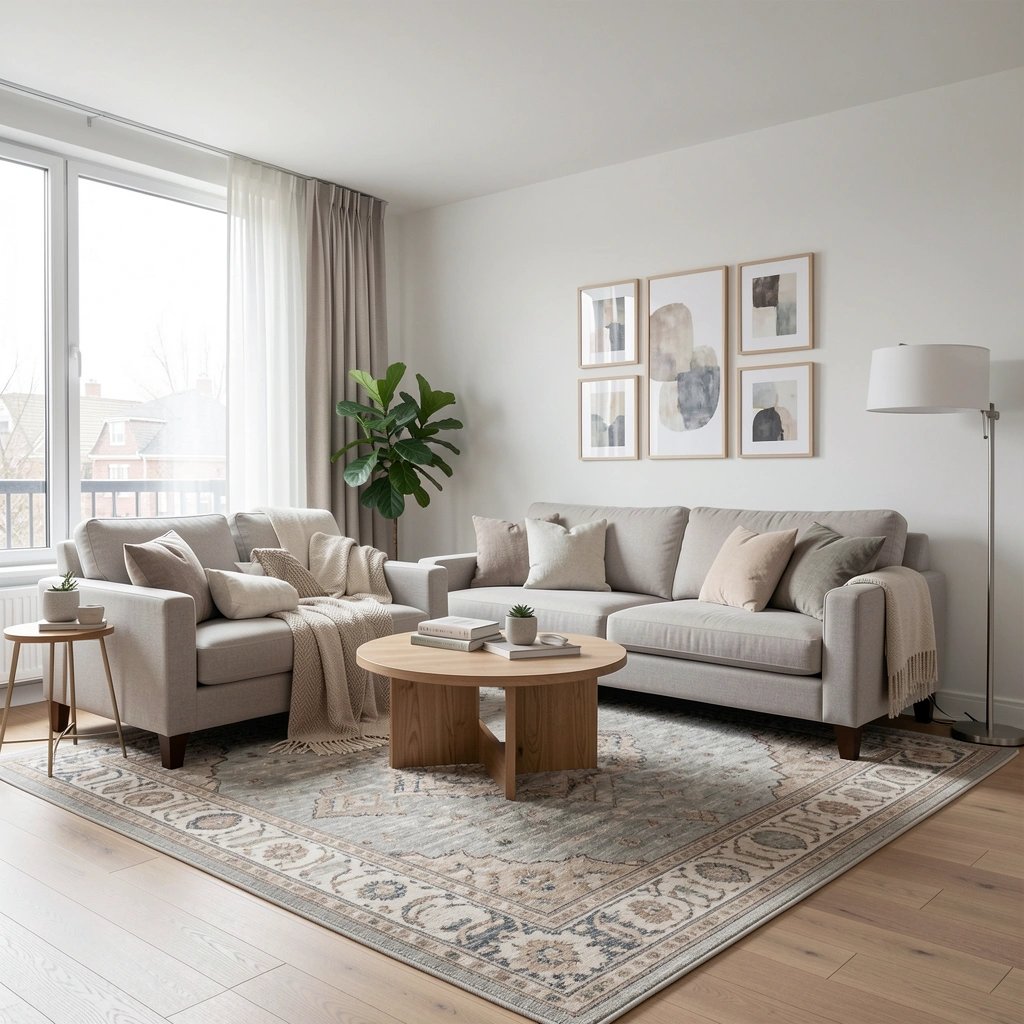
The most common rug mistake in small rooms is going too small. A rug that only fits under your coffee table makes the space feel chopped up and smaller. Instead, choose a rug large enough for all your main seating pieces to sit at least partially on it — the front legs of your sofa and chairs on the rug is the minimum. This visually unifies the seating area and makes the floor look continuous and generous.5 Use a light-coloured rug with a subtle pattern
A cream, oatmeal, or pale grey rug with a low-contrast pattern (think a faint stripe, a woven texture, or a muted geometric) reflects light and avoids visual noise. Bold, high-contrast patterns in small spaces compete for attention and make the room feel busier. Save the statement rug for a larger room.6 Layer rugs for warmth and definition
If your apartment has hard floors and you want to define a living zone within an open-plan layout, layer a smaller textured rug (a jute or boucle runner, for instance) over a larger flat-weave base rug. This adds depth and warmth without adding any visual bulk — and it’s completely removable when you leave.
“The right rug can make a 12-foot room feel like it has twice the floor space. The wrong one makes a large room feel cramped. Scale is everything.”
3. Master the Furniture Layout
7 Float furniture away from the walls
It seems counterintuitive, but pulling your sofa and chairs a few inches away from the walls actually makes the room feel larger. When everything is pushed to the perimeter, the centre of the room becomes a dead zone — a void that emphasises the smallness of the space. Floating the furniture creates a defined conversation area that feels intentional, warm, and spacious.8 Try a conversation layout, not a TV-centric one
Not every small living room needs to revolve around a screen. Positioning two compact armchairs and a small sofa around a central coffee table — focused on the people in the room rather than a wall-mounted TV — creates a warmer, more intimate space. If you do want a TV, mount it in a corner to save wall space, or use a narrow media unit that doesn’t dominate.9 Use the back of the sofa as a divider
In open-plan apartments where the living room bleeds into a kitchen or sleeping area, positioning your sofa with its back to the space you want to zone off creates a natural divide — without a single wall or partition. This works especially well in studio apartments where you need to carve out a distinct living area.10 Put your sofa near the window, not across from it
If your room is narrow, positioning the sofa along the same wall as the window (rather than opposite it) keeps sightlines long. You look across the width of the room rather than immediately hitting a wall, which makes the space feel less boxy.4. Smart Storage That Doesn’t Eat the Room
11 Go vertical with shelving
Floor space is precious in a small living room. Wall space is not. Floating shelves installed high on the wall — above the sofa, beside the window, or flanking the TV — draw the eye upward, making the ceiling feel higher, while providing genuine storage for books, plants, and decor. The key is to keep them curated: a few well-chosen objects look far better than a shelf stuffed to capacity.12 Choose a coffee table with storage
A coffee table with a lower shelf, lift-top mechanism, or built-in drawers does the work of two pieces of furniture. Use it to store throw blankets, remote controls, chargers, and magazines — all the small-apartment clutter that usually ends up on every available surface. Ottoman-style coffee tables are a particularly renter-friendly option: soft, light, movable, and multifunctional.13 Use nesting tables instead of a traditional side table
A pair of nesting tables takes up the footprint of one small table but can expand to provide double the surface area when you need it. Pull them apart when guests arrive or when you need a second surface; tuck them back together when the room needs to breathe. They are one of the most underrated small-space furniture investments you can make.5. Colour, Light, and Mirrors
14 Stick to a neutral, tonal palette
Cream, warm white, soft greige, and pale taupe reflect light and create visual continuity. When walls, sofa, and larger furniture pieces exist in the same tonal family, the eye travels smoothly around the space without hitting jarring colour stops. This makes the room feel cohesive and open. Add personality with texture — linen cushions, a woven throw, a rattan side table — rather than contrasting colour.15 Position a large mirror opposite or adjacent to your window
A floor-length mirror leaned against a wall, or a large rectangular mirror hung above a console or side table, reflects natural light back into the room and creates the illusion of depth. The bigger the mirror, the greater the effect. For renters, leaning a large mirror against the wall is completely damage-free and creates the same impact as a wall-mounted one.16 Hang curtains from ceiling to floor
Mounting your curtain pole as close to the ceiling as possible — and letting the fabric fall all the way to the floor — creates the illusion of taller walls. Use sheer or semi-sheer fabric in a light neutral so the window treatment adds vertical height without blocking natural light. This one change can make a room with low ceilings feel significantly more generous.17 Layer your lighting
A single overhead light is a small room’s worst enemy. It casts flat, uniform light that flattens the space and makes it feel institutional. Instead, layer at least three sources: a central ceiling fixture (flush or semi-flush to avoid eating headroom), a floor lamp in a corner to add warmth and height, and a small table lamp or LED strip behind the TV or under shelves. Warm bulbs around 2700K will make the space feel cosy rather than clinical.6. Renter-Friendly Decor That Makes a Big Difference
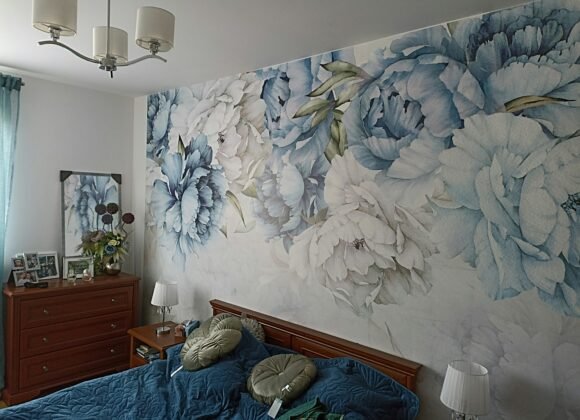
18 Create an accent wall with removable wallpaper
Peel-and-stick wallpaper has improved enormously in quality over the last few years. Applied to a single wall behind your sofa, it creates a striking focal point that makes the room feel deliberately designed — not like a blank rental box. Choose a soft textural pattern (grasscloth, linen effect, subtle geometric) rather than a large-scale repeat, which can overwhelm a small wall. Remove it cleanly when you leave.19 Hang art without putting holes in the wall
Command Strips and adhesive picture-hanging strips now hold surprisingly heavy frames. For a gallery wall without holes, plan your arrangement on the floor first, then transfer it to the wall using the strips. Alternatively, lean framed artwork against the wall on a console table or floating shelf for a relaxed, editorial look that requires nothing beyond the shelf itself.20 Add a tall plant in a corner
A floor plant — a fiddle leaf fig, snake plant, olive tree, or tall pothos on a high shelf — does something no piece of furniture can: it draws the eye upward and introduces a sense of life, scale, and depth that makes a small room feel alive. Position it in a corner to fill vertical space without eating floor area. Even a single tall plant transforms the energy of a compact living room.21 Use multi-functional furniture throughout
In a small apartment living room, every piece of furniture should ideally do more than one job. A storage ottoman serves as a coffee table, extra seating, and hidden storage. A bar cart becomes a side table, plant stand, or drinks station. A bookshelf with its back to the room becomes a room divider. Think of the room as a system, not a collection of individual pieces.7. Budget Small Living Room Ideas That Actually Work
Not everything needs to cost money. Some of the highest-impact changes you can make to a small living room are completely free.| Idea | Estimated Cost | Impact |
|---|---|---|
| Rearrange existing furniture to float off walls | Free | High — immediately makes room feel larger |
| Replace bulbs with warm 2700K LEDs | £5–£15 | High — transforms the mood instantly |
| Command Strip gallery wall | £15–£40 | High — makes blank walls feel personalised |
| Large neutral area rug (charity shop or budget retailer) | £30–£80 | Very high — unifies the room and expands floor visually |
| Peel-and-stick wallpaper accent wall | £25–£60 | High — dramatic focal point, fully reversible |
| Large leaning floor mirror (IKEA, second-hand) | £20–£60 | Very high — doubles perceived space, reflects light |
| Tall floor plant | £15–£45 | Medium-high — adds life, height, and depth |
| Nesting side tables | £30–£80 | High — flexible, multifunctional, space-saving |
22 Edit, don’t add
Before spending anything, remove three items from your living room. Take out the extra cushions, the decorative objects you don’t love, the stack of things that haven’t found a home. In a small space, every object competes for visual attention. A room with fewer things always looks better — and bigger — than a room where everything is on display at once.23 Shop second-hand for statement pieces
Charity shops, Facebook Marketplace, and vintage markets are excellent sources for the pieces that give a small living room character: a distinctive armchair in an interesting fabric, a mid-century side table, a set of unusual frames for a gallery wall. Buying second-hand keeps costs low and gives the room a layered, collected-over-time feel that new flat-pack furniture rarely achieves.24 Use plants as decor, not as afterthoughts
A cluster of plants — different heights, different pots — in one corner of the living room creates a statement as bold as any piece of furniture. Group three or four plants together rather than distributing them one-by-one across the room. A concentrated arrangement has far more visual impact and creates the impression of a thoughtfully styled corner rather than scattered greenery.25 Keep your layout flexible and revisit it seasonally
One of the advantages of a small apartment living room is that it takes only twenty minutes to try an entirely different furniture arrangement. Move the sofa. Swap the rug. Rotate which corner gets the plant cluster. Seasonal refreshes — lighter textiles in spring and summer, warmer throws and deeper tones in autumn and winter — keep a small space feeling fresh without requiring any new purchases.<!– nn