Sharing a small bedroom as a couple is one of the more challenging domestic arrangements — two people’s belongings, routines, and aesthetic preferences must coexist in a space that may have been designed with just one person in mind. The good news is that with the right approach, a compact shared bedroom can be functional, beautiful, and genuinely comfortable for both people.
These 12 ideas address the practical and relational dimensions of sharing a small bedroom, from storage allocation to finding a shared aesthetic that neither person has to compromise on entirely.
01. Choose the Right Bed Size for Your Space
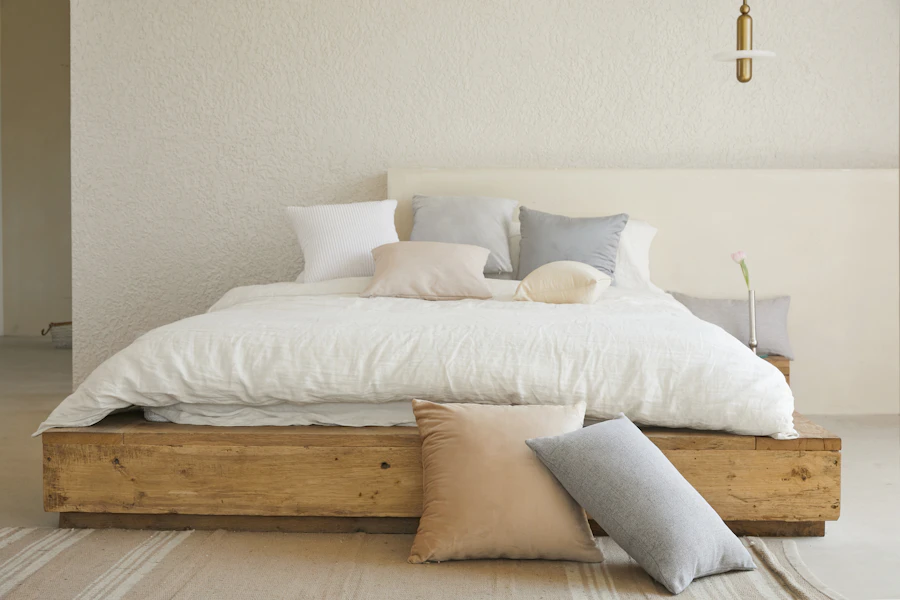
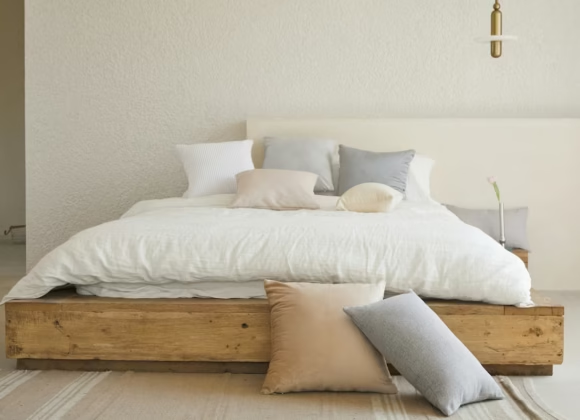
The bed is the most space-consuming piece of furniture in a couple’s bedroom, and choosing the right size is a careful balance. A double (135cm wide) is comfortable for many couples and leaves significantly more floor space than a king or super-king. A queen (150cm) offers a good middle ground in rooms where a full king is too large.
Before choosing, measure your room and mark the bed’s footprint on the floor with masking tape. Then walk around it — you need at least 60cm of clearance on the sides you use to get in and out. If that clearance isn’t achievable with a king-size bed, size down. A slightly smaller bed you can actually move around is more comfortable than a larger one that dominates the room.
02. Give Each Partner Equal, Defined Storage

One of the most common sources of friction in a shared small bedroom is unequal storage. One partner’s belongings spill into the other’s space, drawers become contested, and the room quickly descends into chaos. The solution is to define clearly what storage belongs to whom — and make it equal.
Divide the wardrobe evenly — either left/right or top/bottom. Assign separate drawers in any shared dresser. Each person should have a designated bedside storage zone. When both partners know exactly where their things belong, the room stays more organised with less effort and far less negotiation.
03. Use Matching Bedside Tables for Balance
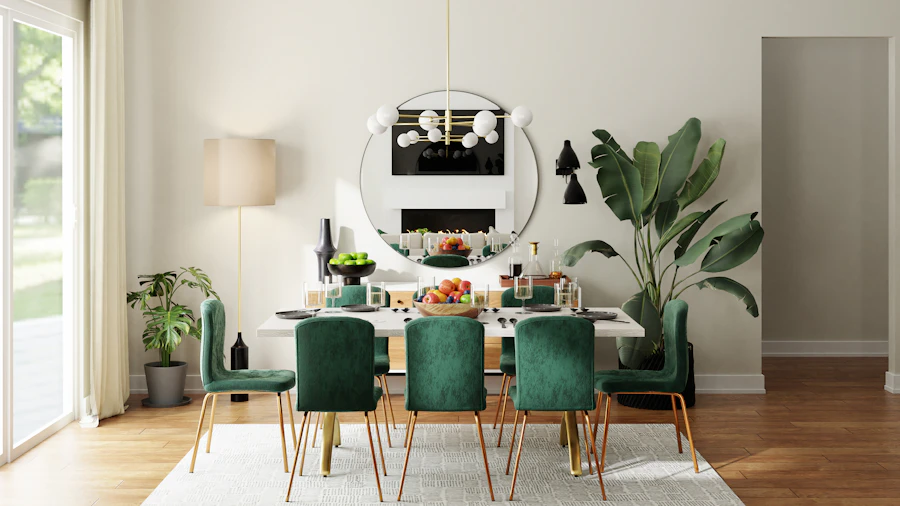
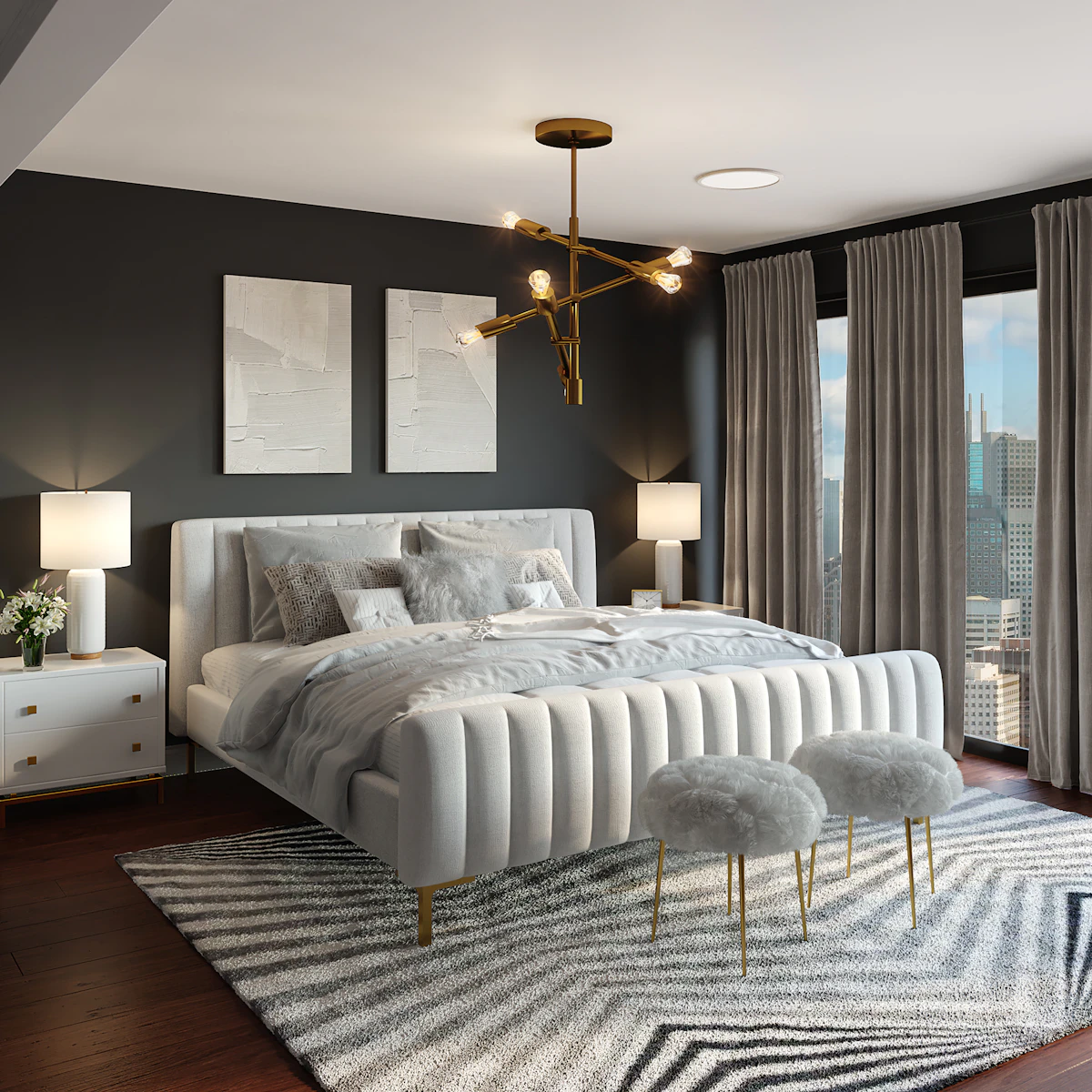
A symmetrical bedside setup — matching tables and lamps on either side of the bed — is a classic for good reason. It creates visual balance that makes a shared bedroom feel fair and harmonious rather than dominated by one partner’s side. It also looks designed and intentional.
In a small bedroom, floating wall-mounted shelves on each side of the bed are an excellent alternative to freestanding nightstands — they free up floor space while still giving each partner a personal surface for essentials. Choose a size and height that works for both, regardless of who is taller or which side of the bed they sleep on.
04. Maximise Under-Bed Storage for Both Partners
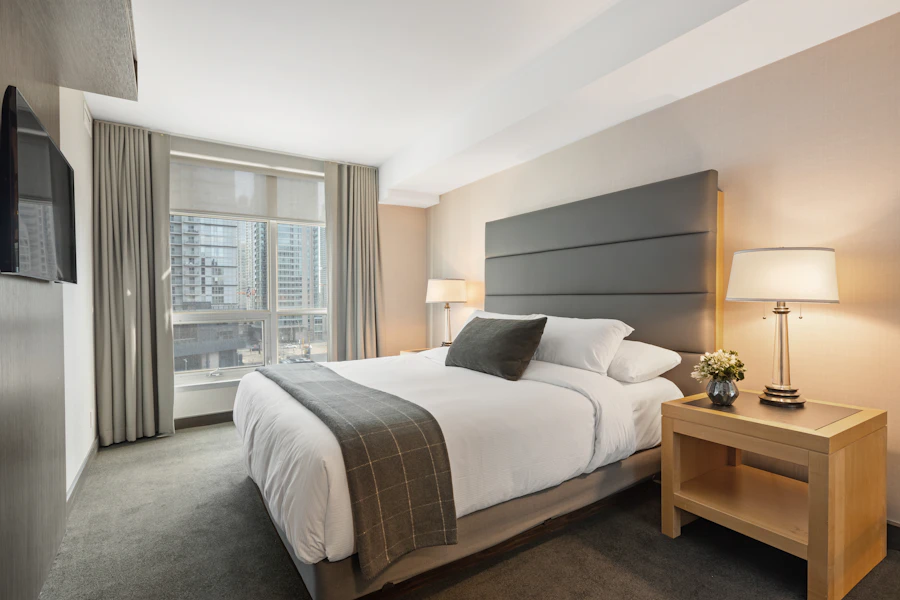
Under-bed storage is particularly valuable in a couple’s bedroom because it provides a significant amount of space without competing for wall or floor area. A storage bed with built-in drawers — ideally two drawers on each side, so both partners have their own — is one of the best investments a couple can make in a small bedroom.
Alternatively, matching under-bed storage boxes labelled by person keep things organised and ensure each partner has equal access. Seasonal items — heavy jumpers in summer, lightweight clothing in winter — are ideal candidates for under-bed storage, freeing up the wardrobe for daily-use items.
05. Find a Neutral Shared Aesthetic You Both Love
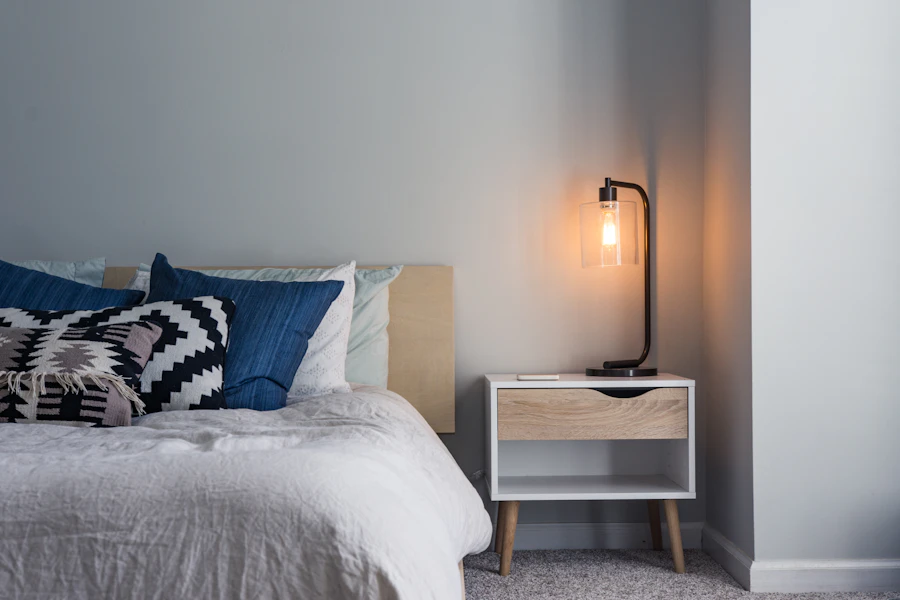
Agreeing on an aesthetic is often the trickiest part of designing a shared bedroom. Rather than one partner’s taste dominating or both compromising into a bland middle ground, try to identify a shared colour palette and style direction that genuinely excites both of you.
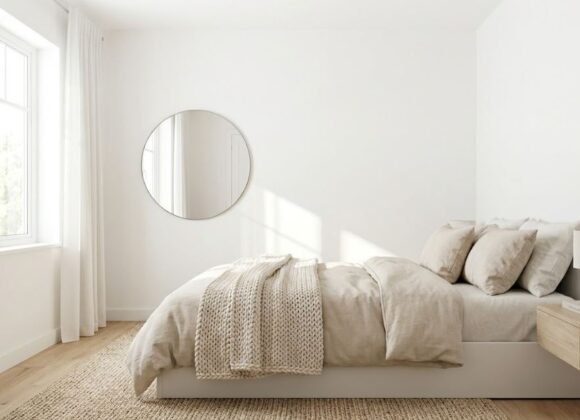
Warm neutral palettes — cream, taupe, natural wood, soft linen — tend to work well for couples because they read as calm and ungendered without feeling clinical. Within that neutral foundation, each partner can introduce a few personal accent pieces — a book, a plant, a lamp — that reflect their individual taste without clashing.
06. Create a Shared Getting-Ready Zone
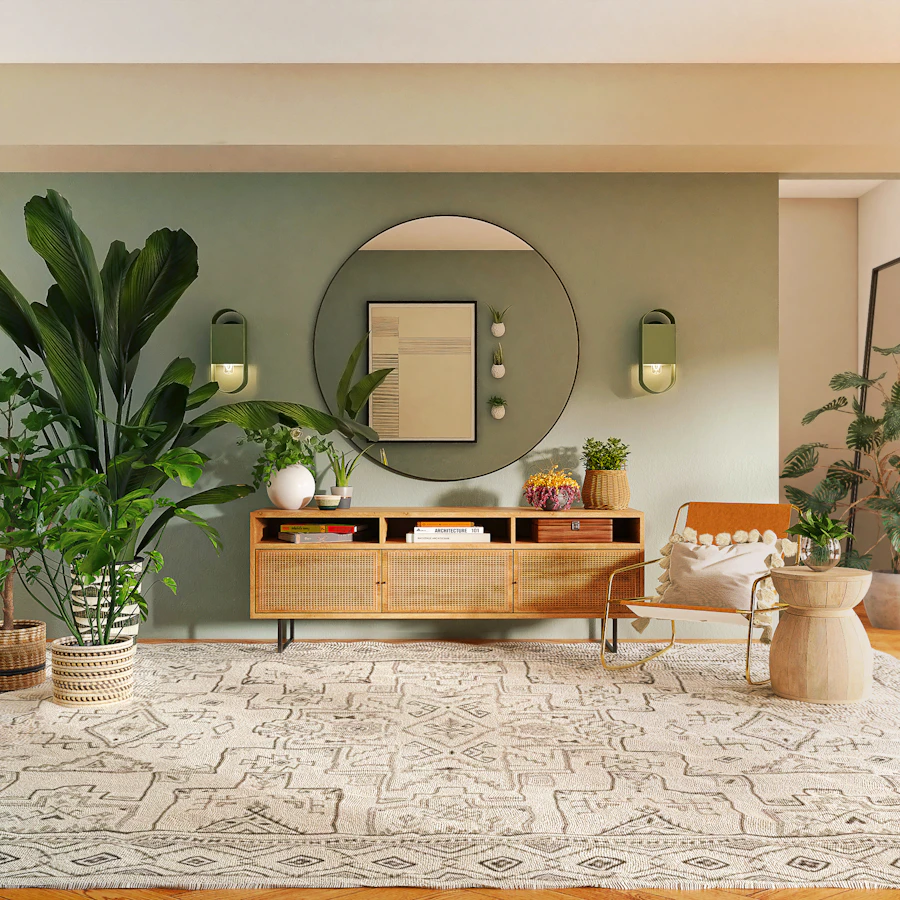
In a small apartment bedroom, both partners often need to get ready in the same space at the same time. A designated getting-ready zone — a shared dresser with a mirror above it, or a small vanity in an alcove — prevents the morning collision of two people competing for the same surfaces.
Organise this zone so both partners can use it simultaneously — one side for skincare and one for grooming, for instance. A small tray or basket for each person keeps things contained and prevents the dresser top from becoming a shared dumping ground for miscellaneous items.
07. Install Individual Bedside Reading Lights
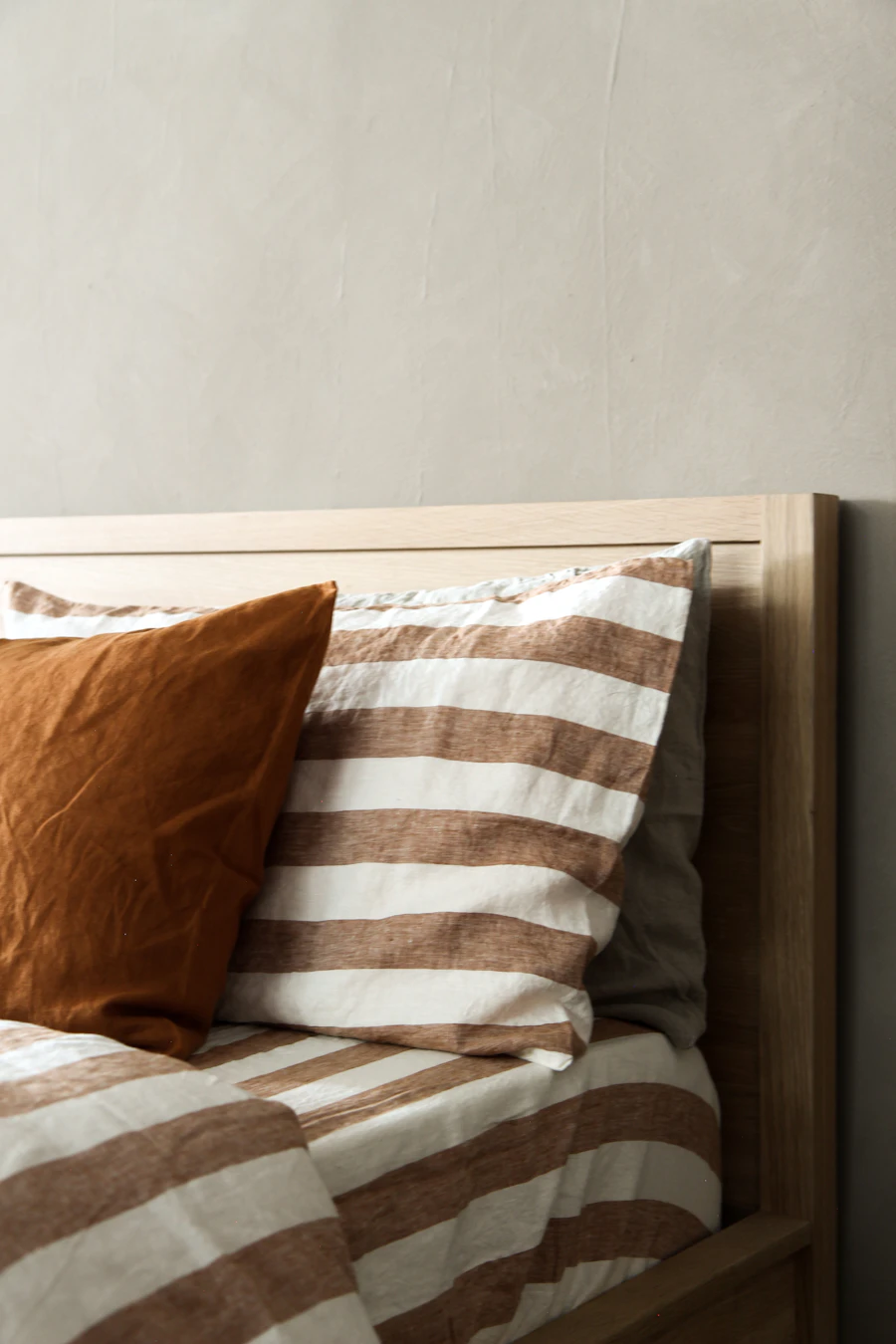
One of the most common couple bedroom conflicts is one partner wanting to read after lights-out while the other wants to sleep. Directional bedside reading lights — wall-mounted sconces with adjustable arms or clip-on book lights — solve this entirely, allowing each person to independently control their light level.
Wall-mounted sconces are the most elegant solution for a small bedroom — they eliminate the need for bedside lamps that take up surface space, and they can be angled to illuminate one person’s book without disturbing the other. Choose ones with a warm colour temperature and a dimmer for maximum versatility.
08. Consider Individual Duvets (Scandinavian Style)
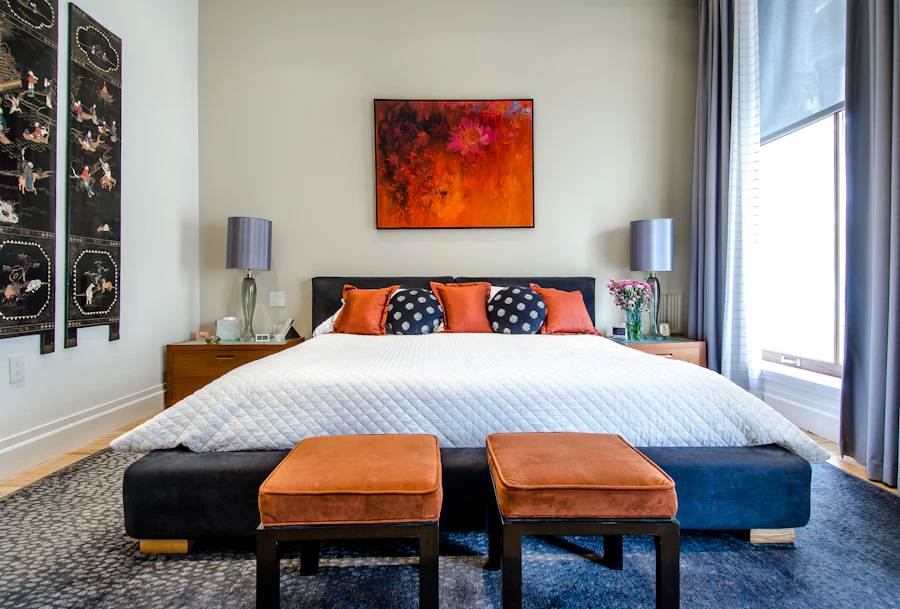
In Scandinavia, it’s common for couples to use two separate single duvets rather than one shared double. This simple change eliminates the age-old duvet-hogging problem and allows each person to choose the weight and warmth of their own cover. For a small bedroom, it also simplifies bed-making considerably.
During the day, style both duvets together under a shared throw or top blanket so the bed looks cohesive rather than like two separate single beds pushed together. This approach requires minimal extra effort but makes a meaningful difference to sleep quality and morning harmony.
09. Keep the Bedroom a Technology-Free Zone
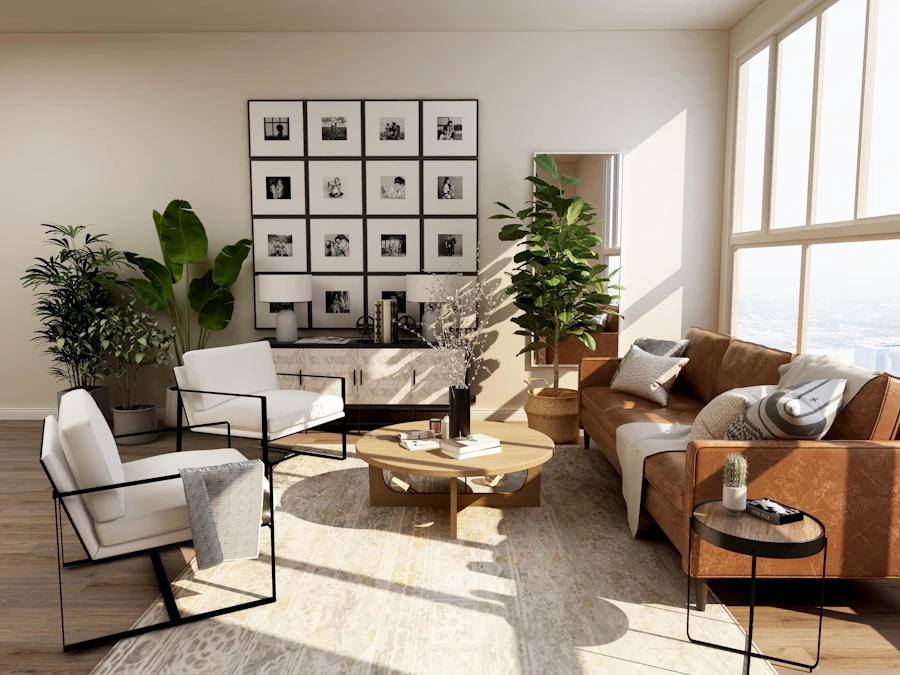
In a small apartment, the bedroom can easily become the primary living space — the place where both partners watch television, scroll phones, and work. But in a shared small bedroom, this quickly erodes the sense of the room as a restful, intimate space and increases visual clutter with screens and cables.
Keeping the bedroom screen-free — even just agreeing to charge phones outside the room — has a dramatic effect on both sleep quality and the sense that the bedroom is a sanctuary. It also prevents the dominant piece of furniture becoming a television rather than the bed, which preserves the room’s sense of calm.
10. Create a Shared Scent and Ambience Ritual
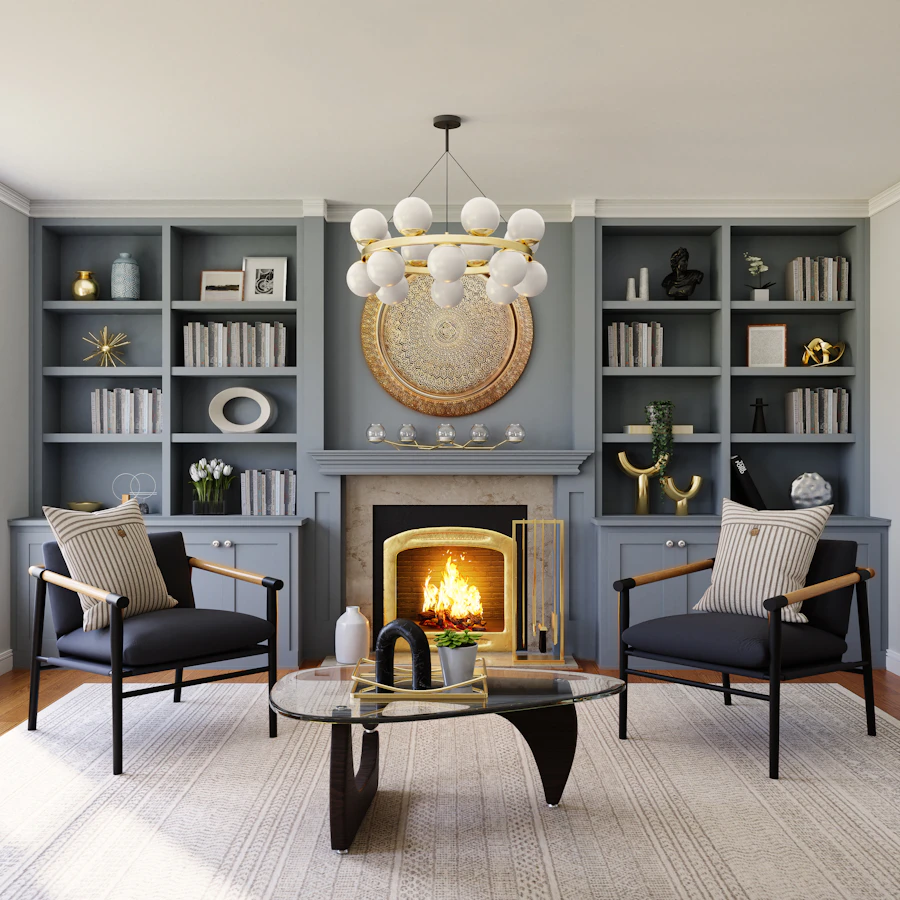
A simple shared ritual — lighting a candle in the evening, diffusing a particular essential oil, or dimming the lights together at a certain hour — creates a sense of the bedroom as a shared sanctuary rather than just a functional sleeping space. These small rituals are disproportionately powerful in a small apartment where distinct zones are harder to create.
Choose a scent you both genuinely enjoy — lavender and eucalyptus are widely popular for their calming effects. Keep the candle or diffuser on a shared surface where it’s visible and accessible to both partners, reinforcing the shared nature of the space.
11. Handle Clutter as a Team

In a small bedroom shared by two people, clutter accumulates twice as fast as it does in a solo space. Agreeing on a shared tidying routine — even just a ten-minute tidy before bed — prevents the gradual slide into disorder that’s almost inevitable when two people’s belongings share a small space.
Establish clear homes for everything — if an item doesn’t have a designated place, it will default to the floor or the nearest surface. A shared “drop zone” just inside the bedroom door can contain the inevitable deposition of small items (keys, watches, hair ties) and prevent them from scattering throughout the room.
12. Compromise on Decor with Personal Accent Pieces
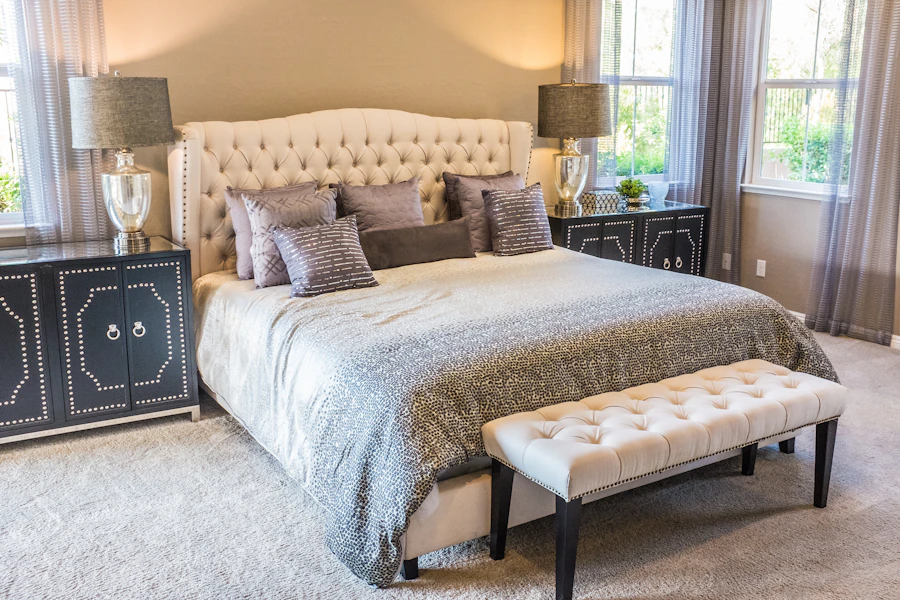
A shared bedroom doesn’t have to suppress either person’s individual aesthetic entirely. Rather than designing one unified vision that neither partner is fully happy with, agree on the major elements — wall colour, bedding, furniture — and give each person freedom to introduce a few personal accent pieces within the agreed palette.
Each partner’s bedside area is an ideal place for individual expression — a particular lamp, a stack of favourite books, a small plant, or a piece of art that has personal meaning. These small personal zones within a unified overall aesthetic allow both people to feel at home without the room becoming a visual battleground.
Final Thoughts: A Bedroom for Two
A small bedroom shared by two people requires more planning and communication than one designed for a single occupant — but it’s entirely achievable. The key is equal allocation of space and storage, a shared aesthetic foundation, and enough individual flexibility for both partners to feel at home.
Start with the practical foundations — bed size, storage, and lighting — before worrying about decor. When the functional elements are sorted, the aesthetic decisions become much easier, and the room begins to feel like a genuine shared sanctuary rather than a compromise.