Interior designers make living rooms look effortless — but the results always come from the same handful of techniques applied to every single project. The good news? These tricks work in any space, at any budget. Whether you’re renting a studio apartment or finally settling into your first proper home, these are the living room styling tips that pros reach for every single day.
The difference between a room that feels designed and one that just feels full of furniture usually comes down to a few deliberate choices — not expensive ones. Let’s go through the ones that actually move the needle.
1. Start with the rug — it anchors everything
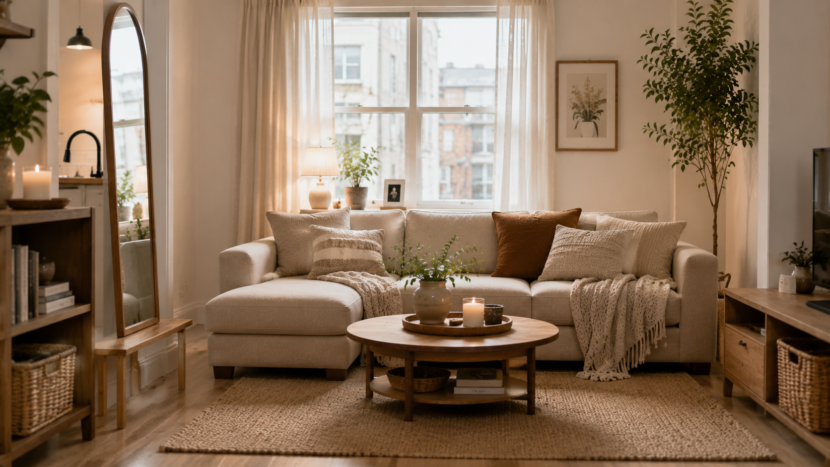
If there’s one piece interior designers universally obsess over, it’s the rug. A rug that’s too small is the single most common living room mistake — it makes the whole space feel ungrounded, like the furniture is floating. The rule: the front two legs of every sofa and chair should sit on the rug at minimum. In smaller spaces, go for an 8×10 or even lay the rug under all the furniture legs completely.
Choose your rug before you buy anything else — it sets the tone for your entire colour palette and texture story. A good rug is worth spending more on than a throw pillow collection. It’s the base of everything. See more ideas in our guide to small living room ideas for apartments.
2. Layer your lighting — this is the #1 designer secret
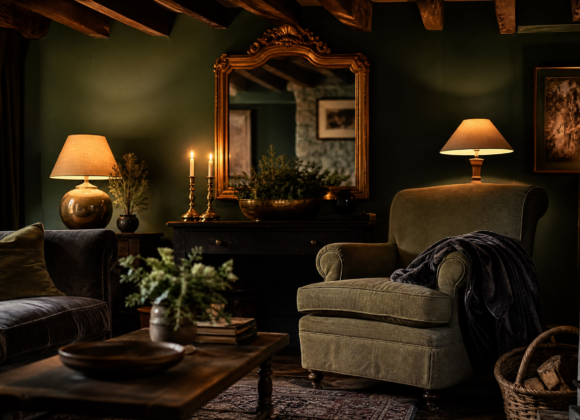
A single overhead light is the fastest way to make a living room feel flat and unloved. Designers always work with three distinct layers: ambient lighting (overhead), task lighting (reading lamps), and accent lighting (candles, table lamps, LED strips behind the TV). Aim for at least four to five light sources in any living room.
Warm bulbs in the 2700K–3000K range create the cosy, inviting atmosphere you see in magazine spreads. If you can only do one upgrade, put your overhead light on a dimmer switch — it completely transforms the feel of a room from day to evening. For a full breakdown, read our post on cosy living room lighting ideas.
3. Hang curtains at ceiling height
Mounting curtain rods as close to the ceiling as possible — not at the window frame — is one of the most impactful styling moves you can make in any room. It draws the eye upward, makes ceilings feel higher, and makes windows look twice as grand. Use floor-length curtains that just skim the floor or pool slightly for a luxurious effect. Curtains that stop awkwardly mid-wall look unfinished and visually shrink the space.
This works in rentals too: adhesive curtain rod brackets and tension rods allow you to achieve the look without drilling. It’s one of those tips that costs almost nothing and delivers an enormous visual return.
4. Use the 60-30-10 colour rule
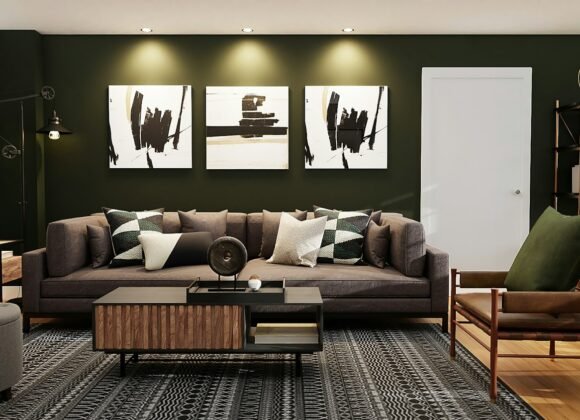
This is the rule every designer uses to create a cohesive colour palette without overthinking it. Sixty percent of your room should be your dominant colour — usually walls, or a large sofa if you can’t paint. Thirty percent should be a secondary colour carried through curtains, a rug, or an armchair. Ten percent is your accent colour: cushions, vases, a piece of artwork.
Keep your accent bold. A rust orange, a deep teal, a forest green — something with personality. If you’re renting and can’t touch the walls, use your large furniture and rug to carry the dominant colour, and keep wall décor in your secondary tone. This rule sounds rigid but it’s actually incredibly freeing. For inspiration, check out our warm neutral living room ideas.
5. Create conversation zones, not a TV-watching room
Designers always arrange furniture so that people can actually talk to each other. Sofas and chairs should face one another with a coffee table in between — not all pointed at the television. The TV can be part of the room, but it shouldn’t be the defining focal point of the whole space.
In smaller rooms, pull seating slightly away from the walls rather than pushing everything against them. Floating furniture looks more intentional and designed, and paradoxically makes rooms feel larger and cosier at the same time. See exactly how to do this in our full guide to arranging furniture in a small living room.
6. Scale your furniture to the room
Oversized furniture in a small room and tiny furniture in a large room are the same mistake — both make the space feel off-balance and unintentional. Before buying any major piece, tape out its footprint on the floor with painter’s tape and live with it for a day or two.
One large, well-proportioned sofa will always beat two small, cramped loveseats. If your room is compact, look for sofas with slimmer arms, raised legs, and a lower profile — these visual tricks make pieces feel lighter and less space-consuming. Opt for a glass or lucite coffee table in a small space: you get the function without the visual bulk. You can find more solutions in our small space living room ideas guide.
7. Accessorise in odd numbers
When styling shelves, coffee tables, and mantels, always group objects in threes or fives — never in pairs. Odd groupings feel organic and curated; even numbers feel stiff and decorative-showroom. Within each group, vary the height: something tall, something medium, something low. Mix textures rather than using identical items — a ceramic pot, a wooden bowl, a stack of books reads as deliberately styled.
Leave negative space. Not every surface needs to be filled, and the space between objects is as important as the objects themselves. When in doubt, remove one item from a grouping. This is the difference between a shelf that looks curated and one that looks crowded.
8. Commit to one statement piece
Every well-designed living room has one anchor piece that earns attention — a bold piece of artwork, a sculptural pendant light, a dramatic floor plant, or a patterned accent chair. Once you’ve found your statement piece, keep the surrounding décor quieter and more restrained. The temptation is to have five statement pieces, but that’s why rooms feel busy and overwhelming rather than designed.
Pick one thing to love and let it do all the talking. Everything around it exists to support and frame it, not compete with it. For a minimalist take on this approach, see our guide to modern minimalist living room ideas.
🎬 Watch: Living room styling tips
Prefer to watch? Browse the best videos on this topic:
✨ Quick Quiz
What’s your living room style vibe?
📊 Designer Tricks That Make the Biggest Difference
Based on reader surveys & engagement data
🕻 Quick Poll
What’s the one thing you’d change in your living room?
You Might Also Like
- → Small Living Room Ideas for Apartments: 12 Ways to Maximise Your Space
- → How to Arrange Furniture in a Small Living Room
- → Cosy Living Room Lighting Ideas for a Warm, Inviting Atmosphere
- → Modern Minimalist Living Room Ideas That Feel Warm, Not Cold
- → Warm Neutral Living Room Ideas on a Budget
- → Small Space Living Room Ideas With No Style Compromise